You built a better landing page. It has a sharper headline, real photos of your crew, a shorter form and a price range up front, because that is the question every caller asks first. You point half of your Meta ad traffic at it, leave the other half on the old page, and wait two weeks.
The new page loses. Fewer leads, higher cost per lead. So you switch everything back, file the idea under "we tried that," and never touch the page again.
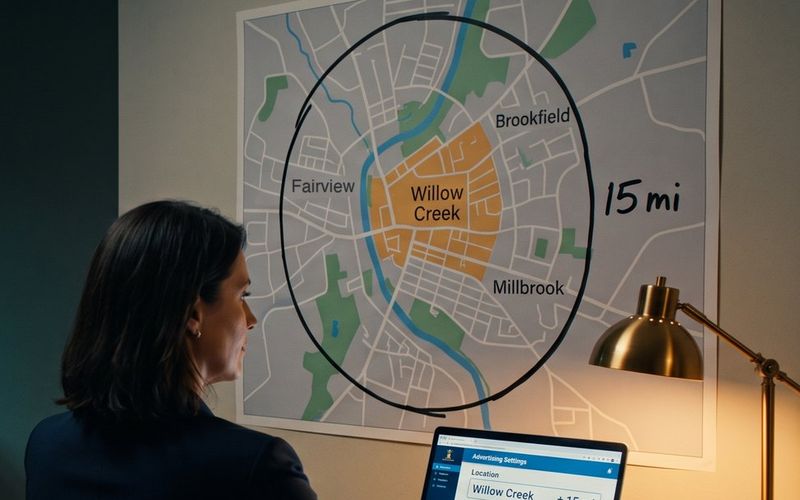
There is a decent chance the new page was never the problem. When you split Meta traffic between two pages behind the same ad, you are not running a fair race. Meta has already decided who sees that ad, and it decided based on who converted on the old page. The new page spent two weeks talking to a crowd that was picked for something else. This article explains why that happens, how to test a landing page on Meta in a way that gives the new page a real shot, and what to do when your account does not have the volume for a textbook test.
Meta Has No Idea You Are Running a Test
Start with what Meta is actually doing when your ad runs. If your campaign is set to find leads or purchases, Meta is not showing the ad to random people in your area. It is predicting, person by person, who is most likely to take the action you asked for, and it learns those predictions from the people who have already taken it. Every lead your old page produced taught Meta a little more about what your buyer looks like.
Now add a split. You use a page tool to send half the clicks to page A and half to page B, or you set up a redirect, or your web person rotates the pages. From Meta's side, nothing changed. The ad is the same ad with the same link. Meta keeps finding people who resemble the ones who converted on page A, because that is the only history it has.
Those people get split down the middle. Half land on the page that was built for them. The other half land on a page with a different promise, a different photo and a different ask, and the page has to win over visitors who were chosen by a system trained on its competitor. If page B is better for a different kind of customer, that customer is mostly not in the crowd. Meta never went looking for them, because Meta does not know page B exists.
Barry Hott, a Facebook advertiser who has been studying ads since 2008, puts the mechanism simply: Meta has no way of knowing you are testing your destination. It routes traffic based on past signals, and a hidden split dilutes those signals for both pages. He describes running exactly this kind of split for a new page that his team had built from heat maps and customer interviews. It lost. Rebuilt as its own ads, the same page performed far better. It had never reached the right people.
Your Page Decides Who Meta Finds Next
This is the part most owners never hear. Your landing page is not just where people end up. It shapes who Meta sends next.
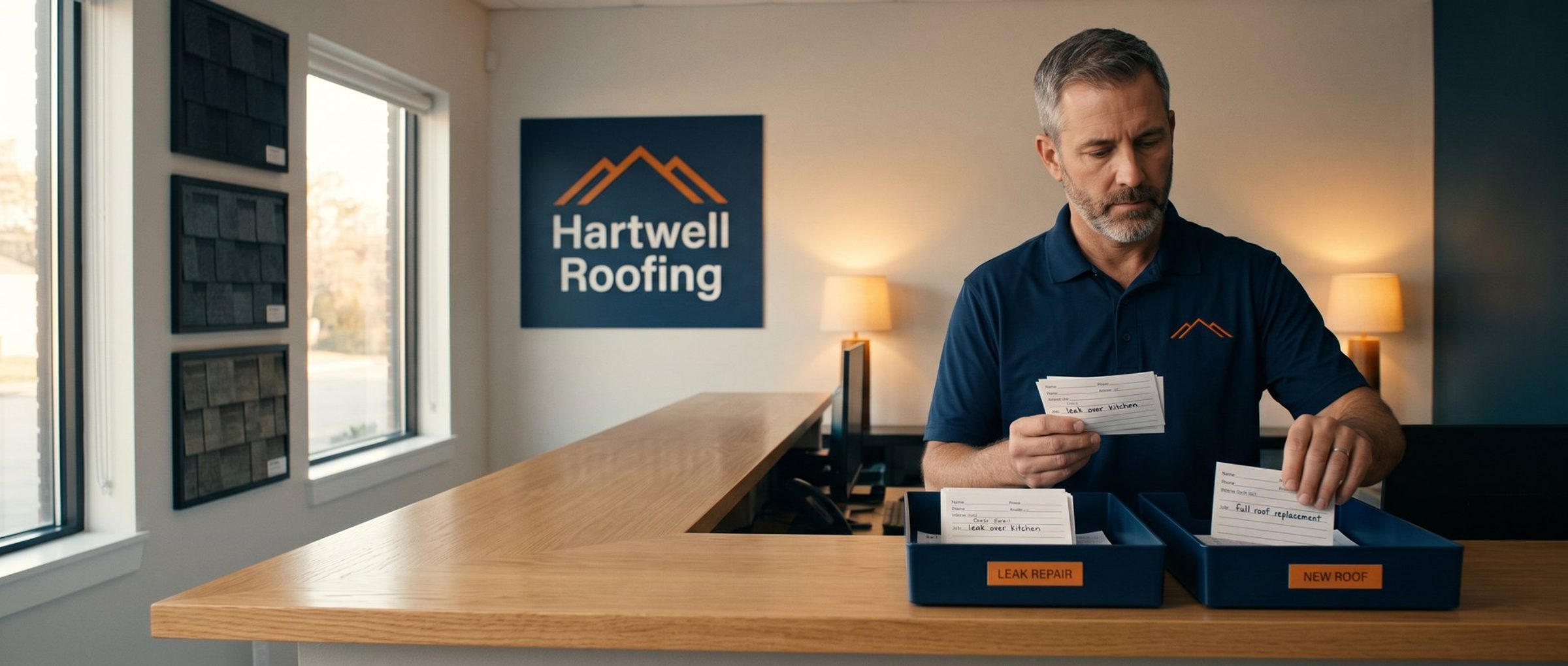
When Meta optimizes for leads, it watches who converts and goes looking for more people like them. So anything on the page that changes who converts also changes who Meta hunts for. Picture a roofing company whose page says "Roof leaking? We can be there today." The people who fill that form out are mostly homeowners with water coming through the ceiling. Meta learns that pattern and finds more of them.
Now the owner tests a page that says "Planning a new roof this year? Get a written estimate with three material options." That is a good page. It is also a page for a different person: someone with time, a budget and a spouse to talk it over with. Run it behind the leak ad, split with the leak page, and it gets judged on emergency callers who wanted a truck in the driveway, not a comparison chart.
The changes that do this are bigger than people expect. A new headline promise, a different photo of who the page is for, a new price or package, a different first ask (book an inspection versus get a price range): each one can shift who says yes. Barry's examples are a headline that moves from busy parents to serious athletes, or a hero photo that swaps a woman in her sixties for a man in his twenties. Same product, different people raising their hands.
That is not a flaw in Meta. It is the system doing its job. It just means a landing page test on Meta is really testing two things at once: the page, and the audience the page attracts.
Swapping the Link Mid-Campaign Restarts Meta's Learning
The other common version of this test is simpler and worse. The owner edits the live ad, pastes in the new page link, and compares the two weeks after to the two weeks before.
Meta publishes a short list of edits it treats as significant, and editing what is inside an ad is on it. (We went through the full list in Meta Already Turned Off Your Worst Ad. You're About to Turn Off the Wrong One.) A significant edit sends the ad set back into the learning phase, where Meta explores again and results are less stable. Meta's own guidance says an ad set generally needs about 50 optimization events within seven days of the last significant edit to leave learning. A local service business might take a month to get 50 leads.
So the after period is not the old campaign with a new page. It is a campaign that just restarted its learning, pointed at a new page, during a different two weeks of the year. If leads drop, you cannot tell whether the page did it, the reset did it, or the weather turned and nobody thought about their roof. If leads rise, you have the same problem in the other direction. We have written about why small before-and-after numbers fool people even when nothing else changes in You Won the A/B Test. You Probably Just Got Lucky. A learning reset stacked on top makes it worse.
A New Button Is a Tweak. A New Promise Is a New Page.
None of this means every page change needs a new campaign. The question is whether the change could change who converts. A quick way to answer it: would a different kind of customer read the new version and think, "this one is for me"?
Tweaks do not change who the page is for. Button wording, fewer form fields, moving the reviews higher, a faster page, a clearer phone number. The same person is on the page either way, so Meta's audience is not the variable. Tweaks can run on one page with an on-site testing tool, or simply be made and watched, because they are rarely large enough to need proof. Our CRO team's piece on what is actually worth testing on a page covers how to rank them.
New pages change who the page is for. A different headline promise, a new offer or price, a different person in the hero photo, a different first ask, or a completely different page. These are the changes where a hidden split misleads you, because the page and the audience move together.
The Intelligems team, who sell an on-site testing tool, make the same split in a podcast debate with a landing page builder: use Meta to find out which ad and page combination finds the most buyers, and use an on-site tool to improve a page that already works. They have a commercial reason to like the second half. The line between the two is still the right one.
A New Page Gets Its Own Copy of Your Best Ad
For a genuinely new page, the fix is to stop splitting traffic behind one ad and give the page its own ad.
Take your best current ad, the one with the most spend behind it that is still performing. Duplicate it into a new ad set with the same creative, the same copy, the same targeting settings and the same optimization goal. Change one thing: the link now points to the new page. Leave the original ad alone, still pointed at the old page.
Now Meta treats the new page as its own delivery track. It learns who converts on that page and goes looking for more of them, instead of recycling the old page's crowd. You compare the new ad set against business as usual: cost per lead, lead quality, and whether it can take more budget without falling apart.
The clearest example of why this matters came from the Marketing Operators podcast, hosted by operators from Ridge and Jones Road. On a fiber supplement brand one of them launched this year, they tested a pricier quarterly bundle against the usual monthly offer by splitting traffic behind ads that had been sending people to the monthly offer for months. They called it the worst test they had ever launched: the pricier bundle barely converted and acquisition costs roughly doubled. Then they launched the same offer as its own funnel with its own ads, and it became a solid part of the account. Same offer. Different crowd.
If you would rather have someone set this up and read it with you, this is a big part of how we run Facebook ads for small businesses: one variable at a time, judged on booked jobs rather than clicks.
Below 50 Leads a Week, Meta's Own A/B Test Is the Fair Fight
Here is where most of the advice on this topic stops fitting a small business. The people teaching the duplicate-ad method are running ecommerce brands with hundreds of orders a week. Barry is upfront about it: he says this method is not for accounts that produce only a trickle of conversions, because every extra ad set splits a small pile of results into two smaller piles, and both go through learning on less information.
A roofer spending $60 a day at $45 a lead gets about nine leads a week. Split that across two ad sets and each one sees four or five. Neither will leave learning anytime soon, and Meta is choosing who sees each ad from almost nothing.
For an account that size, Meta's built-in A/B test is the better tool, and the reason is the same problem this whole article is about. In Meta's A/B test, Meta knows a test is running. You create it in Ads Manager by duplicating your ad or ad set and changing one variable, which here is the website link. Meta then shows each version to its own segment of your audience and, in its own words, makes sure "nobody sees both." Its help pages describe the audiences as evenly split and statistically comparable. That is the fair race the hidden split never gave you.
Three things to set up correctly:
- Change only the page. Same creative, same copy, same budget per version, same optimization goal. Meta's own best practices say ad sets should be identical except for the variable being tested.
- Run it at least a week, and plan on longer. Meta recommends a minimum of seven days and caps A/B tests at 30. If your customers usually take more than a week to decide, Meta suggests running longer than seven days.
- Do not use that audience anywhere else at the same time. Meta warns that overlapping audiences can cause delivery problems and contaminate the result.
What it will not do is manufacture volume. Over 30 days, that roofer's test might produce 15 to 20 leads per page. That can show you a big difference. It cannot prove a small one, which is why the next number matters.
At a Dozen Leads a Month, Form Starts Are the Only Number You Can Trust
When leads are scarce, read the steps before the lead, because they happen far more often.
Say a page gets 1,200 landing page views in a month. Perhaps 160 people scroll far enough to see the form, 60 start filling it out and 14 finish. Fourteen leads split across two pages is seven each, and seven versus seven tells you nothing. Sixty form starts, or 160 people reaching the form, gives you a number with enough behind it to see whether one page is getting people further than the other.
The Marketing Operators hosts make the same trade on their lower-volume brands: they judge new pages on how many people move to the next step, and they accept a less precise answer in exchange for getting one at all. They also describe a "canary" test, where the only goal is to confirm a new page is not badly broken before giving it full traffic. That is a sensible bar for a small business. You are not trying to publish a study. You are trying to avoid replacing a working page with a broken one.
To make this work you need to be able to see those steps. Landing page views are in Ads Manager already. Form starts, scroll depth and taps on your phone number need to be tracked as events on the page, which most small business sites do not do out of the box. If your page sends people to call, count calls by page with a separate tracking number for each.
Treat these earlier numbers as direction, not proof. A page that gets twice as many people to start the form and then loses all of them at the last field still has a problem, and it is usually the form.
Meta Can Send Your Clicks to a Page You Did Not Pick
One more thing can wreck a page test without you noticing: Meta may not be sending every click to the link you set.
When a Sales campaign points at your website, Meta can treat the link you chose as only the main destination and route some people to other places it predicts will convert better, such as a shop or a different page. Meta's documentation says some of these options may be switched on by default. Other automatic creative options can rewrite text or swap images. We walked through the whole list in You Approved One Ad. Meta Is Running Several.
For a page test, you want every click from version A going to page A and every click from version B going to page B. Before launching, open the destination and creative enhancement settings on both versions and turn off anything that changes where the click goes. Then add a tag to each link, such as utm_content=page-a on one and utm_content=page-b on the other, so your site's own analytics shows which page each visitor actually landed on. If Ads Manager and your analytics disagree about which page did better, the tags tell you whether the traffic went where you thought.
Leak Repairs and New Roofs Bring In Two Different Customers
The last lesson is the one that changes how you think about the whole exercise. A landing page test does not always have to end with a winner and a loser.
Go back to the roofer. The leak page works for emergencies. The replacement page works for planners. If you run them as separate ads, Meta can find emergency callers for one and planners for the other. Forcing one page to win means giving up one of those customers. Barry's version of this: sometimes having page A and page B both live beats having either one alone. The Intelligems guest describes adding new destinations for a winning ad and seeing the account spend more per day at the same efficiency, because each page found people the others were missing.
There are limits. Every page you keep is a page you have to maintain, update when prices change and check when the site changes. The Marketing Operators hosts keep one main page per product line for that reason, and so should most small businesses. Keep a second page when it brings in a customer the first one does not. Retire it when it does not.
And if the new page loses fairly, in its own ad or in Meta's A/B test, with enough data to see the difference, believe it. The point of all this is not to protect your favorite page. It is to make sure the result is about the page.
What to Do This Week
- Sort the change. If it could change who the page is for, it is a new page. If not, it is a tweak.
- Tweaks: make them on one page and watch the steps before the lead, or use an on-site testing tool if you have the traffic.
- New pages with real volume: duplicate your best ad into its own ad set, point it at the new page, and compare it to business as usual.
- New pages at small-business volume: use Meta's A/B test with the link as the only variable, for at least 7 days and up to 30.
- Turn off anything that changes where the click goes, and tag each page's link.
- Judge on form starts and calls, not just finished leads, and treat them as direction.
- Go back to the page you gave up on. If it lost a hidden split, it never got a fair test.
If you test a new page and the cheap way to start is a Meta instant form, we covered when that makes sense in Meta's Instant Form Gets You Cheap Leads. A Landing Page Gets You Customers. And if the honest answer is that you need a second page for a second kind of customer, that is the kind of page our team builds for small businesses every week. Either way, give the page a fair crowd before you decide it lost.