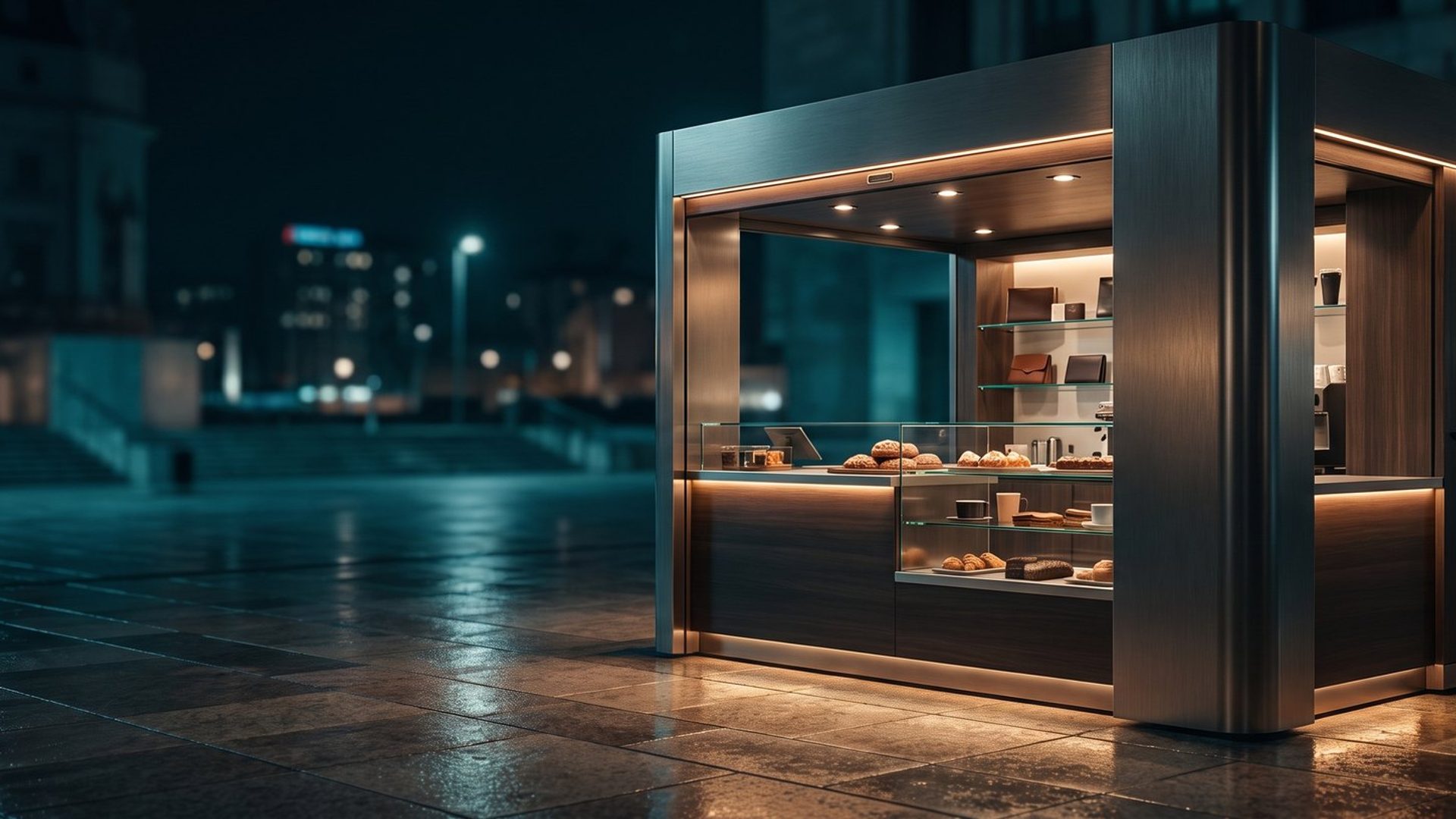
Every few months another online-only brand announces it is opening physical stores, and the trade press writes it up like a plot twist. The brands that were supposed to kill retail are signing leases in shopping centers.
If you run a small online store, that news arrives in a strange shape. It sounds like validation and it sounds like a bill at the same time. The part worth paying attention to is not the lease. It is the reason those brands want to be in a room with a customer, because that reason applies to you at a fraction of the cost, and the version available to you does not involve signing anything for five years.
The Brands Opening Stores Are Not Doing It for Nostalgia
Start with the thing that has not happened. Online selling did not replace retail. In the second quarter of 2026, e-commerce accounted for 17.1 percent of total US retail sales, according to the Census Bureau's own quarterly release. That number has been climbing for twenty-five years and it is still a minority share of where Americans buy things. The other eighty-three cents of every retail dollar changed hands somewhere a person could stand.
Meanwhile the cost of reaching someone online has gone one direction. You know this without a chart, because you watch it in your own ad account. Every brand that once had a local market now has the same national one, all of them bidding for attention in the same handful of feeds and results pages. We see it across client accounts constantly: the same campaign, the same creative, the same offer, quietly costing more per customer than it did eighteen months ago.
Then there is the part nobody enjoys talking about. Returns are the tax on selling something a person could not touch first, and the online rate runs well above the in-store one for exactly that reason. We have already written about what a single return actually costs you, so here is only the part that bears on this argument: a shopper who cannot evaluate a product before paying orders two of them and intends to send one back. You pay freight in both directions, the labor to inspect and restock, the processing fees you do not get back, and then you sell the same unit a second time to make the money you already thought you had.
The mechanism underneath all three of those is the same, and it is not really about channels. It is about doubt. Your product photography is lit, styled, color-corrected and shot on a model chosen to make the thing look its best, which is exactly what it should be. It is also why a shopper cannot fully resolve the question they are actually asking, which is whether this thing is any good. They can read your product page twice and still not know how heavy it is, how the fabric behaves, whether the color is the color. So they guess, and they buy two sizes, and they send one back. Or they do not guess, and they leave.
Putting the product in front of a person removes the doubt in about four seconds. That is what the brands opening stores are buying. It is worth a great deal, and it is not the same thing as a lease. Helping stores solve this is a chunk of what our e-commerce work actually involves, and it almost never starts with real estate.
A Lease Is the Last Step, Not the Entry Point
A retail lease is three commitments wearing one signature, and the rent is the least dangerous of them.
The first is the fit-out, which you pay in full before a single customer walks in. Shelving, lighting, counter, signage, point-of-sale hardware, the deposit, and whatever the space needs to stop looking like the business that failed in it. That money is spent on the hope of a result you have not tested yet.
The second is fixed cost that does not care how your week went. Rent, utilities, insurance and staffing arrive on the first of the month whether forty people came in or four. Every other cost in your business moves with sales. This one does not, which means a slow season does not shrink it, it just eats the good months you already banked.
The third is the one owners consistently miss, and it is the one that decides the whole thing. A physical location has a hard ceiling on how much business it can physically do. There are only so many hours you are open, only so many people who fit in the room, and only so many weekends in a year. You cannot add more Saturdays. Online, growth is a budget decision. In a room, growth requires another room, which means doing the entire calculation again somewhere else.
None of this is an argument against physical retail. It is an argument about sequence. The lease is the expensive, irreversible version of a bet you can place for a couple hundred dollars first. Nobody would test a new product by ordering four thousand units, and a location is a bigger commitment than a product.
Four Ways to Sell in Person Without Signing Anything
There is a ladder here, and almost every online store can stand on the first rung this month. Each rung asks more of you than the one below it, and each one answers a question the one below it could not.
The market or fair booth. A weekend farmers market, a craft fair, a maker's market, a neighborhood festival. Typically somewhere between fifty and four hundred dollars for a space depending on the city and the event, paid once, for one or two days. You bring a folding table, your product, a card reader and a way to collect email addresses. This is the cheapest possible way to watch strangers react to your product, and it is the rung almost everyone skips.
The collaboration. Splitting a space, an event or a table with a brand that shares your customer without competing for the sale. Two businesses, two audiences, half the cost each. This is how a small brand affords a space it could not book alone, and it doubles the number of people who leave knowing your name. The catch is real and worth stating: you are borrowing their reputation as well as their audience, so pick someone whose customers you would be proud to inherit.
The shelf inside somebody else's store. Consignment, wholesale to a local retailer, or a formal store-within-a-store. Your product sits where people already are, and the retailer carries the rent, the staff and the hours. You give up margin instead of cash, which is a genuinely different trade and usually the right one early. If this is where you land, read how wholesale actually works before you quote anyone a price, because wholesale pricing is not your retail price with a discount on it.
The pop-up. A short-term retail space, anywhere from a weekend to a couple of months. More expensive and considerably more work, because now you are responsible for foot traffic rather than renting somebody else's. A pop-up is worth it when the question you need answered is about a specific neighborhood, or when you have a launch that deserves a room of its own. Be honest that it is also where the costs start to look like a small lease.
Your Product Page Cannot Look Someone in the Eye
Here is the finding that should actually change your mind, and it comes up over and over among owners who sell both ways.
Ask someone who runs a market booth and a website how the two compare on conversion, and the answer is not close. Standing in front of a person converts at a rate a website cannot approach. Then ask what the difference is, and it is never the product, the price or the display. It is the person doing the telling. Someone who can pick the thing up, put it in your hands, explain why it is made the way it is, and answer the specific worry in your face rather than the average worry of a thousand visitors.
That is not a soft observation. It is a description of information you do not currently have.
On your website, an objection looks like an exit. Someone lands, scrolls, and goes, and analytics hands you a bounce and a timestamp. You are left to infer what went wrong from the shape of the hole. At a table, the same objection arrives as a sentence, out loud, from a human face: is this going to fit my car, does it come in anything darker, what happens if it breaks, how is this different from the one at the hardware store, why is it this much.
Spend one Saturday and you will hear the same four or five questions until you are tired of them. That list is the most valuable thing you take home, and it is worth more than the day's sales by an embarrassing margin. Those are the exact questions your product page is failing to answer. The phrasing people use is the phrasing your copy should use. The worry that comes up nine times is the one that belongs above the fold, not buried in a shipping tab.
This is the same problem a good product finder solves online, which we have written about in the post on customers who cannot tell your products apart. The difference is that in person you do not have to guess which questions to ask. People tell you.
Decide What the Table Is For Before You Book It
The fastest way to waste a weekend is to show up hoping something good happens. Pick one question before you pay for the space, and design the day around answering it.
Is the product right? Then you want volume of strangers and you want to watch faces, not sales. Take three variations. Note which one gets picked up first and which one people put back down. Two days at a busy market answers this well.
Is this neighborhood right? This one needs longer than a weekend, and it is the most commonly botched. Foot traffic swings hard by season, weather and event calendar, so a great Saturday in October tells you almost nothing about a Tuesday in February. If you are genuinely evaluating a location, you need weeks, not a weekend. If all you can afford is a weekend, accept that you are testing the product and not the place.
Do people convert once they meet you? Then track the ratio of conversations to sales, not the sales total. A busy day with a terrible ratio and a quiet day with a great one point to completely different problems.
Are you building a list? Then sales are almost beside the point and the whole setup should be built around capture. More on that next, because it is the one most stores leave on the table.
One question per outing, changed one at a time, measured against the last one. This is the same discipline you would apply to a campaign test, and for the same reason: if you change the product, the market and the price all at once, you learn nothing you can use.
The Day's Sales Are the Least Valuable Thing You Leave With
Most owners judge a market day by what the card reader says at four o'clock. That number is the smallest thing in the van.
Contacts you collected face to face. A person who met you, held the product and gave you their email is worth a multiple of one who traded an address for a ten percent discount code. They know who you are. They will open the email. That matters more than it used to, because most stores are paying to carry a list where half the names have never opened anything. Two hundred people who shook your hand beat two thousand who clicked a popup.
Make the capture deliberate. A sign that says what they get, a tablet or a paper sheet, and a reason that is worth giving an address for: tell them when the next batch lands, tell them where you will be next month. Ask at the moment they are holding the thing, not as they walk away.
An objection library. The four or five questions from the last section, written down in the car before you forget them.
Photographs of real people with your product. Not styled, not retouched, no model. This is the content your paid and organic feeds are short of, and you cannot manufacture it at a desk.
A channel nobody can take away from you. This is the strategic one. The audience on any platform is rented, and the terms change without your consent. An email list and a group of people who know your face are yours. It is the same argument as selling on a marketplace that owns the customer relationship, and meeting people in person is one of the few ways to build the owned side quickly.
Do Not Kill It After One Slow Saturday
Here is how this usually dies. An owner pays two hundred dollars for a booth, spends eleven hours on it including setup and drive time, sells three hundred and forty dollars of product, does the math on the way home, and never goes back.
That math is wrong, because it stops on Saturday. Three numbers make it honest.
Contribution per outing, with your hours in it. Revenue, minus cost of goods, minus the space fee, minus fuel and parking, minus your own time at whatever you would actually pay someone. Most first outings land at or below zero on this, and that is expected. A first outing is tuition.
Cost per contact captured. Total cost of the day divided by the number of email addresses or phone numbers you collected. Compare it to what you currently pay to acquire a subscriber through ads. Most stores find the in-person number is competitive, and the contacts are better, which is the finding that changes the decision.
Ninety-day revenue from those contacts. This is the one that reverses the verdict, and almost nobody tracks it. Tag every contact you collect with the event, then look at what that group has bought ninety days later. A booth that "lost" sixty dollars on the day and produced nine hundred dollars of follow-on revenue by Christmas was not a loss, it was your cheapest acquisition channel that quarter.
Two rules to go with those numbers. Set a baseline first, which means the second outing is the one you learn from and the first is just data collection. And change one thing at a time, so that when something improves you know what caused it.
When the Lease Does Make Sense
There is a point where the permanent space is the right call, and the ladder tells you when you reach it.
You have run the same format enough times to know your sales per day in that area, not once but repeatedly and across seasons. You know which products sell in person and which only sell online, and they are usually not the same list. You have a plan for the fifty-one weeks after opening week, because the events and reasons to come back are what produce the traffic once the novelty is gone. And the ceiling is the thing actually limiting you, meaning demand is turning up and you cannot serve it, rather than a location being the fix you hope will create demand.
If those four are true, you are not guessing anymore, and the lease is a scale-up of something already working. If any of them is missing, the next rung down will tell you more for less money.
The brands opening stores did not decide retail was back. They worked out what being in a room with a customer is worth, and then bought as much of it as their balance sheet allowed. Yours allows a folding table and a Saturday, and that buys a surprising amount of the same thing.
We spend our days helping online stores figure out where their next customer actually comes from, and how much each one really costs once you count everything. If you want a second pair of eyes on those numbers, or you would rather hand the whole acquisition side to someone else, we are glad to help either way.