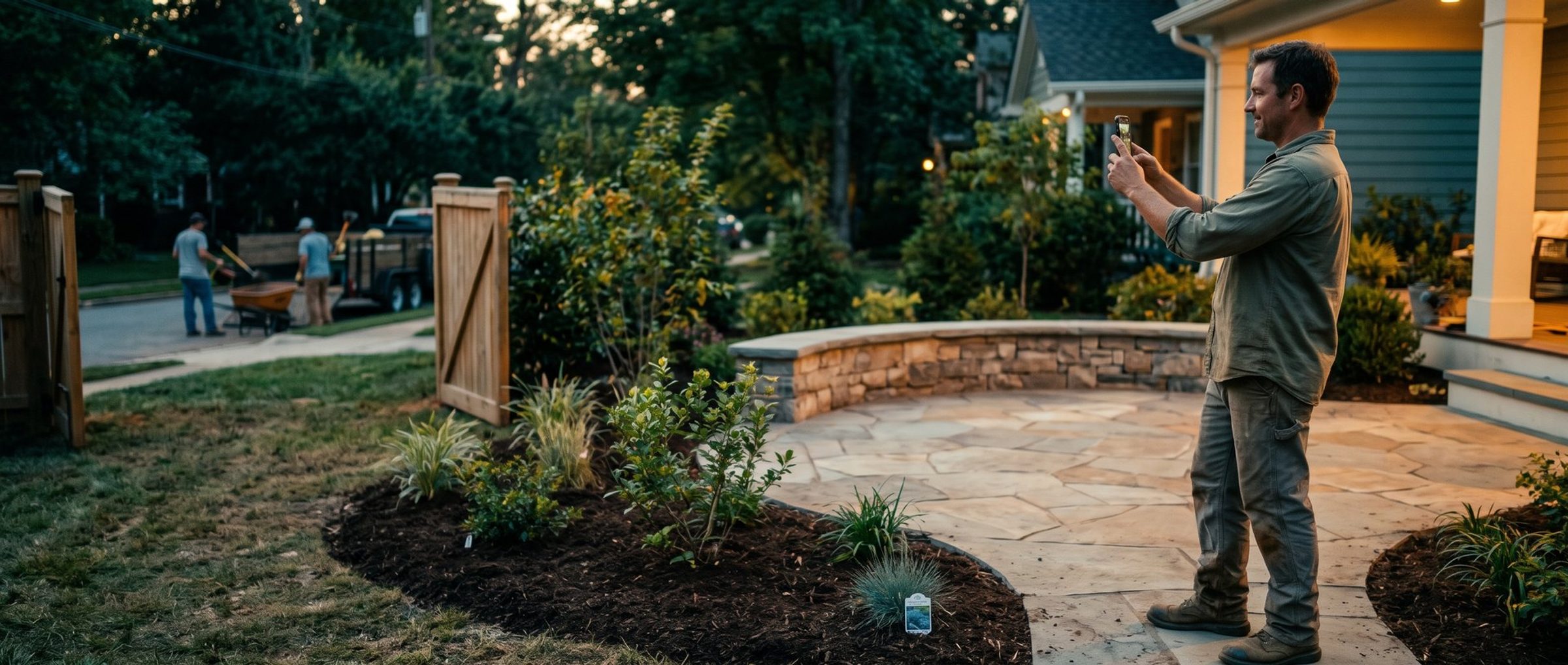
Here is a story we hear in some version almost every month. A landscaping company owner decides to take social media seriously. For a full year he posts four times a week: finished patios, before-and-after lawns, the crew loading the trailer at dawn. He ends the year with about 600 followers, posts that get 20 or 30 likes, and a nagging question he cannot answer. When he goes through the year's jobs, he cannot point to a single new customer who found him through a post.
He did not do it wrong. He did the wrong job with the right tool.
So, is organic social media worth it for a small business? Yes, but not for the reason most people post. Unpaid posts on Facebook and Instagram are a poor way to find new customers, because very few people outside your followers ever see them. They are a very good way to be believed. When a stranger sees your ad, likes it, and goes to check you out, your profile is what they find. That is the job organic social does well, and it takes far less time than most of the advice suggests. Finding new customers is the job you pay for.
Your Followers Barely See Your Posts. Strangers Almost Never Do.
Start with what people actually look at when they open Facebook, because Meta publishes it.
Meta's Widely Viewed Content Report breaks down every view in the US Facebook Feed by where the post came from. In the first quarter of 2026, only 14.7% of Feed views were posts from Pages and public figures people follow. Posts from friends made up 19.2%, Groups 14.3%. The biggest single slice, 39%, came from posts by accounts the viewer does not follow at all, which Meta recommends because it predicts they will keep someone scrolling.
Read that from a business owner's chair. Every Page that every person follows, from their favorite sports team to the pizza place down the street, shares less than one view in six. Your Page is one small piece of that slice. And the recommended posts, the part that does reach new people, go mostly to content built to entertain: creators, jokes, cooking videos, other people's pets. A photo of a well-edged lawn is not competing well in that crowd.
One more number from the same report is worth knowing if your plan was to post links to your website: 98.7% of Feed views did not include a link to anywhere outside Facebook. The Feed is built to keep people on Facebook.
Instagram tells the same story in different numbers. Socialinsider's 2026 benchmarks put the average brand account with 1,000 to 5,000 followers at about 417 views per photo post, 580 per reel, and 993 per carousel. Views, not customers, and many of those views come from people who already follow you.
The Post-Every-Day Advice Was Written for People Who Sell Themselves.
If organic reach is this thin, why does so much advice tell owners to post constantly? Look at who is giving it.
Some of the most-watched videos on this subject come from marketers whose business is themselves. One popular framework from a copywriting educator is built entirely on a personal brand: share your point of view, show up consistently, reply to every comment, start conversations in your messages, and let trust turn into sales over time. She says plainly that it is time-consuming, and that the time is the point. Another widely shared video automates Instagram messages so that anyone who comments a keyword gets a free download, which grows an email list for an online course business.
Both work, for that kind of business. When the product is a person's expertise, every post is a small sample of the product. A follower who enjoys your posts is already halfway to buying.
Now look at what the schedule costs. One popular Instagram playbook recommends a feed post every day, two or three stories a day, one or two live videos a week, three to seven short videos a week, and about 10 minutes a day commenting on other accounts. Put real minutes against each item, including taking the photo, writing the caption and editing the video, and our estimate comes out at roughly eight to twelve hours a week.
For a coach or consultant, those hours are marketing the product directly. For a landscaper, a dentist or a small online store, they are hours taken away from the work, the quotes, the phone and the customers. That is the real price of organic social, and it rarely shows up in the advice, because the people giving the advice are being paid by the attention.
What Organic Is Actually Good For: Being the Proof a Stranger Checks.
Here is where organic earns its place, and it is a bigger job than it sounds.
Think about what happens after someone sees your ad. They do not always tap the button. Often they tap your name instead, because they want to know whether you are real before they hand over a phone number. They scroll your recent posts. They look at whether the last one was this month or two years ago. They read the comments and check whether anyone answered them. They look at the photos to see if your work looks like the work in the ad.
What they find there decides whether they come back to the ad or keep scrolling. A profile with recent photos of real jobs, a few real customers in the comments, and replies from the owner reads as a working business. A profile whose last post is a holiday greeting from two winters ago reads as closed. Nobody needed to follow you for this to matter. They only needed to land on your page once, at the moment they were deciding.
We walk through exactly what a stranger looks at, and how to fix each piece, in People Check Your Facebook Page Before They Trust Your Meta Ad. The short version: the most valuable organic work a small business can do is keep the profile alive, current and answered. That is a different job from growing followers, and it takes a fraction of the time.
Your Best-Performing Post Was Graded by Customers You Already Had.
There is a trap here worth naming, because it is where owners who do post consistently go wrong.
When a post does well, it is tempting to read the likes as a verdict on what customers want. But the people liking it are mostly your followers: past customers, friends, family, other local businesses. They like it because they know you. A stranger who has never heard of you sees the same post with none of that context, and it often falls flat. That is why a post that did well with followers frequently makes a weak ad, a problem we take apart in Your Best Post Makes Your Worst Ad.
So do not judge your organic social by likes, and do not choose your ads by them either. Judge organic by one question: if a stranger checked us out today, would the profile help or hurt?
There is one honest exception where organic and paid connect well, and it is not your own posts. It is your customers' posts. When a happy customer posts about the work you did, that post carries a kind of trust your own content cannot. With the customer's permission, you can run it as an ad from their account, and it reads like a recommendation rather than an advertisement. We cover how that works in You Don't Need an Influencer. You Need Permission.
Reaching Strangers Is the Job You Pay For.
Everything above leaves one job unfilled: putting your business in front of people who have never heard of it, at the moment they might need it. Organic social cannot do that reliably. Paid ads were built for it.
An ad lets you choose who sees it. People within ten miles of your service area. People who visited your website last month and did not call. People searching for what you sell right now, if you add search ads. You decide the budget, and you can see what it bought. A post reaches whoever the feed decides to show it to. An ad reaches the people you paid for.
That does not mean a small business has to spend heavily. It means the money should go to reach and the time should go to proof. A modest, steady ad budget aimed at the right local audience will usually put your business in front of more potential customers in a week than a year of posting does, and those people will land on a profile that makes you look as good as you are. If you are still deciding where that first ad dollar should go, we wrote Which Ad Channel Should a Small Business Actually Start With? for exactly that question.
An Hour a Week on Organic, Not an Hour a Day.
Here is the plan we would give most small business owners, and it fits in about an hour a week.
Post one or two real things a week. Not content for its own sake. A finished job, a before and after, the team on site, a customer result with their permission, a short answer to a question customers ask you every week. Photos from your phone are fine. Real beats polished, because the person checking you out is looking for proof you exist, not production value.
Answer every comment and message the same day. This matters more than the posts. An unanswered question sitting under your post tells every later visitor how you treat people. A message left for three days is often a lost job, and the person who sent it may have come straight from your ad.
Keep the basics current. Hours, phone number, service area, the link to your website, and a pinned post or highlight that shows your best work. Check them once a month.
Spend the hours you saved on the things that turn attention into customers. Your ads, your follow-up, and how fast you call back a new lead. An hour saved from posting and spent calling leads back faster will almost always be worth more.
Give organic more time than that only when one of these is true. You are the product, as a coach, consultant, photographer, stylist or trainer often is, so every post is a sample of what people buy. Your work is visual enough that customers share it on their own. Or you sell to a small, tight community where people genuinely follow local businesses and talk about them. In those cases, posting more is marketing the product directly, and the advice to show up daily starts to make sense.
For everyone else, the landscaper from the beginning included, the answer is simpler than the advice makes it sound. Keep the profile alive so it closes the sale your ads start. Then pay to start more of them.