The Problem You Can't See on a Dashboard
A demo request feels like a beginning. Someone found you, liked what they saw, raised their hand. The story starts here, right?
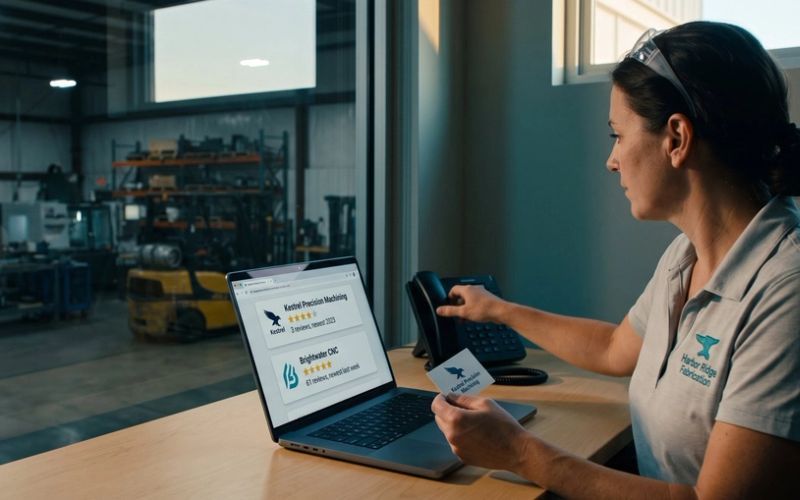
It doesn't. By the time that form hits your inbox, the deciding is mostly done. Weeks or months of it, happening somewhere your analytics never reached. The prospect read your site at 11pm, compared you against two competitors, asked a peer on Slack whether you were any good, lurked on a LinkedIn thread, and quietly formed an opinion long before they ever typed their email address.
Your dashboard shows you the sliver of the journey that touched a trackable link. It hides the enormous part that actually decided the deal. And if you only market to the part you can see, you are marketing to the last page of a story you were never handed.
That is the whole problem with B2B. The real buying journey is invisible, and most owners are optimizing the one tiny visible corner of it while the rest gets decided without them.
95% of Your Market Isn't Buying Today
Here is the number that should change how you spend. At any given moment, only about 5% of your potential buyers are actually in the market. The other 95% are not looking, not comparing, not ready. Professor John Dawes at the Ehrenberg-Bass Institute named this the 95-5 rule, and it quietly explains why so much B2B marketing feels like a knife fight.
Because almost everyone crowds into that 5%. Paid search, retargeting, cold outreach, "book a demo" everything. It is the most contested, most expensive slice of the market, and you are bidding against every competitor you have for the exact same handful of people who happen to be ready this month.
Meanwhile the 95% who will buy later, the people who decide next quarter or next year, are sitting in near silence. Nobody is building trust with them. Nobody is becoming the name they already recognize, with a message that actually lands. That is the opening.
For a small business this is not a reason to stop chasing the 5%. Those buyers are real and you should compete for them. It is a reason to spend some of your budget building memory instead of only buying clicks. The company the buyer already trusts when they enter the market wins before the auction starts. Showing up for the 95% is how you stop paying a premium to fight over the 5%.
By the Time They Raise Their Hand, They've Shopped Without You
When those buyers finally do start looking, they do most of it without you. Gartner found that B2B buyers spend just 17% of the entire buying journey meeting with potential suppliers. Split that across every vendor they are considering, and any single company gets somewhere around 5 or 6% of their attention. The rest is self-guided: your website, your pricing page, review sites, competitor comparisons, a question posted to a peer group, a colleague's offhand recommendation.
They prefer it that way. In a 2025 Gartner survey, 61% of B2B buyers said they want a rep-free buying experience. They would rather figure it out themselves than sit through a sales call, and they will get most of the way to a decision before they ever talk to a human on your side.
So here is the uncomfortable part. For the vast majority of the journey, your sales team is not in the room. Your website is. Your content is. Your reputation is. Those assets are doing the selling whether they are good at it or not. If your site answers three questions and the buyer has ten, you lose, and you never even learn the deal existed.
The Committee You Never Meet
It gets harder, because in B2B you are almost never selling to one person. Gartner puts the typical buying group at six to ten people. A champion who likes you. A finance lead worried about cash. Someone in IT worried about whether it integrates. A skeptic who got burned by a vendor two years ago and swore never again.
And most of them are invisible to you. Scott Gillum spent seven years studying more than 10,000 buyers for his book The Hidden Buyer Journey, and found that around 85% of the people in a buying group never enter the seller's CRM at all. Worse, 77% of them show up late, at the trial, the demo, the final presentation, after the story is largely written. You build a warm relationship with one contact and assume you understand the deal, while six people you will never email quietly decide your fate.
Gillum tells the story of a deal where the sales team was sure the buyer cared about real-time project profitability, so that is what they pitched. Then they noticed the CEO had searched "cash flow" thirty-five times in two weeks. Same company, completely different fear, and the deal came down to the worry nobody had said out loud.
You cannot be in that room. So your champion has to carry you into it. That means giving them ammunition they can forward without you: a clean one-pager, a proof point that answers the CFO's real question, an ROI story in plain numbers the skeptic can't wave away. The people you can't see are the ones who say yes or no, and the only version of you in that room is whatever your champion can repeat.
They Decide With Emotion, Then Justify With Logic
We like to think B2B is rational. Spreadsheets, requirements, procurement, a sober business case. But people make decisions emotionally and rationalize them afterward, and B2B is no exception. If anything the emotion runs hotter, because the stakes are higher. Buy the wrong phone and you are annoyed for a year. Approve the wrong six-figure platform and you might be explaining yourself to your boss, or updating your resume.
That fear is the real driver. Gillum found something telling: when buyers name the reasons they chose a vendor, product fit and reliability top the list, but those are all things you can only confirm after the decision is made. Something else drove the actual choice, and it comes down to a feeling. Do I trust these people. Do I feel safe betting my name on them. Will I look smart or foolish for picking them.
Which is also why buyers quietly distrust your ROI calculator and your glossy case studies. They assume you picked the numbers that flatter you, and they are usually right. A giant "300% ROI" claim lowers trust, not raises it.
The move, then, is to sell safety. Reduce the felt risk of choosing you. Specific, believable proof from a company that looks like theirs beats an impressive number every time. A clear, low-commitment first step beats "book a 60-minute demo." Your job is not to make the buyer confident in you. It is to make them confident in their own decision to pick you, so they can defend it to the room and sleep at night.
The Sale Doesn't End at the Signature
There is one more invisible stretch of the journey, and it is the one most companies treat as the finish line: everything after the deal closes.
James Kaikis, who has spent his career inside B2B software, puts it bluntly. Buying software is often a miserable experience, and it frequently gets worse right after you sign. The technical expert who showed you exactly how it works, the single most trusted person in the whole process, disappears the moment the contract is signed. The attention that won the deal evaporates. And that broken promise does not stay contained. It shapes the renewal, the referral that never gets made, the review that warns the next buyer away.
This matters more than it looks, because of everything above. The 95% who aren't buying yet are listening to the people who bought before them. Reviews, word of mouth, "who do you use for this" threads. Your post-sale experience is quietly feeding, or starving, the top of everyone else's journey.
So being easy to buy from is not a nicety. It is marketing. Answering fast, being honest about what you do and don't do, staying present after the invoice clears. In a market where buyers expect to be ignored once they pay, simply being good to work with makes you the company people recommend without being asked.
What to Actually Do About It
None of this requires a bigger team or a rebrand. It requires marketing to the whole journey instead of only the visible end of it. Five moves, starting Monday:
Show up for the 95%. Publish genuinely useful content on a schedule and be present where your buyers already spend time. You are not chasing this quarter's lead. You are buying memory, so you are the default name when they finally enter the market.
Build assets that sell without you. Your site, comparison pages, FAQs, and proof have to answer the buying committee's real questions, because they are reading all of it while you are nowhere near the room. Write for the finance lead and the skeptic, not just the champion.
Arm your champion. Assume one person is carrying you to five or nine others you will never meet. Make it effortless for them: a one-pager, a plain-numbers ROI story, a proof point from a company like theirs they can paste into a Slack message.
Sell safety, not features. Reduce the felt risk of choosing you. Specific proof from similar businesses, transparent pricing and process, and a small, low-commitment first step will move more deals than any feature grid.
Stop trusting last-click. The dark funnel means your best trust-building rarely shows up in the form's attribution. The buyer credits "Google" or "a friend" because that is the last thing they touched. Do not kill the channels quietly building next year's pipeline just because this month's dashboard can't see them.
The businesses that win in B2B are not the ones with the cleverest funnel for the 5%. They are the ones the other 95% already trust, carried into rooms they never entered, chosen by people who felt safe picking them.
That is a lot to hold together, and most of it happens where you can't watch it. If you would rather run your business than reverse-engineer a buying committee, that is exactly the kind of thing we do all day. Either way, now you know what the dashboard was hiding.