
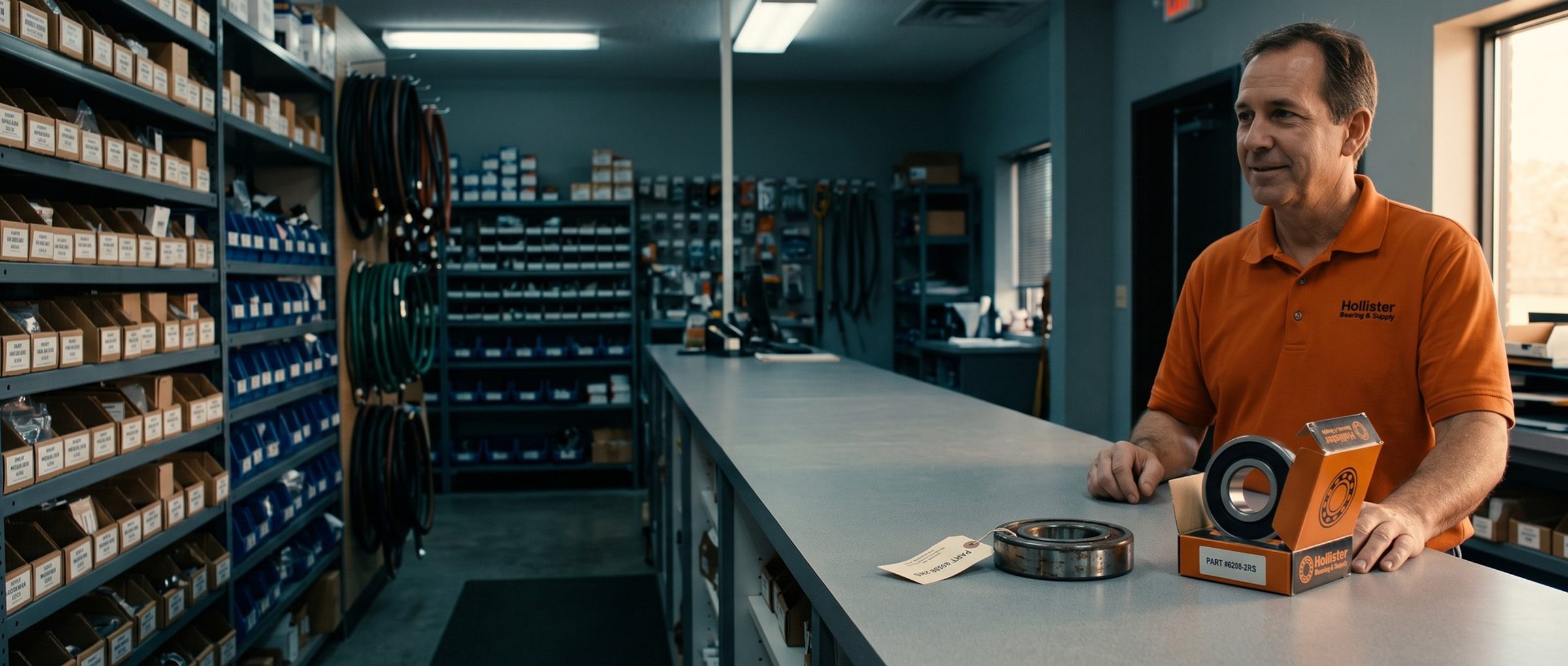
Picture a made-up but familiar case. An engineer types "custom injection molding" into Google, clicks an ad and lands on a home page. The page has a hero photo of a factory, a line about "solutions for every industry," and a menu with eleven items. Somewhere three clicks deep there's a page about injection molding, with the materials, the press sizes and a quote form. The engineer doesn't find it. They go back to the results and click the next ad.
Google sees that too. How well an ad and its page match what someone searched for is part of how Google decides where the ad shows and what it costs. This chapter covers how Google judges that match, what Quality Score does and doesn't tell you, and why a B2B account does better with one page for each product or process than with one home page for everything. It builds on Chapter 3, which set the budget; this chapter is about making each dollar of it land.
Raising Your Bid Raises Your Ad Rank and Your Bill. Fixing the Ad and the Landing Page Raises Only the Rank.
When a plant engineer searches for a supplier, Google holds a quick auction among the advertisers whose keywords match and scores each one. That score, Ad Rank, decides whether an ad appears and how high. Google names six inputs. Three of them are out of a B2B advertiser's hands: the minimum quality bar every ad must clear, how strong the rival advertisers are that day, and the circumstances of the search itself, such as where the engineer is, what device they're on and the exact words typed. You control the remaining three. One is your bid. One is fit: does the ad, and the page behind it, match the search? The last is the set of add-ons hanging under the ad, such as a call button or sitelinks.
Those three behave very differently. A higher bid usually means a higher cost per click. Tightening the match between search, ad and page lifts the rank as well, and by Google's own account better ads frequently pay less per click. Old blog posts still circulate a tidy multiplication for all this. Google has never published one, so don't plan around it.
For a B2B account with a modest budget and expensive supplier searches, that difference is the whole game. You can't outbid a national distributor on every term. You can be the most relevant answer to the narrow, specific searches your buyers actually type, and higher placement usually brings more clicks.
Quality Score Doesn't Set Your Price. It Tells You Whether the Ad, the Click or the Page Is Weak.
Every keyword in the account carries a Quality Score between 1 and 10, and plenty of advertisers spend months trying to push it up. Google is clear that the number is a gauge, not a lever: it plays no part in the auction itself. It summarizes how your ads and pages for that keyword compare with other advertisers'.
The useful part is underneath the number. Open the keyword's details and you'll find three sub-ratings, graded against other advertisers whose ads showed for the exact same search over the last 90 days:
- Expected clickthrough rate: Google's estimate of how often the ad gets clicked for that keyword, worked out with position and add-ons stripped away. A bigger bid can't fake it; only an ad people want to click can.
- Ad relevance: how squarely the ad addresses the need behind the keyword.
- Landing page experience: Google's judgment of whether the destination page helps the person who clicked through.
In B2B accounts the ratings tend to point at the same culprits. A keyword with weak ad relevance is usually sharing an ad group with twenty loosely related terms and an ad written to fit them all. A keyword with weak landing page experience is usually sending an engineer to a home page that never mentions the thing they searched for. Treat each weak rating as a work order for one specific ad group or one specific page.
49 of 68 B2B Ads We Read Showed a Home Page Address. Only Two Advertisers Named a Product in Every One.
Throughout this guide we use twelve B2B advertisers from one example market, the Milwaukee area. Your market will differ; the pattern is common anywhere. We read every ad they had run in the last 90 days and noted the web address each ad displays. Of the 68 ads with a readable address, 49 showed only the company's bare domain, the home page address. For eight of the twelve companies, every text ad with a readable address did; some of them also ran Shopping or listing ads, which work differently.
Two did the opposite. A process equipment maker showed a different product address on each ad, one per machine type, and a packaging distributor showed an address naming the tool or brand on each ad for its tool repair service.
A note on what we measured: a display address is text the advertiser types into the ad. We read the ads; we didn't click them, so a few home-page ads may still land on a deeper page. Some of those typed addresses don't even exist as pages on the live site. But the display address is also what the searcher sees before deciding to click, and a home page address signals a general page before the click ever happens.
The reason the home page underperforms is simple. A B2B home page has to speak to every product, every industry served, job seekers and existing customers. It answers every search a little. A page about one product answers one search completely, and that is what Google's landing page experience rating is looking for.
An Ad Group Built Around One Product Can Repeat the Buyer's Exact Words. A Catch-All Group Can't.
Fixing it begins inside Google Ads, before anyone touches the website. In our method, keywords go into small, tight ad groups, about five or six keywords each, all about the same product or process. That structure is what makes the ad and the page able to match.
Take a custom injection molder. A catch-all ad group might hold "injection molding," "plastic parts manufacturer," "mold making," "overmolding" and twenty more, all sharing one ad that has to stay vague enough to fit them all. Split it instead:
- Custom molding: "custom injection molding," "injection molding companies," "plastic injection molding services." The ad says custom injection molding; the page is the injection molding capability page.
- Quotes: "injection molding quote," "plastic injection molding quote." The ad says get a quote in a day, if that's true; the page opens on the quote form with the drawing upload.
- Overmolding: its own group, its own ad, its own page, if the company actually does it.
Each group's ad can now repeat the search almost word for word, which is the most direct way to raise ad relevance. Each page is about exactly what the ad promised, which is what landing page experience measures. And each group gets its own bid, so the quote searches from Chapter 2 can be bid higher than the general ones.
This is also where Chapter 2's bottom-of-the-funnel searches become an account. The supplier and quote searches each get a tight group and a matching page first. The broad product terms wait.
A B2B Landing Page Has Two Readers: the Engineer Checking Specs and the Buyer Checking Terms.
A B2B purchase usually involves more than one person, and the landing page often gets read by both kinds. The engineer or plant manager wants to know whether you can make or supply the thing: materials, tolerances, capacities, certifications, the industries you work with. The purchasing side wants to know how to buy: minimums, lead times, how fast a quote comes back, and how much work the request takes.
Here is what the twelve example sites put in front of a visitor:
- Every one shows a phone number, and eight show more than one.
- Eight have a dedicated quote or request form; the other four rely on a general contact form.
- Five accept a file upload on that form, and two accept CAD drawings.
- Five state an ISO 9001 certification.
- Four state a quote or response time in hours or days.
A strong B2B landing page answers both readers above the fold or close to it. The headline repeats the product the ad named. A short block of specs or capabilities proves you can do the work. Certifications and industries served sit where the engineer will see them. Then the buying details: typical lead time, minimum order if there is one, how fast you quote, and a form that asks only what you need to quote. Let them attach a drawing if the job needs one, and put the phone number where a buyer in a hurry can find it.
Speed matters too. A product page that takes ten seconds to load on a phone at a plant loses the visitor before the specs appear. Run your key pages through Google's free PageSpeed Insights and fix the worst problems it reports, usually oversized images.
None of this needs a new website. Most of the twelve sites we read already have separate pages for their products or services; the ads just don't point at them. The first job is to match each ad group to the page that already exists, then improve the pages that carry the most spend. Our post on what happens after you win the meeting covers the follow-up material buyers want once they've raised their hand.
Next: Keyword Planner Misreads B2B Websites More Often Than You'd Think
Chapter 5 builds the keyword list itself, starting from your competitors' sites and your own, and shows why Google's Keyword Planner needs a careful human read before any idea goes into an ad group. The full series is on the Google Ads for B2B guide home, and if you'd like someone to build the account with you, see our Google Ads management.


