
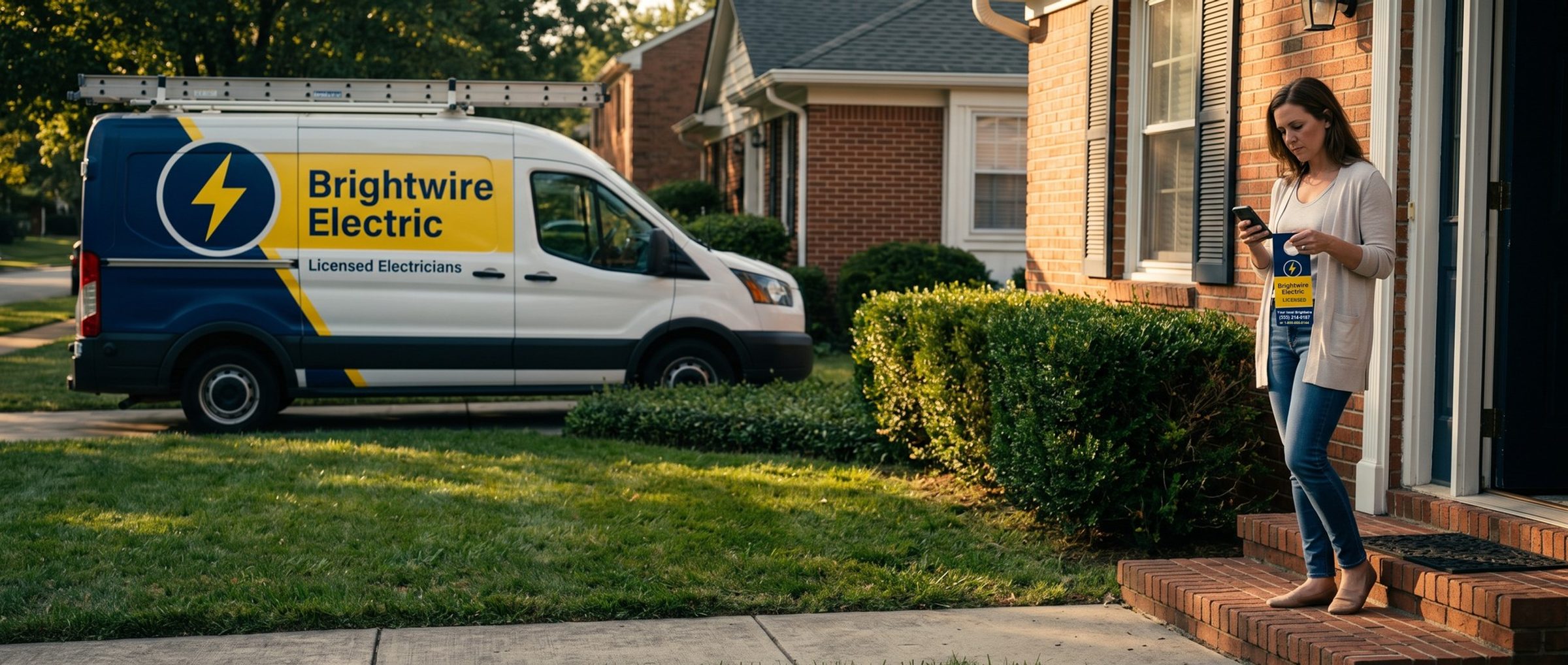
A family in a new neighborhood searches for a tutor on a Tuesday night, taps an ad for a learning center chain and calls the number on the page. The call rings at a regional desk. Someone takes a name and promises a callback from "your local center." Three weeks later the parent has enrolled somewhere else, and nobody in the account that paid for the click can say which location the ad was supposed to help.
The brand got the call. The location never saw it. Google Ads recorded a click and no idea which owner's customer it was.
This chapter fixes that before the first keyword: a trackable number per location, bookings counted where they really end, and every paying customer reported to Google under the right location. The examples come from nine franchise locations we studied in one example market, Orlando: home services, fitness and wellness, and kids' education. Your market and numbers will differ. The setup is the same in any franchise system.
Google Ads Learns From the Leads It Can Count, and a Franchise Has to Count Them by Location
Conversion tracking tells the owner what the ads produced, and it tells Google's bidding what a good result looks like. Smart Bidding copies whatever you feed it. Teach it that a page view is a win, and it will hunt for browsers.
So the first step on any account is cleaning the conversion list. Page views, scroll depth and "clicked the Book button" come off the list Google bids on. If an existing account has been counting them for months, flush that history so the learning starts from real contacts.
A franchise adds one more requirement: every lead has to arrive with its location. Franchise systems run their ads three ways. Franchisors run local ads centrally with franchisee money, owners run their own, or the two split it, with the brand fund buying brand-name searches. Across 52 franchise brands we checked in Google's Ads Transparency Center, 24 had their ads paid for mostly by the franchisor or a brand entity, 18 mostly by franchisees and other local accounts, 3 by agencies, and 7 by a mix. The tracking below works in all three setups, as long as each lead carries the location it belongs to.
For a franchise location, the contacts worth counting are phone calls, form submissions, confirmed bookings, and sometimes texts or chats.
Google's Call Tracking Follows One Phone Number per Page. A Franchise Location Page Should Show Only Its Own.
Calls are the first contact for many local franchise customers, so they come first. Google counts calls through free Google forwarding numbers. When call reporting is on, the number in your ad becomes a forwarding number, and Google records the call. On the site, Google's phone snippet trades the location's number for a forwarding number for ad visitors, so a caller who read the page first still shows up.
Google's setup instructions add a limit: "Only one number can be tracked on a single page using the default Javascript tag." Tracking several numbers on one page takes the manual install, which is a developer job.
That limit lines up neatly with a good franchise website. A location page that shows one local number for that location fits the default setup: one page, one number, one swap, and every tracked call belongs to that location. A store locator or a "contact us" page listing ten locations' numbers does not. The default tag can follow one of them. The other nine ring unrecorded.
Calls straight from the ad work the same way. Google lets you add call assets at the account, campaign or ad group level, and the most specific one wins. A franchise that gives each location its own campaign can give each campaign that location's number, so a call from the ad rings the right owner and lands in the right column. Count each call once per click.
How long does a call need to last to count? You set the minimum. Our standard is 30 seconds, because a caller who leaves a voicemail is still a real lead. On a brand-new account we sometimes start lower so Google gets signals sooner, then raise it once volume builds.
For dozens of numbers per site, nearest-location routing or recorded calls, franchise systems turn to CallRail or CallTrackingMetrics. They're worth knowing about. You don't need one to start.
One Shared Number Hides Which Location Earned the Call
In our example market, the location pages showed how easily numbers drift. Two of the nine locations showed a national or brand number on their pages or booking path. One franchisee's own website showed 12 different phone numbers across its pages, most of them rotating tracking numbers from its field-service software, which is tracking doing its job. On two locations, the number on the site differed from the number on the location's Google listing.
We could confirm call tracking on three of the nine sites: dynamic numbers from field-service software, a Google Ads call swap loaded through Google Tag Manager on a corporate-run location, and a third-party call script. Two showed no call tracking we could see. On the other four, the page code didn't let us tell either way.
Customers notice when the phone path goes wrong. Across 334 Google reviews with text for these nine locations, newest first, six described reaching the wrong place: a call center that couldn't see the location's openings, a corporate office that couldn't sort out a local refund, a map pin that pointed somewhere else. Six is a small number, and none of those reviews gave more than three stars.
A shared national number isn't wrong on its own; plenty of systems route calls through one center on purpose. The problem starts when ads are paid for location by location and calls aren't counted that way.
Most Franchise Bookings Happen on the Brand's Booking System, Not the Location's Own Page
Forms and bookings come next, and franchises have a twist here too. Seven of the nine locations in our example market took bookings or estimate requests through a system the whole brand shares: a brand-wide booking form, an estimate funnel, a fitness booking platform, corporate scheduling and reservation sites, and brand-wide assessment and tour schedulers. Two of those seven sent the customer to a separate booking or estimate site. Of the other two locations, one franchisee ran its own scheduling software and one offered callback forms only.
That matters because the customer finishes on the brand's system, not the location's page. The conversion has to fire on the confirmation step there, the tracking has to follow the visitor across domains (cross-domain tracking in Google Analytics or the Google tag), and the location has to come through with it, as a location ID or a separate conversion per location.
The franchisor usually controls that platform and its tags, so a location owner's question is short: what fires on the booking confirmation, and which Google Ads account receives it? If the answer is "nothing" or "the corporate account only," your own campaigns are bidding without seeing a single booking.
Count the confirmed booking or submitted form, never the "Book Now" click. A click is curiosity. A confirmation is a customer.
A Franchise Owner Who Pays for the Clicks Should See Every Lead Those Clicks Bought
Where the conversions live depends on who runs the account.
When the franchisor runs ads for many locations, Google offers cross-account conversion tracking from a manager account: one Google tag records conversions across all the location accounts, and Google says this "is beneficial for Smart Bidding as it provides more data." Google also warns that campaigns set to a specific conversion action switch to the manager account's default goals, so check every campaign's goal after the switch.
When a franchisee runs their own account, the conversions live in that account, set up by the owner or their agency, with the franchisor given access through a manager account link.
The catch shows up when the relationship changes. If a location's account is unlinked from the franchisor's manager account, cross-account conversion tracking stops recording conversions for new clicks. An owner who leaves keeps the account and its history, but conversions that only lived at the manager level stop flowing.
Our position: whoever pays for the clicks should be able to see every lead those clicks bought, location by location. Chapter 14 covers the three ways franchise systems run their ads and who should own the account.
A Page View Isn't a Lead. Calls, Forms and Bookings Are What Google Should Count.
Google Ads splits conversions into primary and secondary. Primary ones steer the bids. Secondary ones sit in the reports for you and stay out of the bidding.
For a franchise location, calls over your minimum length, submitted forms and confirmed bookings are primary. Direction clicks, email link clicks, page views and app downloads are secondary: useful to watch, wrong to bid on. Lead actions count "One" per click; the same parent filling out two forms is still one family. Give the click-through window room to match how long people decide (up to 90 days for website actions), and keep data-driven attribution.
One tag install per site, through Google Tag Manager where the brand already uses it. Then prove it: Tag Assistant on the location page and the booking confirmation, a test call through the ad from a cell phone, a test form, a test booking you cancel later, and a look the next morning at which account logged each one.
Google Bids Better When It Learns Which Calls Became Paying Customers at Each Location
A call is a lead. The customer is the member who joined, the family that enrolled, the homeowner who paid for the job. Google can only bid for paying customers if you tell it which leads became one, and what they were worth.
Google now steers new setups to enhanced conversions for leads: "If you have not already adopted offline conversion import, we recommend starting with enhanced conversions for leads instead." The lead's form or call is matched to the sale in your own records, and the result is uploaded with its value. The clock runs from the click: 63 days for enhanced conversions for leads, 90 for click ID imports.
In a franchise the sale usually sits in a system the brand chose, a membership platform, a point-of-sale system, a field-service tool or a central CRM. The location's ID has to travel with every sale so it can go back to the right account, or to the right location inside a central one.
Which step should the bids aim at? Google says to choose a single step that logged at least 15 conversions over 30 days, preferably one that happens within a week of the click, rather than blending steps. For a busy location that may be the paid customer. For a small one it is often the booked visit, with the sale recorded alongside for reporting.
Chiropractic and other health-related franchises work differently. Google's customer data policy keeps their health conversions out of enhanced conversions, so the visit returns by click ID alone, with a plain conversion name and no patient information.
Our Google Ads for Electricians guide shows a value set per job type, and Google Ads for Gyms counts new members rather than bookings. Both apply to franchise locations in those trades.
Next: The Brand Fund Already Pays for Awareness. A Location's Money Should Buy Searches From People Ready to Buy.
Once each location's leads are counted, Chapter 2 ranks franchise searches by readiness and spends a location's first dollars on people already shopping, leaving awareness to the brand fund.
All sixteen chapters, from tracking and territories to who runs the ads and franchise development, are on the guide's home page.
Before any franchise account we run in Google Ads management goes live, someone calls each location through its own ad. Own a location? Do it yourself this week, then find out which account got credit.


