
Demand Gen is how Google sells a local business to people who aren't looking for it yet, through video on YouTube and images in Gmail, the Discover feed and Maps. For a local business, the appeal is obvious. The homeowner who'll need a new roof next spring is watching YouTube tonight, and a search ad can't reach them until the leak starts.
The catch is in Google's own setup advice. Google's guidance ties the Demand Gen budget to the cost of a lead, at a multiple of ten, and for a plumber or a roofer that multiple is brutal. Run that rule against what leads really cost a one-shop plumber or roofer bidding to a lead target, and the daily figure is bigger than many such businesses spend in a week.
This chapter does that math, covers what Demand Gen is good at, and sets out the three conditions a local account should meet before it spends a dollar there. It follows Chapter 10, which added Performance Max only once the account's Search campaigns had the volume to aim it.
For a Local Business, Google's Demand Gen Budget Rule Works Out to Hundreds of Dollars a Day.
On Google's Demand Gen help page, the budget advice for target CPA campaigns is a single line: set the budget to ten or more times the target cost per acquisition. Google doesn't say "per day" in that line, but a Demand Gen budget is normally an average daily amount, and Google's own Budget Panel gives its suggestions as daily budgets. Read that way, the rule means ten leads' worth of budget every day. (Demand Gen can also run on a total budget for a set flight; the math scales the same way.)
Plug in the cost per lead from Chapter 3, the median figures from LocaliQ's benchmark of its own customers' home services campaigns:
- Cleaning, at about $47 a lead: a Demand Gen budget of about $470 a day.
- Electricians, at about $94 a lead: about $940 a day.
- Plumbing, at about $129 a lead: about $1,290 a day.
- Roofing, at about $228 a lead: about $2,280 a day.
Compare that with the starting point from Chapter 3, about $1,500 a month for the whole account, or roughly $49 a day. Even the cheapest trade on the list needs more than nine times that for Demand Gen alone. Over a month, at Google's 30.4-day pacing from Chapter 9, the cleaning budget comes to about $14,300, the electrician's to about $28,500 and the plumber's to about $39,200.
These are medians from one vendor's customers, and a Demand Gen lead won't cost exactly what a Search lead does. But even at half the cost per lead, the cheapest trade would still need nearly five times a starting account's daily budget. The math also assumes the target is a real lead; a campaign aimed at site visits would have a far lower target, which the next sections take up. Google's own setup screen shows a Budget Panel with low, medium and high daily budget suggestions; the low one is what Google calls the minimum it recommends.
A Homeowner Scrolling YouTube Today Might Need a Plumber Next Spring. Demand Gen Is Paid to Find Them Early.
Google describes Demand Gen campaigns as capturing "engagement and action across YouTube (including Shorts), Discover, Gmail, Maps, and the Google Display Network." The Display Network is joining it: Google is moving its standalone Display campaigns into Demand Gen, with a migration tool rolling out from June 2026 and remaining campaigns to be moved automatically later.
One part of that reach is local by design. Google has added Maps inventory to Demand Gen, still in beta, describing it as connecting a brand "with people exploring their local areas." For a business people visit, that could be the closest Demand Gen comes to a search ad: someone browsing the map near home, not yet looking for a dentist or a mechanic, sees one nearby.
That reach is still the opposite end of the funnel from where this guide started. Chapter 2 put a local business's first dollars on the people already searching to hire. Demand Gen is for the people who aren't searching yet: the family with a 15-year-old water heater, the new homeowner who hasn't picked a dentist.
Reaching them early can build a business. It rarely pays back in the same week. A plumbing video seen in October might bring a call in February, if it's remembered, and the account has to be able to wait for that.
Google Suggests Training Demand Gen on Light Actions Like Site Visits. Visits Don't Book Jobs.
Google's setup advice for Demand Gen includes a line that matters more for local businesses than almost anyone: "Optimize for lightweight conversion events such as 'add to basket' or 'site visit.'"
For an online store, an add to cart is a reasonable early signal. For a local business, a site visit is not. People visit a plumber's site to check the hours, read a review or look up the number for a friend. A campaign told to find more site visits will find them, cheaply, and the phone won't ring any more often.
Our reading: Google suggests light actions for the same reason the budget rule is so high. Demand Gen needs a lot of conversions to learn from. A local business has two honest options: fund it at the level its real conversions require, meaning calls, booked appointments and forms as Chapter 1 counts them, or wait. Training it on page views to make the numbers work is the one option we avoid.
Google Builds Lookalike Audiences From Your Own Customers, So a Local Business Needs a Real Customer List First.
Demand Gen's targeting leans on lookalike segments. Google seeds them from the people a business already has, buyers, site visitors and YouTube viewers, then looks for others who resemble them.
A lookalike is only as good as the list it starts from. A local business with a few hundred past customers in its booking or invoicing software has something to work with. One with a handful of website visitors a day mostly doesn't, and a lookalike built from casual site visitors inherits the same problem as the light conversions above.
Some businesses face tighter limits. Under Google's rules for sensitive categories, those ads are generally limited to YouTube, with some allowed on the Discover feed, and must target only Google's predefined audiences, such as affinity and in-market segments. That rules out lookalikes built from a business's own lists. A health business should check whether its ads fall in one of those categories before planning around lookalikes. And as Chapter 10 noted, a dental or medical practice shouldn't be uploading patient lists in the first place.
A Phone Video of the Real Crew on a Real Job Beats a Stock Montage for a Local Business.
Demand Gen runs on pictures and video. Google asks advertisers to pick their "highest-quality image and video assets," and video is the format YouTube and Shorts are built around.
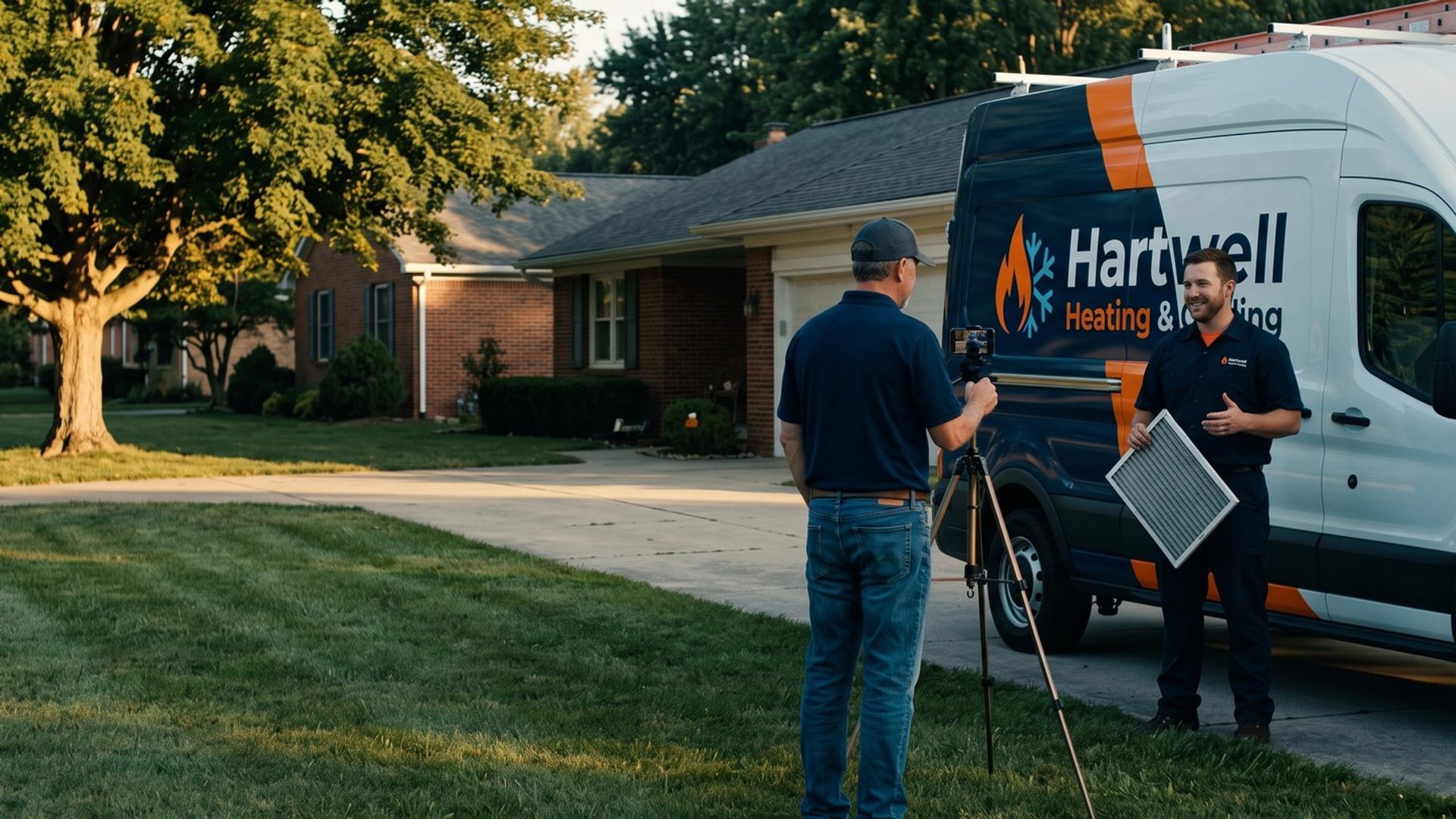
For a local business, highest quality doesn't mean a production company. In our experience, the videos that work are the plain ones: the owner explaining a common repair, a technician walking through a finished job, a before-and-after of a real yard or a real bathroom, shot vertically on a phone for Shorts. A homeowner choosing who to let into the house wants to see who will show up.
Ideas that suit the four kinds of local business in this guide:
- Emergency service: a technician explaining, in under a minute, the sign that a water heater or furnace is about to fail.
- Planned project: a time-lapse of one real roof, patio or kitchen from start to finish, with the crew in it.
- Recurring service: the same lawn, pool or house on the first visit and the tenth.
- Storefront and appointment: the owner walking through the front door, the waiting room and the people a new patient or member will meet.
The stock version works against that. A montage of anonymous workers in spotless uniforms could be any company in any city, and the viewer knows it. The same rule that applies to the photos in Chapter 10 applies here, with more at stake: real people, real trucks, real jobs.
Our plumbers guide shows what that looks like in one trade, with short plumbing videos built for YouTube.
That also makes it cheap. A phone, a tripod and an owner willing to talk for a minute are the whole production budget.
A Local Business Is Ready for Demand Gen When Its Search Ads Already Make Money and It Can Fund 10 Leads a Day.
Put together, Demand Gen has three conditions for a local account, and all three have to be true:
- Search already makes money. The Isolation and Exploration campaigns from Chapters 6 and 7 bring in booked work at a cost per lead the business can carry, by Chapter 3's math.
- Thirty or so real calls, bookings and forms come in every month, month after month. That's the same gate as Exploration and Performance Max, and it means the account has real conversions to train Demand Gen on.
- The budget covers Google's rule without starving Search. Ten times the cost per lead per day, on top of what the Search campaigns already spend.
Most single-location businesses won't meet the third condition, and that's a reasonable place to be. The same money usually does more in the campaigns the account already has: winning more of the top spots on the searches that book jobs, as Chapter 7 measured; covering a service or a town the account hasn't reached yet, as Chapters 4 and 5 laid out; or simply keeping the ads on during more of the hours someone answers the phone. The money that would go to Demand Gen does more work in Search, on the people already looking to hire. In our view, the ones that get there are usually multi-location brands, high-ticket trades with deep margins, and businesses that have outgrown their local search volume.
Next: Local Google Ads Use Your Business Profile's Phone Number.
The next chapter goes back to where most local customers find a business first: Google Maps and the Business Profile. Chapter 12 covers how the profile connects to the ads, and a mismatch we found at 4 of the 12 businesses we studied: the phone number on the profile appeared nowhere on the website.
Every chapter is on the guide's home page. If you'd rather have someone decide when the budget is ready, our Google Ads management adds Demand Gen to a local account only when Search is profitable and the budget can meet Google's rule.


