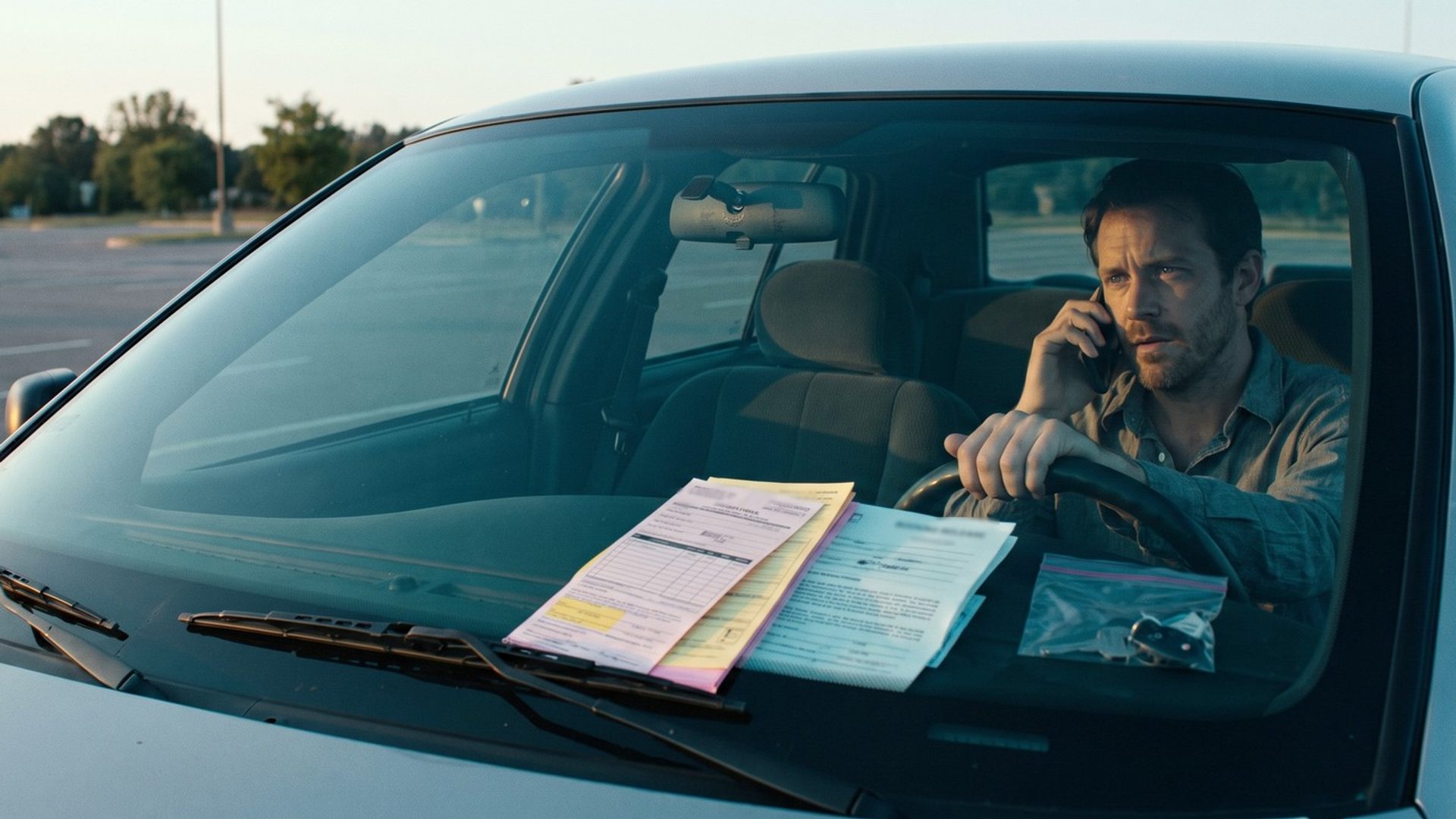
A man is arrested for DUI on a Friday night. Saturday morning, sitting in his car with a court date in his hand, he searches for a DUI lawyer and calls three of the firms whose ads came up. Two of those ads promised a free consultation.
The first firm sends him to voicemail. The second takes a message. The third calls back inside the hour, and a lawyer explains what happens next. He hires the third firm. Six months later he leaves a review, and it doesn't mention the free consultation. It says the firm always called him back.
Most law firm ads sell the first meeting. Clients judge the firm on every call after it. This chapter is about closing that gap: what the ads in a market actually say, what clients actually praise, and how to write headlines from the second list instead of the first.
One in Four Law Firm Ads Offers a Free Consultation. Not One Promises a Callback.
We read every law firm Search ad that ran in our example market, Las Vegas, between July 1 and the end of September, through Google's Ads Transparency Center. That came to 524 readable ads from 61 firms. Here's how often each message appeared:
- Free consultation or free case review: 134
- Years in business or experience: 106
- A phone number or "call now": 97
- Open 24 hours or 24/7: 57
- Trial or fight wording: 57
- No fee unless we win: 54
- Awards, "best" or "top-rated": 44
- A promise to call back or keep the client updated: 0
Thirty-eight of the 61 firms used the free consultation line. When a quarter of the ads say the same thing, the line stops separating anyone. It tells the searcher what every firm offers, which is the same as telling them nothing about yours.
The free consultation isn't wrong. It answers a real question, and Chapter 2 showed how often searchers ask what a lawyer costs. It just can't be the only thing the ad says, because it's the thing everyone's ad says.
In 984 Google Reviews, the Lawyer Who Called Back Gets the Praise. The One Who Didn't Gets the One-Star.
Now look at the other side. We read 984 Google reviews from 25 law firm listings in the same market, covering injury, family, criminal defense, immigration, bankruptcy and estate practices, and grouped what the clients wrote about.
Responsiveness dominated both sides of the ledger. It came up in 116 of the 284 complaints in the sample, more than any other complaint, and it was the most common kind of praise after general professionalism. The complaints aren't about one missed call. They're about weeks of silence after the client signs: "Been calling for 2 months leaving messages no call back."
The praise sounds like this:
- "Followed up with me throughout the entire case, never had to ask first"
- "always answered my calls no matter how small the issue was"
- "I never had to wait for return calls"
- "kept me informed," in some form, in 35 of the 984 reviews
The free consultation? Six of the 984 reviews mention it.
Legal review sites tell the same story in their own structure. Avvo tags client reviews by topic, and Responsiveness is one of the tags. Lawyers.com shows client ratings under four labels, and Responsiveness is one of them. The industry has already noticed what clients care about. Most of its ads haven't.
Do this for your own firm before you write a word of ad copy. Pull your Google reviews and your Avvo reviews, and count what clients praise. Copy the exact phrases. Your clients may praise something different, the way you explain fees or the fact that you took a case another firm turned down. Whatever it is, it's the thing your ads should say, because it's the thing your next client will care about too.
Your Clients Already Wrote Half Your Headlines. A DUI Ad Group Shows How.
Here's the order we use for ad copy, and it doesn't start with a blank page or an AI tool.
- The landing page. The page Chapter 4 built for each case type already holds the firm's own words and its proof: years practicing, results with the right disclaimers, the languages it speaks. The ad should sound like the page it opens.
- Client reviews. Their words, as above.
- The front desk. What do callers ask in the first minute? Cost, timing, whether a lawyer will actually call them back. Those questions are headlines.
- The competition. In the Ads Transparency Center, search a rival firm, open its advertiser page and read every ad it's running. If the name on the account is a marketing company, that's normal: many firms run their ads through an agency, and the account carries the agency's name. Google's Ad preview and diagnosis tool shows how the ads look on a real search without costing anyone a click. Paid tools such as Semrush or SpyFu add history if you have them, but they're optional.
- AI tools, last. Use them to tighten wording or check length. Never to start, because they write the ad every other firm already runs.
A law firm's ad on Google gets fifteen headline slots and four description slots. Headlines stop at 30 characters, descriptions at 90. Google shuffles them into different ads, search by search. For a DUI ad group, the 15 might split like this:
Case words: "DUI Lawyer," "DUI Defense Attorney," "Charged With a DUI?" and "Arrested for DUI Last Night?"
Client words: "Never Had to Ask First," "Always Answered My Calls," "Kept Me Informed," "Answered All My Questions," "Explained Everything Clearly" and "Upfront About Costs"
Proof and offer: "Free Consultation," "Payment Plans Available," "Call Back Within One Hour" and "Hablamos Español"
Brand: the firm's name
Descriptions: one on what happens next after an arrest, one built on what clients say in reviews, one on fees and payment plans, and one results disclaimer if any line in the ad mentions outcomes.
Every client-word headline is a claim the firm is now making to strangers, so it has to be true for the firm, not just for the one client who wrote it. "Upfront About Costs" runs only if the fee conversation really happens up front. "Payment Plans Available" runs only if the firm offers them. "Call Back Within One Hour" is the most valuable line on the list and the most dangerous, because it has to be true at 9 p.m. on a Saturday. If the intake desk can't keep it, don't print it. Chapter 15 is about the calls that slip.
The Only Line Worth Pinning at Launch Is a Results Disclaimer. Leave the Other Eighteen Free.
Google lets you pin a headline or description to a fixed position, so it always shows there. Google's own guidance is that pinning isn't recommended for most advertisers, because every pin cuts the combinations Google can test against a given search.
So launch unpinned. Let Google mix the 15 headlines and 4 descriptions, and wait for the data before deciding what wins. Once one headline proves itself over weeks of real traffic, or the firm already knows from years of experience that a line works, pinning it is a reasonable call.
Pinning can also lower Ad Strength, the "Poor" to "Excellent" grade Google puts on every ad. Ignore it for this decision. Ad Strength is a coaching grade, and Google keeps it out of the auction entirely. An ad graded "Poor" can still win the top spot. It's a grade on variety, not on results.
There's one pin worth making on day one. Google's own example of a good reason to pin is a disclaimer: write it as a description and pin it to Description 1, so every version of the ad shows it. For a law firm whose headlines mention past results, that's exactly the case. A line such as "Past results don't guarantee a similar outcome" pinned to Description 1 travels with every combination Google builds.
After launch, give the ad a few weeks, then check how each headline performs in the asset report. Replace the weakest lines with new ones from the same sources: another review phrase, another question from the front desk. Ad copy isn't written once. It gets edited by the people who click it.
A Settlement Number Without Context Reads Like a Promise. Bar Rules Treat It That Way.
Most of what a law firm can say in an ad is governed by its state's version of the ABA's Model Rules, and three of them touch ad copy directly.
The first is about results. The comment to Model Rule 7.1 warns that a truthful report of what a lawyer won for past clients can still mislead if it leads a reader to expect the same result without regard to the facts of their own case. A disclaimer can help. That's why a verdict amount in a headline needs company.
The second is about the word "specialist." Under Model Rule 7.2, a lawyer can't say they're certified as a specialist unless an approved or ABA-accredited organization certified them, and the ad names that organization. Saying a lawyer "specializes in" DUI defense is generally allowed under the Model Rule, but New York, Illinois and Texas handle that wording more strictly.
The third is simple: the ad has to name at least one lawyer or firm responsible for it. In our reading, the firm's name in a headline plus its web address in the ad covers it.
Reviews add one more layer. A client's words in your headline become your firm's claim. Choose the ones that describe how the firm works for everyone, such as returning calls and explaining fees, over the ones that describe one client's outcome.
States adopted these rules in different versions, and some add their own requirements on top. Chapter 14 goes through them state by state. This isn't legal advice; read your own state's rules before the ads go live.
A Great DUI Ad Shown Outside Your Bar License Buys Clients You Can't Take.
Good copy can still be shown to the wrong people. Google's default location setting reaches people outside the state where a firm's lawyers are licensed, and it isn't the only default that works against a law firm. Chapter 9 goes through the six settings to change before launch.
See every chapter on the guide home. Rather have the ads written from your own reviews for you? See our Google Ads management.