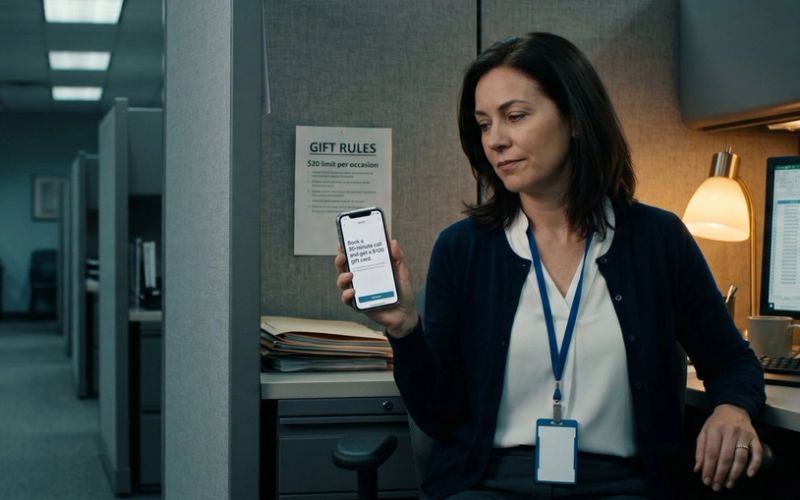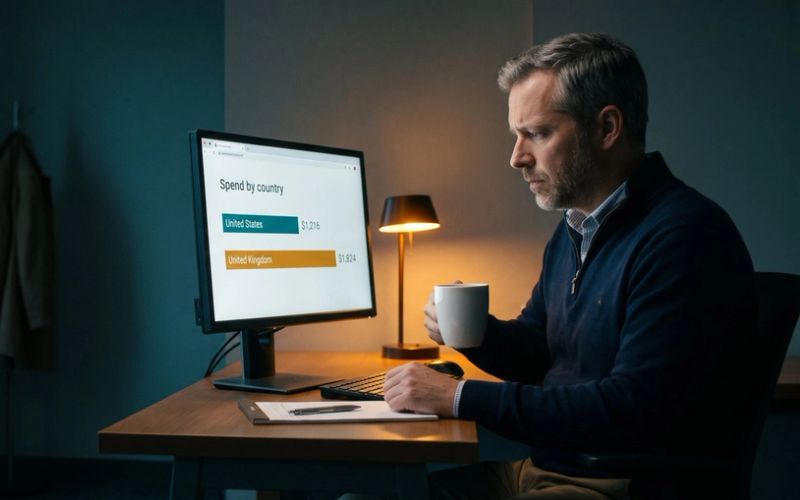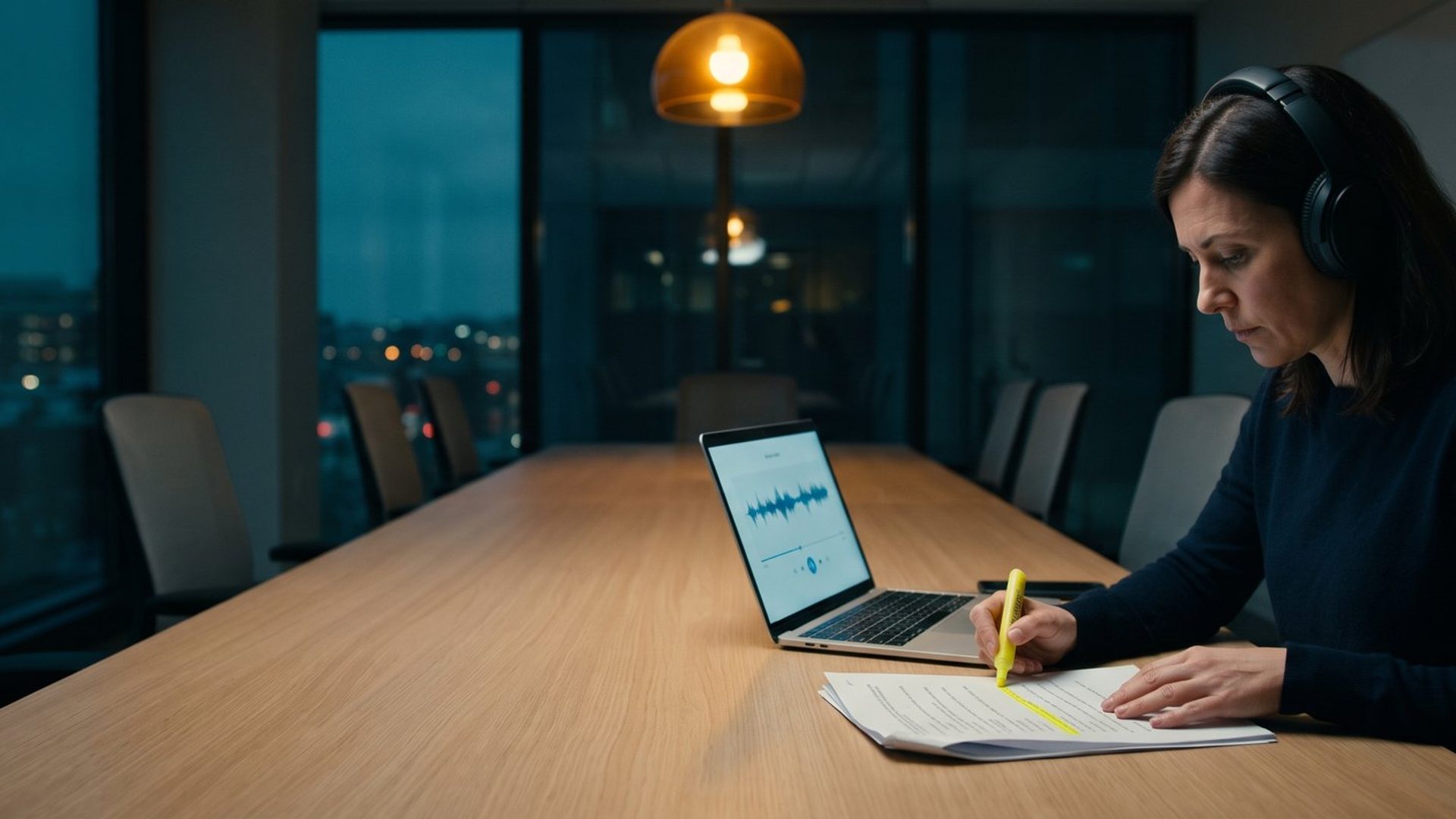
Picture an IT services company with twelve technicians and a LinkedIn budget of a few thousand dollars a month. The targeting is tight: office managers, operations directors and owners at companies with 20 to 200 employees within an hour's drive. The ad underneath it says "Smarter IT solutions for growing businesses."
Now picture the last sales call that company won. The buyer, an operations director at a dental group, opened with this: "Our office manager is also our IT person, and last Tuesday she spent the whole day on the phone with the printer company while two hygienists couldn't open patient charts."
One of those sentences cost money to write. The other one was free, and it is the better ad.
Most small B2B companies have the second kind of sentence sitting in their call recordings, their inboxes and their salespeople's heads. Then they open Campaign Manager, pay LinkedIn's prices to reach exactly the right person, and hand that person the first kind. This article is about closing that gap: where your buyers' words already live, how to pull them out without flattening them, and where each one goes in a LinkedIn ad.
Nobody Has Ever Called You to Streamline Their Operations
There are two languages in every B2B sale. One is the language a company uses to describe itself: solutions, streamlined, best-in-class, end-to-end, trusted partner. The other is the language a buyer uses to describe the problem: the printer, the lost Tuesday, the hygienists standing around, the office manager who never signed up to fix computers.
Buyers never use the first language. Nobody picks up the phone and says "We're looking to optimize our operational efficiency." They say what broke, what it cost, and who was upset about it. The company language is what's left after a marketing meeting sands all of that off.
On most channels that gap is expensive. On LinkedIn it is especially expensive, because LinkedIn is where you pay a premium for precision. You can name the job title, the company size and the region, and LinkedIn will put your ad in front of almost exactly those people. Then the ad says something a competitor could have said, and the precision you paid for buys you a fraction of a second of attention before the scroll continues.
We made the case in You Fixed the Targeting. The Ad Still Says Nothing. that the message is the part of a LinkedIn campaign competitors can't copy. That post is about what a specific ad sounds like. This one is about where the specific words come from, because the honest answer is that you shouldn't be inventing them at all.
Why a Buyer Called You This Week Is Your Best First Line
A sales call is the one place a buyer explains, unprompted and in their own words, why they are spending time on you. Tim Keen, who runs paid programs for high-ticket B2B companies, put it bluntly in a video this fall: the sales team has the messaging answers already, and they're "just sitting there waiting for you to ask because they talk to prospects all day." His process starts by pulling every call recording before writing a single ad.
You are listening for five things. Each one does a different job in an ad.
Why now. Something happened this month that didn't happen last month. A key person quit, an audit came back, a server went down, a big client complained. This is the most valuable thing on the call, because a stranger scrolling LinkedIn may be living through the same week. Why people buy your kind of service in general is something you already know. Why this buyer moved this month is the part you can't guess.
The before. How the buyer describes things going wrong, in concrete detail. "We find out the backup failed when we need the backup."
What they tried first. The spreadsheet, the nephew who's good with computers, the cheaper vendor. This tells you what you are actually competing with, and it is rarely the competitor you think.
What nearly held them back. The objection, in their words. "We tried an IT company before and they only showed up when something broke." This becomes the offer and the proof you lead with.
The after. How they describe success. Listen for the plain version. Buyers rarely say "increased uptime." They say "I want one number to call and somebody who picks up."
One rule while you listen: keep only what the buyer said. Gong, the call recording company, describes a workflow its own marketers use called "use their words": search the calls for a topic, then filter to the lines spoken by the prospect, not by its own salespeople. Your rep's pitch is already your marketing language. You want the other side of the conversation.
Ten Calls Beat Your Most Memorable Call
Every company has a sales call everyone remembers. The huge deal, the furious prospect, the one that nearly fell apart. It is the call people retell in meetings, and it is the worst one to write ads from, because it's memorable precisely for being unusual.
Jane Menyo, who runs customer and solutions marketing at Gong, described how her team avoids this in a podcast interview last year. Instead of collecting a few vivid examples from sales, they run the same set of about fifteen questions across every call with one type of buyer, so the answers can be counted. Her warning was specific: don't build your messaging around the one big lost deal the team is still upset about. The same caution came up on the Operators podcast, where one of the hosts, who runs the kitchen composter brand Lomi, said the customer his team had built its creative around turned out to be the loudest customer, not the typical one.
You don't need that kind of volume to do this. A small B2B company with ten to twenty recent sales conversations has enough to see what repeats. We made a version of this case for landing page headlines in Your Analytics Show Where People Leave. They Can't Tell You Why., and the rule carries straight over to ads. The test is simple: a phrase earns a place in an ad when you've heard the same idea from several different buyers who don't know each other. If the office manager doubling as the IT person shows up in six of fifteen calls, that is your audience telling you what to lead with. If it showed up once, in a great story, it is a great story. Save it for a case study.
No Recordings? Your Inbox and Your Lost Deals Kept the Words.
Plenty of small businesses don't record sales calls. The words are still there, just scattered.
The first email. The message a buyer sent before you ever spoke is the purest source you have. Nobody coached them, and they had to explain the problem to a stranger in a few sentences. That is exactly the job your ad has.
Your notes. Whoever runs the sales conversations usually writes down the reason the prospect called. Ask them to start writing it in quotation marks, word for word, instead of summarizing.
Questions about the proposal. The questions buyers ask after they see a price tell you what they are worried about. Each one is an objection you can answer in an ad before anyone asks.
Lost deals. When a prospect goes with someone else, ask why, and write down the answer exactly. Our piece on the questions your FAQ should be answering calls lost-deal notes the purest source of objections you have, and the same is true here.
Reviews. If you have reviews on Google or an industry review site, the before-and-after language is often already written out for you.
If you decide to start recording, do it properly. Federal law allows a call to be recorded with one person's consent, but around a dozen states, including California, Florida, Illinois, Pennsylvania and Washington, require everyone on the call to agree. Since you rarely know where a prospect is sitting, the safe habit is to say it at the start: "Mind if I record this so I don't have to take notes?" Most video meeting tools announce the recording on screen anyway. This is general information, not legal advice; if your sales calls cross into regulated territory, ask your attorney.
AI Can Sort Your Calls. Don't Let It Rewrite Them.
Twenty transcripts is too much to read closely every quarter, so this is a job worth handing to an AI tool. It's also where most people quietly ruin the result.
Ask an AI to "summarize these calls and tell me the key pain points" and it will hand you back a tidy list: "Customers value reliability and responsiveness." That sentence is true, and it is exactly the language you were trying to escape. The tool has done what it is built to do, which is to average a lot of specific words into a smooth general one. Keen's warning about his own process was direct: build the customer language database, and make sure "you don't let the AI rewrite it in AI language. Keep it in human language." Menyo, from the enterprise side, said the same thing about using generic AI for messaging: you end up mediocre, because it's "just pulling from existing thought."
The fix is to ask for a different job. Not a summary. A sort. A workable prompt looks like this:
"Below are transcripts of sales calls. Only use lines spoken by the prospect, not by our salesperson. For each one, pull out direct quotes that describe: why they reached out now, what was going wrong before, what they had tried, what almost stopped them, and what success looks like to them. Quote word for word. Do not paraphrase or clean up the wording. Label each quote with the call it came from. Then group quotes that express the same idea and count how many different calls each idea appeared in."
That gives you a sheet you can check against the source, with the counting already done. The AI does the tedious part, finding and grouping, and you keep the part that matters, which is the buyer's exact wording. Before any quote goes into an ad, open the transcript it came from and read the line in context. It takes a minute, and it is the only way to be sure the tool didn't tidy it up.
Buyers Repeat Your Own Pitch Back to You. Cross Those Words Out.
One trap catches everyone who does this for the first time. You read through the quotes and find a buyer saying your tagline back to you. "We need a true technology partner," they say, and it feels like confirmation.
It isn't. If you have been running ads, talking at events or sending the same proposal for years, some buyers will absorb your language and hand it back. On the same Operators episode, the Lomi host described his team pointing to reviews and comments where customers kept calling the product "magic." It looked like customer language. Then he reminded them that the brand's first viral ad was built on that exact word, and the video had passed 100 million views. The customers were echoing the marketing.
So cross out any phrase that appears in your own website, ads or sales deck. What's left is the language you didn't teach them.
Then look for the specific word nobody in your market is using. B2B copywriter Will Hoekenga described this on the Exit Five podcast while explaining a page he wrote for Toast, the restaurant software company. Talking to cafe owners, he kept hearing the word "workarounds," the daily hacks they used to get around a system that didn't quite work. Competitors were all promising variations of "increase your revenue." The page that led with trading workarounds for a system that just works came straight from the interviews. When everyone does the same research, he pointed out, everyone arrives at the same headline. The word that separates you is usually one your buyers say and your competitors haven't noticed.
Six Customer Phrases in One Ad Bury All Six
Once you have a good list, the temptation is to use all of it. The printer story, the one-number-to-call line, the backup that failed, the "they only showed up when something broke" objection, all in one ad, because each one is true and each one landed on a call.
Direct-response copywriters have a name for the alternative. In Great Leads, Michael Masterson and John Forde call it the Rule of One: one big idea per piece of copy, with everything else in service of it. Masterson spent decades building the customer acquisition operation at the publisher Agora, and his point is that the winners are almost never the ones that try to say everything. Stuffing every true thing into one message gives you a little of everything and nothing a reader remembers.
On LinkedIn the case for one idea per ad is even stronger, for a reason that has nothing to do with copywriting theory. A small account can't learn much from any single ad. As we covered in our piece on testing LinkedIn ads on a small budget, most small accounts never get the volume to declare a winner between two versions. If six ideas share one ad, even a clear result tells you nothing about which idea worked. If each ad carries one idea, a month of rotating them tells you something real, even at small volume.
So build a short bench. Take your three or four strongest ideas, the ones with the highest counts, and give each its own ad. Leave the rest on the sheet for next quarter.
The Buyer's Phrase Belongs in the First 150 Characters
Your list is organized, you have three or four ideas with real counts behind them, and each idea gets its own ad. Here is where the words go.
The first line of the ad. LinkedIn shows roughly the first 150 characters of the text above your image before it collapses the rest behind "see more." We dug into those numbers in Your LinkedIn Ad Was Designed on a Desktop. It Is Being Read on a Phone., and they are the reason the buyer's phrase has to come first. "Is your office manager also your IT person?" fits with room to spare. "At Acme IT, we've spent fifteen years delivering proactive solutions" uses the space up on the part nobody came for.
A founder or salesperson's post. Some of the strongest material on your sheet is a story, and stories read better from a person than from a logo. A post from your founder that opens with "A dental group's operations director told me last month that..." and retells the problem in the buyer's words can run as a Thought Leader Ad, which promotes a real person's post rather than a company page ad. We covered how those work in Your Best LinkedIn Ad Doesn't Come From Your Company Page. Get the buyer's permission before you quote anything identifiable, and leave out names unless they say yes.
The lead form offer. Your objections column is your offer list. If buyers kept saying "we tried an IT company and they only showed up when something broke," the offer isn't a demo. It's something like a one-page checklist of what a good IT provider does in a month when nothing is broken. That's the logic in Nobody on LinkedIn Wants a Demo. Offer Them Something Smaller.: the offer that works is the one built around the step where buyers get stuck.
The opening message of a Conversation Ad. A message that lands in someone's LinkedIn inbox has to sound like a person in its first line, or it reads as spam. The "why now" quotes are made for this. A message that opens on the situation the buyer is in, rather than on your company name, gets read. More on the format in Most LinkedIn Ads Shout From the Feed. This One Knocks on the Door.
Your Sales Team Will Hear Which Ad Worked Before the Dashboard Does
On a small LinkedIn account, the dashboard is slow to tell you anything. Clicks come in by the dozen, not the thousand, and a good ad and a bad one can look identical for weeks. So add two signals the dashboard doesn't have.
The first is the response on the ad itself. Comments on a Thought Leader post, replies to a Conversation Ad, and how many people who open the lead form finish it all react faster than a cost-per-lead figure, and they tell you which phrase is resonating. A post that draws "this is exactly us" in the comments has done its job, whatever the click-through rate says.
The second is the one most companies never use: listen for the ad on your sales calls. When a new prospect says "your post about the office manager doing IT is why I reached out," or starts describing the problem in the words of your ad, that ad is working. It is the same loop you started with, running in the other direction. Ask whoever takes the calls to note it when it happens.
Then run the sort again every quarter. Buyers' reasons shift. A new regulation, a busy season, a local competitor closing its doors. Twenty fresh calls and the same prompt will tell you whether your best first line is still the right one.
None of this needs a copywriter or a new tool. It needs you to listen to conversations you've already had, keep the buyer's words exactly as they said them, and give each idea its own ad. We do this for the B2B companies whose LinkedIn advertising we run, and it is usually the first thing we ask for, before the targeting and before a dollar goes out. If you'd rather do it yourself, the five columns above are the whole method, and your next sales call is a good place to start.