
An owner fills in the rental analysis form on a Monday night. Two days later a tenant uses the same site to report a leaking water heater, and on Friday someone who saw a yard sign asks whether the three-bedroom on Elm is still available. If the site counts every form as a conversion, Google Ads now thinks it found three new clients. It found one, and it will spend next week looking for more people like all three.
Your website serves owners, tenants, applicants and vendors at once, and most of them never searched for a manager. This chapter separates the owner lead from everything else, then sends the result that pays you, the signed management agreement, back to Google. Leases you fill go back the same way, separately.
A Contact Form Counts a Tenant's Complaint as an Owner Lead Unless It Asks Who's Writing
Tracking is how Google's bidding learns who you want.
The examples in this guide come from a dozen property companies that bought Search ads in the last 90 days around Orlando, our one example market: four residential managers, four HOA and condo firms and four apartment communities. Expect different figures in your own city; the setup doesn't change.
On all eight manager sites, tenant or resident tasks sit in the top navigation or the header bar: a tenant portal, a pay-rent button, a maintenance request link. Only two of the eight manager sites have a contact form that asks who is writing. Best Orlando Property Management opens its form with a required "I am a..." menu (new owner, existing owner, new tenant, existing tenant, vendor). Blue Sky Property Management asks whether you are "in need of property management services," a prospective tenant, a current tenant or something else.
That one menu is what makes the form trackable. When the answer is "new owner," the submission counts as a lead. When it's a tenant or vendor, it doesn't. Wire it so the owner choice alone fires the conversion, either by sending owners to their own thank-you page or with a Tag Manager trigger keyed to that menu.
Owner Phone Calls Are Leads Google Can Count Without Any Extra Software
Google Ads can count both calls placed straight from the ad and calls placed after a visit, where a Google forwarding number temporarily replaces the number on your pages for anyone who came from an ad. No paid tool is involved.
You decide how many seconds a call must last before Google credits it; our setting for property managers is 30. The owner who rings at 7 p.m., gets voicemail and leaves their address is a real prospect; a higher cutoff would discard that message. Google can also listen for you: in the US and Canada, call recording is now on by default for ad calls, and Google uses it to judge which calls were real leads, falling back to call length when there's no recording. The two exceptions are accounts that already opted out and businesses Google files under healthcare or financial services; a property manager fits neither.
CallRail and CallTrackingMetrics are paid call trackers worth knowing about, not a requirement. None of the twelve sites showed either one, or Invoca, in its code.
Property sites break call tracking in two ways we saw. One residential manager showed a different header number depending on the page, and three of the twelve companies listed a number on Google that appears nowhere on the site pages we checked. A call to a number Google doesn't know about never reaches your report. Track every number you publish, or drop it.
Set each lead action to count "One conversion" per click, so an owner who sends the form twice is one lead, and two calls from one click count as one call. Website actions default to counting every conversion, so change them by hand.
A Rental Analysis Request Is the Owner Lead. A Tour Booking Is the Renter Lead.
Google lets you mark each conversion as primary, which bidding learns from, or secondary, which you see in reports only. A property management account needs two sets.
Owner campaign. The primary actions are the rental analysis or management proposal request (the owner answer only) and owner calls over 30 seconds. All four residential managers in our set offer a rental analysis, and their owner forms run from 4 fields to 24. Email link clicks and owner-guide downloads can be secondary, so you see them without teaching Google that a download is a client.
Leasing campaign. The primary actions are a booked tour and leasing-office calls. Applications are secondary at first, because they arrive later and some are never finished. One of our four apartment communities still takes applications as a PDF download, which no tag can count.
Tour schedulers and applications are where tracking breaks: they often run on the software vendor's domain or inside an iframe, so the visitor leaves your site at the moment they convert. Cross-domain measurement in the Google tag or GA4 can carry the visit across when you control both sites; otherwise you need the vendor to push the event. Funnel, a leasing platform, documents a Tag Manager event from its forms; most vendors we checked publish nothing on it. Test yours by booking a tour from a tagged link and checking that the conversion shows up.
Conversion windows stretch to 90 days, so an owner who decides in week three still credits the ad. Keep data-driven attribution, the default; Google has dropped the old first-click and linear models.
Half the Property Advertisers We Checked Showed No Google Ads Conversion Tag
All twelve example companies were buying Search clicks when we read their page source and public Tag Manager containers. A Google Ads tag turned up on eight, and a conversion tag on six. Some tags load out of sight of a check like ours, so read those counts as a floor rather than a judgment on any one firm. Either way, an account with nothing counting conversions is bidding blind.
The setup we use on a property management account:
- Put the Google tag on the site through Tag Manager. If the site already carries both, Google's advice is to merge them, and its preference is Tag Manager.
- Switch on enhanced conversions, a single toggle covering website and lead uploads, after accepting Google's data processing terms.
- Then run each visitor's path yourself while Tag Assistant watches: an owner request, a tenant message, a test call. You want one conversion for the owner, none for the tenant, and one for the call after 30 seconds.
- Strip out everything that isn't an owner or renter lead. A tenant portal login or a "pay rent" click marked as a conversion tells Google your residents are new business. Demote or delete those before a single bid leans on them.
The Signed Management Agreement Is the Conversion That Pays the Bills
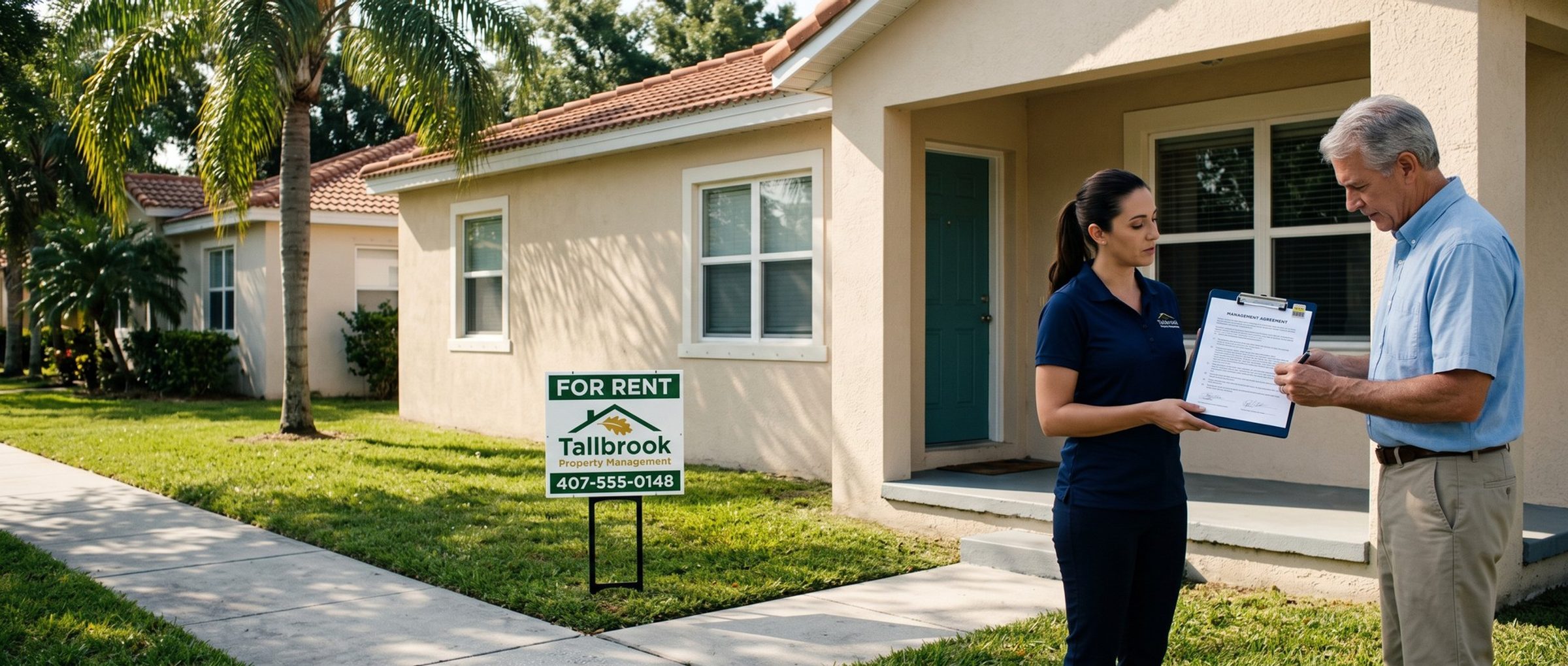
A rental analysis request is a maybe. The owner might be comparing four firms or checking what their house would rent for. The signed management agreement is the sale.
Give it a value. Using published averages, a manager charging the average advertised fee of 8.49% on a typical US rent of $1,962 collects about $2,000 a year in fees, plus a placement fee that averages 70.6% of a month's rent, about $1,385. That's roughly $3,400 in the first year of one door. Use your own fees and rents; what matters is that the number travels with the conversion. Chapter 3 works out what a door is worth over its full life.
Google's recommended way to send a sale back is enhanced conversions for leads. The rental analysis form passes Google a scrambled version of the owner's email or phone when it's submitted. Weeks later, the signed agreement goes up carrying that same contact detail, which is how Google ties the signature to the click that started it. Importing by click ID alone still works, though Google now labels it legacy. Watch the clock: an upload matched by email or phone has to land within 63 days of the click, and one matched by click ID within 90. An owner who signs in week ten is past the 63-day limit, and only a click-ID upload still counts, so store the click ID too and upload as soon as each agreement is signed, ideally daily.
Here's the catch. None of the property management platforms we checked (AppFolio, Buildium, Rentvine, Rent Manager, LeadSimple and others) documents a do-it-yourself Google Ads conversion import; Yardi offers one only inside its own managed ad service. AppFolio's help center sits behind a client login, so absence there means "not public," not "not possible." HubSpot, which some managers use for owner leads, records the Google ad click ID on the contact automatically and connects to Google Ads natively, sending lifecycle stages back as conversions. Without a connector, keep it simple: store the email, phone and click ID with each owner lead, and when an agreement is signed, add a row to the upload sheet. Buildium's documented lease-created webhook is one trigger a developer could use to automate that step.
Housing doesn't block any of this. Google's customer data policy forbids uploading conversions tied to its sensitive categories, such as health, a criminal record or negative financial status, and housing isn't on that list. Owners and leases can go back. What can't go back is anything that describes a person in a sensitive way: never name a conversion "failed screening" or upload a denied application.
A Signed Lease Is Its Own Conversion in Google Ads, Never Lumped In With Owner Leads
A company that fills units runs a leasing campaign next to the owner campaign, and the two must never share a goal. Google lets each campaign carry its own conversion goals in place of the account's defaults, so the owner campaign bids only on owner leads and the leasing campaign only on tours, calls and signed leases. Otherwise a busy leasing month teaches the owner campaign that renters are what you want.
The signed lease goes back the same way the signed agreement does: as its own conversion action, with the month's rent or the lease value as its value, matched by email or phone. Funnel's developer documentation shows the Google click ID captured "with the lead on creation." Most other leasing tools we checked document no lease upload. If your leasing software can't send it, use the same sheet.
Google treats rental ads as housing, which limits their targeting; Chapters 9 and 14 cover the settings and the fair housing rules.
Google Bids Smarter on Rental Analysis Requests Than on Rare Signed Agreements
Google's lead-generation guidance says to bid toward a single goal that logged a minimum of 15 conversions over the past 30 days, and preferably one that happens inside a week of the click. Signed management agreements fail both tests for almost every company: they're rare, and they come weeks after the click.
So the owner campaign bids on the rental analysis request and qualified owner calls, and the signed agreement stays a secondary conversion you report on, with its value. Owner keywords open in Isolation (exact match, manual bids, our label), and the weekly count of rental analysis requests is its report card. Exploration, our broad-match follow-on where Google steers bids toward a cost-per-lead target, stays parked until owner leads reach about 30 a month. Most single-office managers take months to get there (Chapter 7 covers the meantime); a busy community's leasing campaign may get there sooner on tours.
Next: Where an Owner's Search Starts
Chapter 2 maps what owners search at each stage, from "should I hire a property manager" to "property management near me," and why the first dollars go to the owners already looking for one. See also how local businesses count calls with forwarding numbers and sending won deals back from a B2B CRM. Every chapter is listed on the Google Ads for Property Management guide home. If you'd rather have someone run the account, see how our Google Ads management works.


