
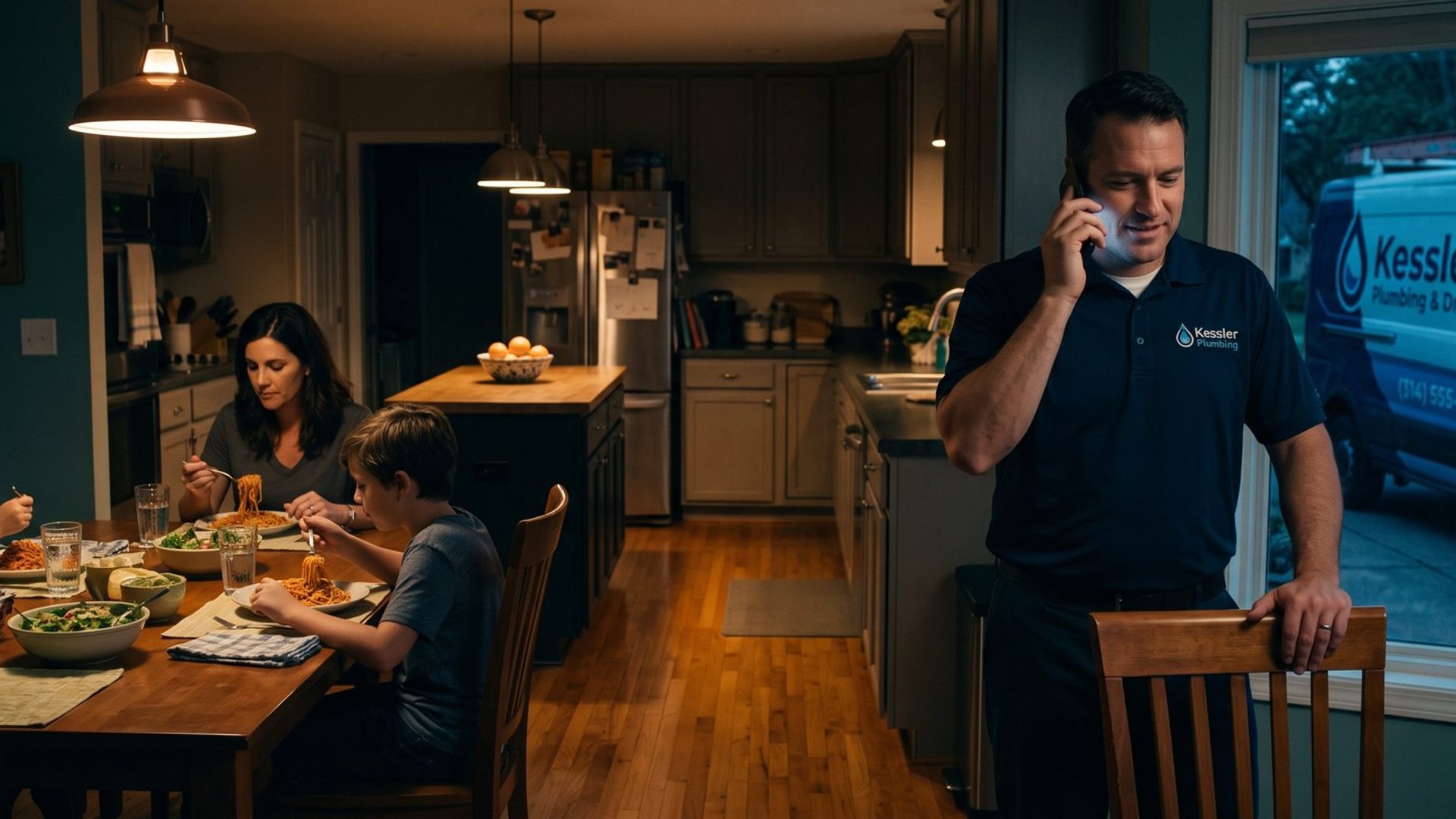
Fifteen chapters have worked on one job, making a local business's phone ring: counting calls in Chapter 1, choosing the searches that bring them in Chapter 6, bidding for them in Chapter 7. This last bonus chapter is about the other end of the line.
A call from an ad has already been paid for by the time the phone rings. If nobody answers, the money is gone and the customer calls the next business on the page. No setting in Google Ads fixes that. The fix is on the business's side: knowing how many calls go unanswered, having a backup when the office can't pick up, and making sure whoever answers is counted properly.
This chapter covers how Google charges for a call, what the published numbers and our own review sample say about missed calls, the backup chain we recommend, how to test an answering service before ads send it customers, and how the answering setup changes the call length Google should count.
Google Charges the Same for a Tap on Your Call Button as a Click to Your Site, Answered or Not.
On a Search ad, the phone number appears as a call asset, the line under the ad with a tap-to-call button on phones. Google's help page on call assets says a tap on that button is priced like a tap on the headline, at the ordinary cost per click. Its page on forwarding numbers puts it more plainly: "Advertisers are only charged when the Google forwarding number shown in the ad is clicked on."
So the charge happens at the tap. Whether the phone then rings out, goes to a full voicemail box or reaches a person makes no difference to the bill. There's one free path: Google says it doesn't charge advertisers for people who dial the forwarding number by hand instead of tapping it.
That's the opposite of how Local Services Ads work. As Chapter 14 explained, those bill by the lead, and an unanswered call can count as a lead if the caller holds on past 20 seconds during business hours. On ordinary Search ads, the tap itself is the charge, so every unanswered call is a click paid for with nothing to show.
Chapter 9 set the ad schedule to the hours someone answers. This chapter is about making sure someone actually does during those hours.
Industry Reports Disagree on How Many Calls Local Businesses Miss. Your Own Call Log Shows How Many You Missed.
Two call-tracking companies publish answer rates from their own customers, and they don't line up. Invoca's 2026 home services report found a person picked up 52% of calls. A 2025 CallRail benchmark put the missed-call rate for home services at 14%, and for health care at 32%.
Part of the gap is what's counted. Invoca's 52% includes misdials and quick hang-ups; for calls over 15 seconds, its answer rate is 65%. CallRail's report covers its small-business customers and doesn't say how it defines a missed call. Each is an average across one company's customers, not your business.
The useful number is the business's own. With call tracking set up as in Chapter 1, the call details report shows every call from an ad, how long it lasted and whether it connected. A month of that data answers the question better than any benchmark:
- How many ad calls came in during the scheduled hours.
- How many were shorter than a real conversation, often a sign nobody picked up.
- What times of day those short calls cluster in.
We Read 11 Reviews About Calling a Plumber, HVAC Company or Electrician. Ten Were Complaints.
Customers notice missed calls, and some of them say so in public. We read all 394 Google reviews with text for the 12 St. Louis businesses in our sample and coded every one that mentioned calling, callbacks, texts or getting through to the office. There were 68, with 37 complaints and 31 praise.
The split by business type tells the real story:
- Emergency trades (plumber, HVAC, electrician): 10 complaints, 1 praise.
- Storefronts (dentist, auto repair, gym): 13 complaints, 4 praise.
- Recurring services (pest control, cleaning, lawn care): 11 complaints, 10 praise.
- Planned projects (roofer, remodeler, landscaper): 3 complaints, 16 praise.
The complaints read the same way across trades. "No one called me for 12 days, so I called them back." "He never called me back." "I tried to call and the voicemail box was full." "I called them 4x before they would answer."
One caution: our review pull included each business's lowest-rated reviews on purpose, so these counts show what goes wrong when it goes wrong, not how often. Still, the pattern fits the trades. A planned project gives the customer time to wait for a callback. A burst pipe doesn't.
A Missed Call Doesn't Need a Bigger Budget. It Needs a Second Phone That Rings.
When calls go unanswered, raising the budget buys more unanswered calls. One practitioner we studied lays out the fix, and others back parts of it. It's about the phone system, not the ads:
- Ring everyone at once. The office phones should all ring together, not one after another. He's blunt that ringing one person, then the next, is how calls get lost.
- Then a backup. After three rings, the call rolls to a backup person.
- Then an answering service. If the backup doesn't pick up, the call goes to a live answering service that takes the details and the urgency. Prices practitioners quoted ran from under $100 a month to about $180 a month.
- Then a text back. Many CRMs and phone systems can send an automatic text within a minute of a missed call ("Sorry we missed you, we'll call right back"), which keeps the caller from moving straight to the next business.
- Then a fast callback. His target was a callback within five minutes for anything missed.
He put the case for a person over a recording simply: "an average human who picks up beats an excellent voicemail every single time because the voicemail books zero."
An AI Answering Service Picks Up Every Call, but Only a Test Call Shows What It Tells Your Customers.
AI answering services, sometimes sold as AI receptionists, promise the same backup for less: a voice system that answers every call, any hour, and books or takes a message. Owners are clearly shopping for them: in Keyword Planner, "ai answering service" draws about 4,400 US searches a month, ahead of plain "answering service."
We don't have evidence yet that they work better or worse than a live service for local businesses. The one practitioner in our research who tested an AI receptionist with a client said "we didn't end up loving the software we tested with, so we kind of shut it down." He listed it third, after a live service and an offshore employee, and called it the cheapest.
Whatever answers the phone, the test is the same, and it costs nothing: call your own number from a phone the business doesn't recognize, during the hours the ads run. Then call again after hours. Listen for whether the greeting names the business, whether it asks what the caller needs and where they are, and whether the message reaches someone who calls back. One practitioner's advice to owners was blunt: "call your own freaking phone again."
Google's call recording adds a second check. With recording on, which Google now sets by default in the United States and Canada except for health care and financial businesses and accounts that turned it off, calls through its forwarding numbers are recorded, callers hear a short automated message at the start, and Google's AI decides which calls count as qualified conversions. Listening to five or ten recordings a week, as one practitioner recommends, shows what the answering service actually says to the customers the ads paid for. Calls from location assets, the ads that show your address, aren't recorded.
A One-Minute Call to Your Answering Service Is Still a Lead. A Two-Minute Minimum in Google Ads Throws It Out.
Chapter 1 set the minimum call length, the length a call has to reach before Google Ads counts it as a conversion, by how long a real booking call takes. Who answers changes that number.
One practitioner times the client's own answering path before setting it. He has seen some answering services finish in about 60 seconds, while some businesses' own salespeople spend "3, four, five minutes" on a call. A service that takes the name, number and problem can finish a good lead in about a minute.
With call recording on, Google's AI judges recorded calls instead of the clock. Where Google can't record a call, it counts the call only if it passes your minimum length. That covers health care and financial businesses, accounts that turned recording off, and calls from location assets. There, a minimum set for in-house sales calls, say two minutes, quietly drops every lead an answering service takes, and Smart Bidding stops paying for the hours and searches that brought them in.
The fix for those calls is to set the minimum to fit the shorter call, then check the call details report to make sure it's counting what it should.
A Local Google Ads Account Only Works if Someone Answers the Calls It Buys.
This guide started with counting calls because Google Ads learns from what it's told. Every chapter since has built on that: the searches worth paying for, the bids, the ads and pages, the settings, the profile, Performance Max, AI Max, Local Services Ads and multiple locations.
All of it ends at the same place, a phone ringing at a local business. When someone answers, the call becomes a booked job, the job goes back to Google Ads as Chapter 1 set up, and the account learns to find more customers like that one. When nobody answers, the click is still paid for, the customer calls someone else, and the account learns nothing.
Every chapter is on the guide's home page. If you'd rather have someone watch the call reports and tell you when calls are slipping through, our Google Ads management checks every account's missed and short calls along with the ad numbers.


