You did the best work of your career for a regional distributor last spring. Their order errors dropped, their warehouse team stopped working Saturdays, and your contact there told you, more than once, that hiring you was the smartest call she made all year. So you asked if you could write it up. She said she'd love to. Then she said she'd need to run it past a couple of people.
That was eleven weeks ago. The draft is sitting in someone's inbox in their legal department, and every follow-up gets a friendly "still with legal, sorry!"
If that story sounds familiar, you are in the majority. Most B2B firms are sitting on their best proof and can't use it, because the customer who would have to sign off on it has every reason to say nothing. The good news is that a stuck case study is rarely a dead one. And the interview you would have done for it is worth more than the finished PDF anyway, whether or not anybody ever approves it.
This piece covers why clients say no, how to ask so they say yes, what to do with everything they told you when the answer is still no, and how to publish an anonymous story that people actually believe.
A Client's No to Your Case Study Isn't About You. It's About Losing Control of the Story.
When a client turns down a case study, it feels like a verdict on the work. It almost never is. Joel Klettke, who has spent years writing case studies for agencies and software companies, sorts the refusals he sees into three buckets, and once you know them you can design around every one.
Fear. The client is worried about what gets disclosed and how they will look. Will you mention the vendor they fired? Will a competitor read this and learn how their operation works? Will the "before" section make their team look incompetent? This fear lives most strongly in the legal department, and it is not irrational. A lawyer who approves a case study gains nothing. A lawyer who approves one that leaks something sensitive has a very bad week.
Hassle. A case study sounds like a project. Interviews, drafts, rounds of edits, sign-offs from three departments. Your contact is busy, and "help a vendor with their marketing" is not on anyone's performance review. Saying no, or saying "let me check" and then letting it drift, is the easiest path.
Nothing in it for them. You get a sales asset. They get homework. Even clients who genuinely like you will notice that the trade is one-sided.
The host of the Pipe Dream podcast, who spent years at a technology vendor serving major sports media companies, found the same thing when his team finally sat down with the legal departments that kept blocking them, instead of just reading their rejection emails. The lawyers were not afraid of the story being told. They were afraid of not controlling how it was told, and they were buried in review requests already.
That reframe matters, because it tells you what to fix. You will never fix "they didn't like our work." You can absolutely fix fear, hassle and a lopsided trade.
The Best Time to Ask for a Case Study Is Before You Sign the Contract.
Most firms ask for a case study at the end of a project, when the work is done and the leverage is gone. By then you are asking a favor of a busy person with nothing left to gain from you.
There is a better moment, and it comes much earlier. Patricia Bautista, speaking on Testimonial Hero's channel about getting customer stories approved, points out that some of the best customer stories she has seen were agreed to during a negotiation, when pricing or a renewal was on the table and the client was already thinking about what each side was giving. You don't have to trade a discount for it. You just have to put the question on the table while there is a conversation happening.
For a small B2B firm this is the cheapest fix in this whole article, because you probably write your own contracts. Add a short clause that says, in plain language, that you may ask the client to take part in a customer story once there are results to share, that nothing will be published without their written approval, and that they can decline. It commits them to nothing. What it does is make the question expected rather than awkward, and it puts the approval right in writing from day one, which is exactly what their legal team will want to see later.
Then ask when there is something real to point to, not when the project ends. If your engagement runs a year and the numbers are clearly moving at month five, that is the moment. A customer story is a snapshot, and you can always come back and update it. Waiting for the perfect ending is how a lot of good stories never get told.
"Nothing Goes Live Without Your Approval" Is the Sentence That Gets the Yes.
How you ask matters more than when. A vague "would you be open to a case study sometime?" invites a vague "let me check," and "let me check" is where these go to die.
A good ask answers all three objections before the client has to raise them:
Be specific about what you want to say. Name the project, the result and the numbers you hope to include. "We'd love to share how the new picking process cut your order errors, and include the before-and-after error rate if you're comfortable with that." A specific ask is much easier to approve than an open-ended one, because the client can picture exactly what is going out with their name on it.
Hand them control in writing. Say plainly that they will see every word before anything is published, and that they can change or cut anything. Klettke's advice is to say this in the very first message, not after they hesitate. It speaks directly to the fear, and the fear is usually the real objection.
Put a number on the time. "About an hour of your time in total: a 30-minute interview and a draft to review." Then keep that promise. A one-page sheet that shows the steps (interview, draft within a week, one review, done) turns an open-ended favor into a small, bounded task.
Win more than one person. Bautista's other point is to treat the case study like a sale. If your only ally is your day-to-day contact and she has no pull with legal, the story is stuck with her. Who else at the client was happy with the work? Is there someone senior who could tell the legal team this one is fine? One well-placed sponsor can unstick a draft that a dozen polite follow-ups never will.
Give them something, and say so. Sometimes thanks is enough. Sometimes it is not, and a few extra hours of work, a discount or a gift is a fair trade for their time. If you do offer something, disclose it in the published story. The FTC's endorsement guides, revised in 2023, treat free or discounted products and services as the kind of connection readers should be told about when it could affect how much weight they give the praise. One sentence saying the client received a discount for taking part covers it, and it costs you nothing in credibility.
The Client Interview Pays Off Even If the Case Study Never Ships.
Here is the part most firms miss. They treat the interview as the first step of making a document, so when the document gets blocked, they think the whole effort was wasted.
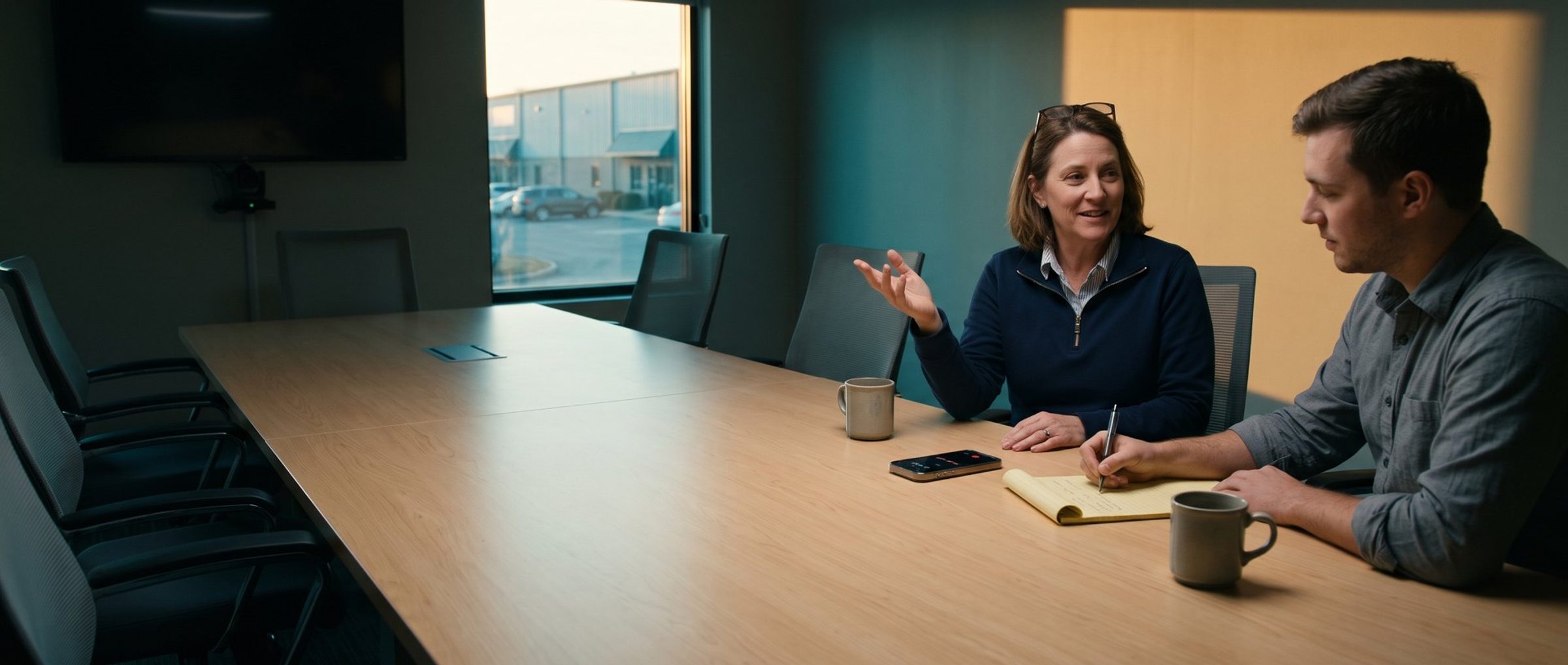
Marshele Scherrer, a B2B marketer with 14 years in the field, makes the case for splitting these into two jobs. Publishing a customer is risky and needs permission. Listening to one is not risky at all. Your client does not owe you a public endorsement. But almost any happy client will give you 30 minutes to talk about how the work went, especially when you tell them up front that the conversation is for your own learning and nothing will be published without their say-so.
And that conversation gives you something you cannot get anywhere else. Sales calls are about closing. Support calls are about whatever broke this week. Neither one captures the story from start to finish: what was going wrong before you showed up, why they finally decided to do something about it, who else they looked at, what almost stopped them from signing, and what changed afterward. That is exactly what your next prospect wants to know.
Ask questions that get at the decision, not the compliments:
- What was happening in the business that made you start looking for help?
- What else did you consider, including doing nothing or doing it yourselves?
- What nearly stopped you from going ahead?
- Who else inside the company had to be convinced, and what did they ask?
- What is different now, and how would you describe it to a peer at another company?
Record it (with permission) and get a transcript. Then read it for the words they use. Clients almost never describe your work the way you do. You say "warehouse process optimization." They say "my guys stopped working Saturdays." Their version is the one that sells.
Your Client Describes Your Work Better Than Your Ad Copy Does. You Don't Need Their Name to Use It.
Once you have that transcript, you have a stack of material you can put to work this week, with no approval chain at all, as long as you use the language and not the identity.
In your ads. If three clients independently said some version of "we were drowning in spreadsheets," that phrase belongs in your LinkedIn ad and your Google Ads headlines. You are not quoting anyone or claiming an endorsement. You are describing the problem in the words your buyers actually use, which is what makes a stranger stop scrolling and think, that's us. We have written about mining your happiest customers for ad copy in Your Best Ad Is Already Written. Your Happiest Customer Wrote It. The B2B twist is that the most valuable lines are rarely the praise. They are the description of the problem and the objection they had to get past.
On your landing page. The question "what nearly stopped you from going ahead?" is a map of your prospects' objections. Answer each one on the page, in that order.
In the sales one-pager. A B2B deal gets decided by people you never meet, which is why the material your contact forwards internally matters so much (we covered what that material should look like in You Won the Meeting. Then You Sent a Brochure.). The interview tells you what the finance person and the operations lead at your last client actually worried about. Write for them.
The line to hold: do not attach a quote to a person or a company that has not approved it, and do not imply an endorsement that was never given. Using the way buyers talk is research. Putting words in a named client's mouth is not.
An Anonymous Case Study Only Works If It's Too Specific to Fake.
When a client says "you can tell the story, just don't use our name," a lot of firms treat that as a consolation prize. The experts are split on this, and both sides have a point.
The Pipe Dream host's view is blunt. Anonymous case studies don't work. A line like "a leading manufacturer cut costs by 35%" reads as invented, and buyers discount it to zero. Klettke sees it the other way. He has written more than 70 anonymous stories for a single cybersecurity company, a field where no client is going to put their name on a story about their own security setup. In industries like that, prospects expect anonymity and do not hold it against you.
They are describing two different things. The anonymous story that fails is the vague one: no title, no industry, no detail, one big round number. The one that works keeps everything except the name:
- The person's role: "the operations director at a 200-person food distributor in the Southeast."
- Their actual words. Real quotes are the hardest thing to fake, and readers can tell. Strip the name and keep the voice.
- Real numbers, stated precisely. "Order errors fell from 3.1% to 0.8% over five months" is believable. "Dramatically reduced errors" is not.
- One concrete moment. The Saturday shifts that stopped. The month-end inventory count that used to take a week. A detail that someone in that role would recognize instantly.
There is also a quiet upside here that Klettke points to. A client who knows they won't be named is often willing to share more, not less. Margins, budgets, the vendor that failed before you. Once their name is off it, the risk they were worried about is mostly gone. So when a client offers anonymity, take it, then ask what else you can include now that nobody will know it's them.
A Legal Redline Kills a Sentence, Not the Whole Case Study.
Sometimes the draft comes back covered in edits, or comes back with a one-line "we're not comfortable with this." Don't take that as the end. Treat it as a negotiation.
Ask exactly what the problem is. Is it the tone of the "before" section? One specific metric? The logo? Bautista's advice is to be flexible and figure out what would make them comfortable. Losing your best number hurts, but if the client's name alone carries real weight in your market, the story can still be worth it.
Offer a stand-in for a sensitive number. If the real figure is off-limits, a range ("between 30 and 40 percent"), a percentage instead of a dollar amount, or a time saved instead of money saved will often get through. Work that number out with the client, never on your own. A number you calculated without them is exactly the kind of thing their legal team is there to catch.
Don't make them look foolish. Klettke names this as one of the most common reasons drafts get rejected. The temptation is to make the "before" as dramatic as possible, so the result looks bigger. The client reads it and sees themselves written up as the company that was a mess until you saved them. Write them as smart people who spotted a problem and made a good decision. They will approve that much faster, and prospects find it more believable.
Keep it moving. Klettke's working rules: get the first draft to the client within five business days of the interview, because momentum is everything and a draft that takes a month gets buried. Send it as a shared document they can comment on, so they don't have to edit anything themselves. Check in about every three days. If it still stalls, pick up the phone and ask what is holding it up. Very often there is one stakeholder nobody told you about, and now you know who to win over.
A Client Who Refuses a Case Study Will Often Say Yes to Being Your Guest Expert.
Some clients will never sign a case study, no matter how well you ask. For those, change the offer.
The Pipe Dream host's solution was to stop asking clients to promote his company and start offering to promote them. His team started a show built on interviews with people at client companies about where their industry was heading. Questions went out in advance, and nothing aired without the guest's approval. A senior executive who had turned down every case study request for years said yes almost immediately, and explained why afterward: every earlier request had been something for the vendor, and this one was something for him. During the recording, he brought up the work they had done together on his own. By the host's own count, roughly one client in twenty agreed to a case study, while roughly seven in ten agreed to an interview. That is one firm's experience, and he now sells this service, so treat the number as his. The reason it worked is easy to believe, though.
You don't need a podcast to do this. A small B2B firm can run the same play with:
- A Q&A interview in your email newsletter, about the client's view of their industry
- A short webinar where the client shares what they learned, with you as host
- A guest article under the client's own name, which you help write
- A talk at an industry association event that you set up and they deliver
In every version, the trade is balanced. They get visibility and a polished piece of content to share. You get to be the firm standing next to them. Prospects who see a respected client choosing to appear alongside you draw the conclusion on their own, and that implied endorsement often lands harder than a quote ever would. If your buyers already follow a particular trade newsletter, the same logic applies to getting your client into it, which we covered in Your B2B Buyer Trusts the Industry Newsletter They Read Every Week.
One Client Interview This Month Beats a Case Study Library You Never Finish.
You don't need a dozen polished case studies. Start with one client interview, booked this month, with questions about the decision and a clear promise that nothing gets published without their approval. Within a week of that call you can have new ad copy, a sharper landing page, a better sales one-pager and the start of a customer story, whatever their legal team ends up saying.
If you are building the case study itself, our guide to what makes proof actually persuade covers what to put in it, and You Won the Account. Then You Went Quiet. explains why the best ones are built with your client, not just about them.
Turning what clients say into ads and pages that win the next deal is a big part of what we do for small B2B firms. If you would rather hand that off, we are happy to help. If you would rather run the interview yourself, the questions above are a good place to start.