Search "best Facebook ad creative" and you will find tier lists, rankings and top-ten countdowns, most of them delivered with complete confidence. Line two of them up side by side and they disagree about almost everything.
Dara Denney, a creative strategist who has worked on around 20,000 ads, ranked 51 ad types and put text-only ads near the bottom of the list. Motion, an ad analytics company, studied more than 550,000 Meta ads across about $1.3 billion in spend and found text-only ads produced winners more often than any other format it tracked. Same platform, same year, opposite verdicts.
Both of them are right about what they measured. Neither of them measured your business. So here is the short answer up front, and the rest of this article is how to use it: the Meta ad that converts best is the one that answers the doubt still standing between your buyer and a yes. The format is the last thing you choose, not the first. When we say Meta ads we mean the ads that run on both Facebook and Instagram from one account.
Every "Best Meta Ad Format" List Measured a Different Thing.
Before you borrow anyone's ranking, find out what it was ranking. The popular lists are grading ads on three different scales, and an ad can top one scale and sit at the bottom of another.
The first scale is how often an ad type turns into a winner. That is what Motion measured, and its definition is strict: a winner is an ad that spends at least ten times the account's typical ad. By that measure, text-only ads came out on top at 11.6 percent, followed by product photos with words on them at 8.75 percent. Customer-style videos landed at 7.56 percent, polished high-production video at 6.87 percent, and carousels near the bottom at 4.45 percent.
The second scale is how much money a type can absorb once it wins. This is what most tier lists from big agencies are really ranking. Their question is which ad can carry a brand spending hundreds of thousands a month, and a plain text ad rarely can. That is why the same list that buries text-only ads crowns founder videos and partnership ads with creators. Those can hold enormous budgets.
The third scale is how cheap a type is to make, which almost nobody writes down but everybody is quietly weighing. A text ad takes ten minutes. A polished video takes two weeks and a production quote.
There is a second problem with borrowing these rankings, and it matters more for a small business. Nearly all of them come from ecommerce brands, many of them spending six figures a month on Meta. Motion's own numbers show how different life is at the small end. Among accounts spending under $10,000 a month, only about 3.7 percent of ads became winners, against about 8 percent for the largest spenders, and the typical small account launched fewer than three new ads a week. Motion has also said its data was gathered between Black Friday and Christmas, a stretch when ads that lead with a discount have an obvious head start. Motion is upfront about the limits of its own scale, too: an account that launches five ads and finds one winner has a 20 percent hit rate, and an account that launches fifty and finds five has 10 percent. The second one found five times as many winners.
None of that makes the research useless. It makes it a weather report from a different city. Useful, and worth reading, but you still have to look out your own window.
The Format of a Meta Ad Matters Less Than the Argument Inside It.
Here is the part the rankings leave out. "Founder video" is not a reason anyone buys. "Customer testimonial" is not a reason anyone buys. Those are containers. What sells is what is inside the container: the argument the ad makes, the offer it puts on the table, and whether the person watching recognizes themselves in it.
Blue Sense Digital, an agency that has run Meta accounts since 2018, puts the order bluntly. When an ad is not working, look first at the angle (the argument you are making), then the offer, then who the ad is speaking to, and only last at the format. Most owners work the list in reverse. They decide they need a video, or a customer clip, or one of those notes-app screenshots everyone seems to be running, and only then try to work out what it should say. That is how you end up paying for a beautifully shot ad that makes no argument at all.
This matters more on Meta now than it used to, because of how the platform decides who sees your ad. You no longer pick the audience in any meaningful way. Meta reads the ad, works out who is likely to respond, and goes and finds them. The words, the person on camera and the problem you name are doing the targeting. We covered that shift in why your ad picks your Meta audience now. Change the format and keep the same argument, and you mostly reach the same people again. Change the argument, and you reach someone new.
The argument also has to meet the buyer where they are. An ad that leads with your product only works on people who already know they need one. We walked through that in why most small-business ads are written for someone who already decided. This article picks up at the next step. When someone is close to buying, what is the one thing still stopping them?
The Meta Ad That Converts Answers the Doubt Your Buyer Still Has.
People rarely say no to an ad. They just keep scrolling with one question unanswered. Does it work? Can I trust these people? Is it for someone like me? Why them and not the big company? Is it worth it right now? What's the catch?
Each of those doubts has an ad type built to answer it. That is the real reason certain formats keep showing up on every list: they are the ones that handle the most common doubts. Match the ad to the doubt and the format chooses itself.
"Does it actually work?" Show it working. A time-lapse of the stain coming out, the dog calm in the groomer's chair, the before and after of a patio. Nothing answers this doubt faster than seeing the result happen. We have a whole piece on why demonstration is the oldest idea in advertising and how service businesses can use it.
"Who are you, and can I trust you?" Put the owner on camera. For a business that sends someone into a customer's home, cuts their hair or handles their money, this is the doubt that decides most sales, and a stranger in a logo cannot answer it. A real person explaining why they do the work can. This is also the ad type the big-brand lists and the small-business reality agree on: founder content ranks at the very top of the tier list mentioned earlier, and it costs nothing but your phone. It only looks unplanned, though. Here is how a talk-to-camera ad is actually built.
"Is it for someone like me?" Use the customer's own words. A review read out in the customer's voice, a screenshot of a text they sent you, a quick clip of them in their kitchen. Notice the wording: the customer's words, not a testimonial slapped on a graphic. The same tier list ranks generic testimonial graphics close to dead last "the way most of you are making them," and it is right. A star rating and a quote nobody can picture does not answer the doubt. A specific person with a specific problem does. Your happiest customer has already written your best ad, and before you run a video they filmed, check who actually owns it.
"Why you and not the big company?" Make the comparison yourself. For a local business up against a chain, being smaller is an argument, not an apology: you answer the phone, the owner shows up, nobody reads from a script. Dara Denney, the creative strategist behind that tier list, has noted that an us-versus-them ad is often the first ad that wins for a newer or smaller brand. Here is how to put your size in the ad without trashing anyone by name.
"Is it worth it right now?" Lead with the offer. This is where those cheap text and product-photo ads earn their reputation. When the buyer already understands what you sell, a clear offer with a reason to act now is often all that is left to say. The offer does not have to be a discount. For a service business, a smaller first step beats a bigger one, and we showed why a free checklist beats a free quote as the first ask.
"What's the catch?" Answer the objection out loud, before the buyer has to ask. If people keep asking about price, warranty, mess or timing, make an ad about exactly that question. One step further, admitting a real flaw makes people believe everything after it.
How do you find your buyer's doubt? You already have the evidence, and it is not in Ads Manager. Look at the quotes you lost and what people said when they passed. Write down the questions people ask on the first phone call. Read the one-star reviews of your competitors, because those are the fears your buyers walk in with. Whatever doubt comes up most often is the one your first ad should answer.
Cheap Meta Ads Win More Often. That Is Good News for a Small Budget.
Look back at Motion's numbers with a small budget in mind and something useful jumps out. The formats with the highest win rates were the cheap ones. Text-only ads and product photos with words on them beat polished, high-production video. Motion's explanation is the practical one: you can make a lot of them, find out quickly what works, and make more of whatever does.
That is very good news if your marketing budget is your own evening and a phone. The ads that win most often are the ones you can make yourself. A photo of a finished job with one strong line on it. A short clip of the owner answering the question every customer asks. A screenshot of a real customer's message. None of these need a production company.
High production still has a job. It is just a later job. Once a cheap ad has proven which doubt matters and which argument answers it, that is the moment to spend real money making a better version of it. Paying for the polished version first means paying to find out whether the argument works, which you could have learned for free. We have a separate article on whether your static ad might be beating your video, which works through the static-or-video decision by the size of what you are asking for, so we will not repeat it here.
Press Ads, Celebrity Ads and Podcast Ads Are Big-Brand Tools. Most Small Businesses Never Need Them.
A lot of what fills the rankings was built for budgets you do not have, and some of it costs more to make than a month of your ads. Here is what most small businesses can safely leave off the list.
- Press ads. These are built around a screenshot of a magazine article that mentioned you. Publications often object to their name and pages being used in ads, and the agency people who used to love this format now rank it near the bottom for exactly that reason.
- Celebrity and podcast-style ads. These are expensive to produce and hit or miss even for brands that can afford them.
- Street interviews. They look effortless and are miserable to film, by the account of people who make them for a living.
- Catalog ads. These pull products from a store's product feed. They matter if you run an online store and do nothing for a plumber.
- AI presenters. These can work, but they come with a trust problem a local business can rarely afford. We wrote about where an AI person in your ad sinks you.
The one big-brand favorite worth borrowing is the partnership ad, where an ad runs from a real person's account alongside yours. The big brands use creators with huge followings. You do not need one. A happy local customer who agrees to let you run their post works on the same principle, and we covered how to ask for that permission.
Four Different Meta Ads Teach You More Than Forty Versions of One.
Once you have the doubt map, the obvious next question is how many ads to make. The answer depends less on the number and more on how different they are from each other.
Meta has been clear about this. In a December 2025 post on creative variety, it explained that its system groups together ads that share key visual and thematic attributes and treats them as variations of the same creative. Five versions of the same photo with different headlines are, as far as Meta is concerned, close to one ad. Its own advice is to make ads that are "truly different in look, feel, storyline, and message," and to aim different ads at different motivations. That is the doubt map in Meta's words. We covered the mechanics in why hunting for one winning Meta ad backfires.
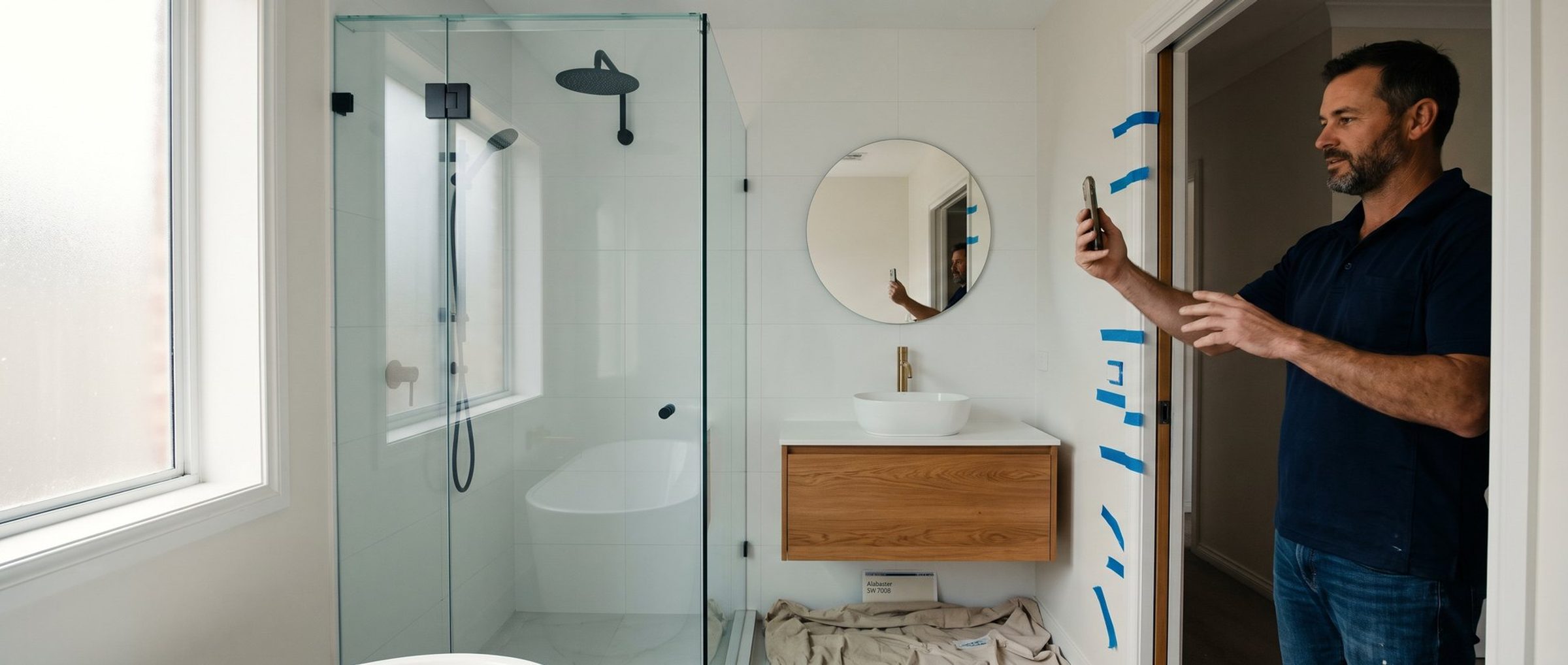
So for a small business, a strong starting set is four ads, each answering a different doubt, each made cheaply. Here is what that looks like for a bathroom remodeler.
Then judge them on what Meta does, not what people do in the comments. Meta moves spend toward the ads it expects to work, so where the money goes is information in itself. Pair that with your cost per result: a booked visit, a call, a sale. Likes and video views will flatter the wrong ad almost every time. Decide before you launch how long the test runs and what number counts as a win, then leave it alone until then. We have written about how many ads a test needs and about why Meta's refusal to spend on an ad is an answer, not an insult. And if the budget is tight, here is how to make Meta ads work on a small budget without starving the test.
A Winning Meta Ad Tells You Which Doubt Mattered Most.
When one of the four wins, resist the urge to make the same ad again with a different color or a new headline. The lesson is not the look of the ad. The lesson is the doubt. If the owner-on-camera ad won, your buyers' biggest question is whether they can trust you, and every ad you make next should answer that question in a new way: a different job site, a different employee, a customer saying the same thing in their own words.
That is how you get more out of a winner without making copies Meta will lump together. Keep the argument and change the person, the place or the opening line, which we covered in how one winning ad can carry five more. Then write down why you think it won, because you will forget, and most owners never find out what made a winner work.
The tier lists will keep coming, and some of them are genuinely useful once you know what they are grading. But the most reliable ranking of ad types for your business is the one your own account builds, one answered doubt at a time.
Working out which doubt to answer first, making ads that answer it, and reading what the account says back is the work we do every day for small businesses on Facebook and Instagram ads. If you would rather hand that off, we are happy to take a look. And if you would rather do it yourself, you now have the map most people skip.