Scroll through the ads in your own market for five minutes and keep a tally. Fast. Friendly. Affordable. Trusted. Family owned. Quality you can count on. Best in town. Best in the county. "We go above and beyond," which by this point is less a promise than a sound businesses make, like a car door closing.
None of those claims is false, exactly. The problem is that every business makes all of them, so a customer has learned to treat the whole list as background noise. It costs nothing to call yourself the best, and people know it costs nothing, so they give it the weight it cost.
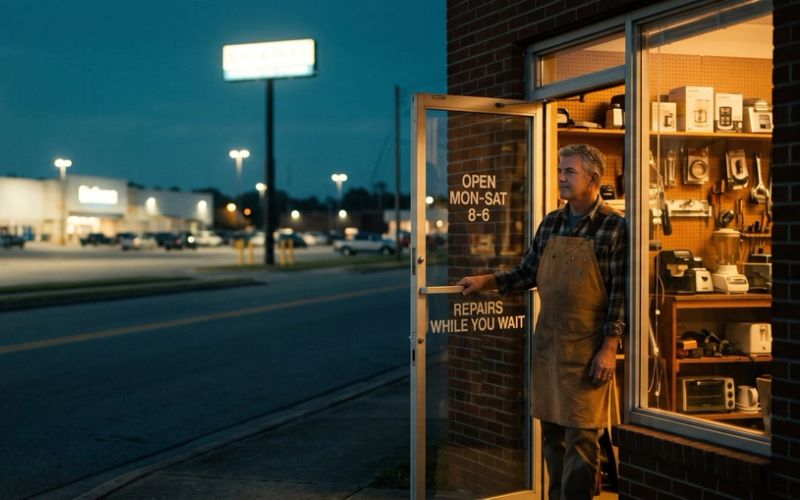
Now picture an ad from a remodeling company that opens with this: "We're booked about two weeks out. Here's why we don't fix that."
That one gets read. It sounds like something a person would say, not something a company would print, and the viewer immediately wants to know the answer. More importantly, they believe the next sentence, because the company just said something no business would say unless it were true.
That is the whole idea behind what we'll call the admission ad: an ad built on one honest flaw. It is one of the oldest moves in advertising, it is trending again in the ad accounts of the people who make ads for a living, and almost no small business uses it. This article covers why it works, the one rule that decides whether it helps or hurts you, and three versions you can run this month.
Every Ad in the Feed Claims Perfection. That Is Why Nobody Believes Any of Them.
Think about why a friend's restaurant recommendation is more convincing than the restaurant's own ad. Your friend has nothing to gain. When they say "the food is great, but get there before six or you'll wait forever," the warning is what makes the praise believable. They told you something unflattering, so you assume they are not selling you anything.
Ads lost that credibility a long time ago, because an ad is the one place a business is guaranteed to say only good things about itself. Customers have adjusted. They read a list of positives the way you read a dating profile that describes someone as "easygoing": with a quiet discount already applied.
An admission breaks that pattern. A claim of quality is free to make, but admitting a weakness costs you something, so the reader takes it as a signal that you are telling the truth. And once they have decided you are telling the truth about the bad part, they extend that trust to the good part that follows.
Advertising researchers call this a two-sided ad, one that mentions a negative alongside the positives. The research on it is old and consistent: admitting a downside tends to make the advertiser more believable. But "more believable" is not the same as "more likable," and it is definitely not the same as "more customers." Two findings decide which way an admission goes, and both matter more than the admission itself.
A Flaw Only Helps a Business That Is Already Good at the Job.
In 1966, the psychologist Elliot Aronson ran an experiment that gave this whole idea its name. He played people a recording of a man auditioning for a quiz show. In one version the contestant was impressive and answered 92 percent of the hard questions correctly. In another he was ordinary and got 30 percent right. Then, in some versions, there was a clatter at the end of the tape and the contestant said, "Oh my goodness, I've spilled coffee all over my new suit."
When the impressive contestant spilled his coffee, people liked him more than when he did not. The mistake made him human and approachable. When the ordinary contestant spilled the same coffee, people liked him less. Same blunder, opposite result. Aronson called it the pratfall effect.
The lesson for an ad is blunt: an admission is an amplifier, not a rescue. If the viewer already has reason to think you are good, a flaw makes you relatable. If they have no reason to think you are good, the flaw just confirms their suspicion. A business with fourteen reviews and a stock photo of a handshake should not lead with its weaknesses, because there is nothing yet for the weakness to humanize.
This is why every admission ad that works carries its proof inside the same ad. The flaw buys attention and belief, and the proof turns that belief into "these people are good at this." Skip the proof and you have taken out an ad to share bad news.
The Right Flaw Proves Your Strength. The Wrong One Just Loses the Job.
The most useful study on this for a small business was published in 2003 by the psychologist Gerd Bohner and three colleagues, in a peer-reviewed consumer research journal. They showed people an ad for a restaurant in one of three versions.
- Only good news. The restaurant was described as having a cozy atmosphere and good food.
- Good news plus an unrelated flaw. Same ad, plus a drawback that had nothing to do with the coziness, such as no parking of its own.
- Good news plus a related flaw. Same ad, plus the honest admission that the place has little space. A small room is exactly why it feels cozy.
On a scale of one to nine, people's overall attitude toward the restaurant came out at about 4.3 for the positives-only ad, 4.5 for the unrelated flaw, and 5.6 for the related flaw, averaged across the study's two reading-time conditions. The related flaw beat the flawless ad by roughly 31 percent. When readers had a bit longer with the ad, the gap grew: 4.4 versus 6.0.
The detail that makes the study useful is in its other measure. Both flawed ads made the restaurant more believable. Readers rated the advertiser as more credible whether the flaw was related or not. But only the related flaw made people like the restaurant more, because only the related flaw made them think harder about the positive. "Small" made "cozy" feel real. "No parking" just sat there.
So the rule is not "admit something." It is: admit the flaw that is the price of your strength. When a customer hears it, they should be able to finish the thought themselves. You are expensive because you do not cut the corner. You are slow because you are careful. You are booked because people wait for you.
You can see the difference in the ads running on Facebook and Instagram right now. Two businesses, both admitting the same flaw, price:
- A climbing-gift shop, Climber's Gift, opens a current ad with "We get a lot of comments saying Boulder Block is pricey." Then: "Could we make it cheaper? Probably. But that would mean cutting corners on the details your climber will notice: real climbing holds, proper grip texture, and route cards that turn it into a challenge." Every word of the admission points at something specific the extra money buys.
- A car detailing shop runs an ad that says "We aren't cheap, but we're the best," directly above a $200-off offer. The flaw is the same one. But "the best" is not a strength the price pays for, it is the claim every ad already makes, and the discount quietly takes back the admission a line later.
Same flaw, opposite effect. The first ad gives the reader a reason to believe the price. The second gives them a price and asks them to take its word for the rest.
A local turf installer, 2 Turf Guys, found a third way to play the same card. "Are we the cheapest in town? No," the ad opens, and explains that the cheapest installers use junk materials. Then it admits it is not the most expensive either, because the most expensive company pays for "bloated overhead and high pressure salespeople." The flaw (not the cheapest) and the strength (no padding) are the same fact, seen from both ends.
That ad edges toward a different move: pointing at what the bigger competitor's strengths cost its customers. If being smaller than the chain down the road is your flaw, we wrote a whole piece on that version, You're Smaller Than the Chain Down the Road. Put That in Your Ad. The admission ad is the quieter cousin. It doesn't need a giant to fight, only something true about you that a customer already suspects.
Your Flaw Is Already in Your Lost Quotes and Your Four-Star Reviews.
You do not need to invent a flaw, and you should not. The right one is the thing customers already hold against you, and you can usually find it in an afternoon.
- Lost quotes. What did the people who chose someone else say? "You were more expensive" and "they could start sooner" are two of the answers a service business hears most, and both are admissions waiting to be written.
- Four-star reviews. Five-star reviews tell you what you are good at. Four-star reviews tell you what it cost the customer to get it: "Great work, but it took a while to get on their schedule."
- The question on every call. "Why is your quote higher than the other guy's?" "Do you do weekends?" If you answer it on the phone every week, the ad can answer it before the phone rings.
- The comments under your ads. People will tell you their objection in public, for free. We wrote about why the comments under your Meta ad are part of the ad.
The best flaw to admit is one customers already believe. That is why the Climber's Gift ad above opens by quoting its own comment section. It is not confessing a secret. It is agreeing with what shoppers are already saying under its ads, and an advertiser agreeing with you is rare enough that people stop to read what comes next.
Then check your candidate against the rule from the last section. Write it as "We [flaw] because [strength]." If the "because" comes easily, you have a related flaw. If you have to strain, or the honest "because" is "we haven't gotten around to fixing it," pick a different flaw.
There are also flaws you never admit, however honest it would feel. Anything touching safety, licensing, insurance or whether you will actually show up is not a charming imperfection. It is a reason not to hire you. "We're a little slow to reply to emails" might work for a custom furniture maker. It does not work for a locksmith.
Price, Sold Out and "We Don't Do That": Three Flaws Worth Putting in an Ad.
Most admission ads fall into one of three shapes. Pick the one that fits the flaw you found.
1. The "we're not cheap" ad. This is the price admission, and it is the most common because price is the most common objection. The structure is: say the price is higher, say exactly what the extra money buys, and let the bargain shoppers leave. A static ad for a fence company might read:
"We're usually the highest quote you'll get. We set every post in concrete, 36 inches deep, and we come back free if anything leans in the first five years."
That ad will get fewer clicks than "Affordable Fencing, Free Estimates," and that is the point. The people who do click have already accepted the price. We covered the search-ad version of that trade-off, fewer clicks on purpose, in Most Google Ads Advice Wasn't Written for a Local Business.
2. The "we're sorry" ad. An apology for a real inconvenience your customers have actually run into: a waitlist, a price increase, a season where you were slow to call back. One agency that tests thousands of new ads a quarter put this format on its list of what is working this year, and admitted it had bet against it: the apology ads kept scaling and kept running long after flashier ones burned out, and the team still is not entirely sure why. For a bakery, it might sound like this on video:
"We owe our regulars an apology. We sold out of sourdough by ten every Saturday last month. We bake it for two days, so we can't just make more at noon. Starting this week, you can reserve a loaf online by Thursday night, and it'll be waiting for you."
Notice what the apology does. It admits the flaw (sold out), explains the strength behind it (a two-day bake), and ends with what changed (you can now reserve). That last part is not optional, and the next section explains why.
3. The "here's what we don't do" ad. Some of the strongest admissions are about scope. "We don't do emergency calls. That's why the scheduled job you booked three weeks ago actually happens on the day we said." "We only do kitchens." A business that turns work away tells the viewer it is good enough to choose. This shape suits owners who are tired of getting the wrong leads, because it filters them in the first line.
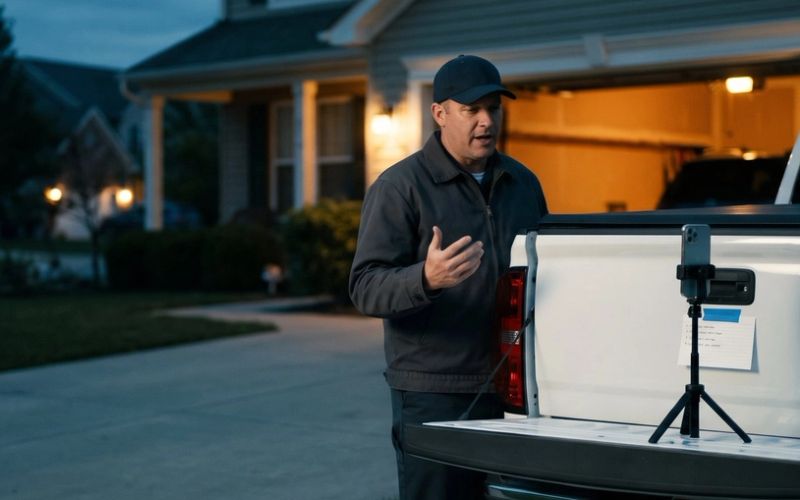
Whichever shape you use, put the admission first. An admission buried in the third line of the caption is a disclaimer. In the opening line, it is the hook. If you are making a talk-to-camera video, this is the same instinct as raising the objection before the viewer can, which we walked through in Your Best Video Ad Looks Like You Ranting Into a Phone, except here the admission is the whole idea of the ad rather than one beat inside it.
An Apology Ad With No Fix Behind It Is an Ad for Your Worst Review.
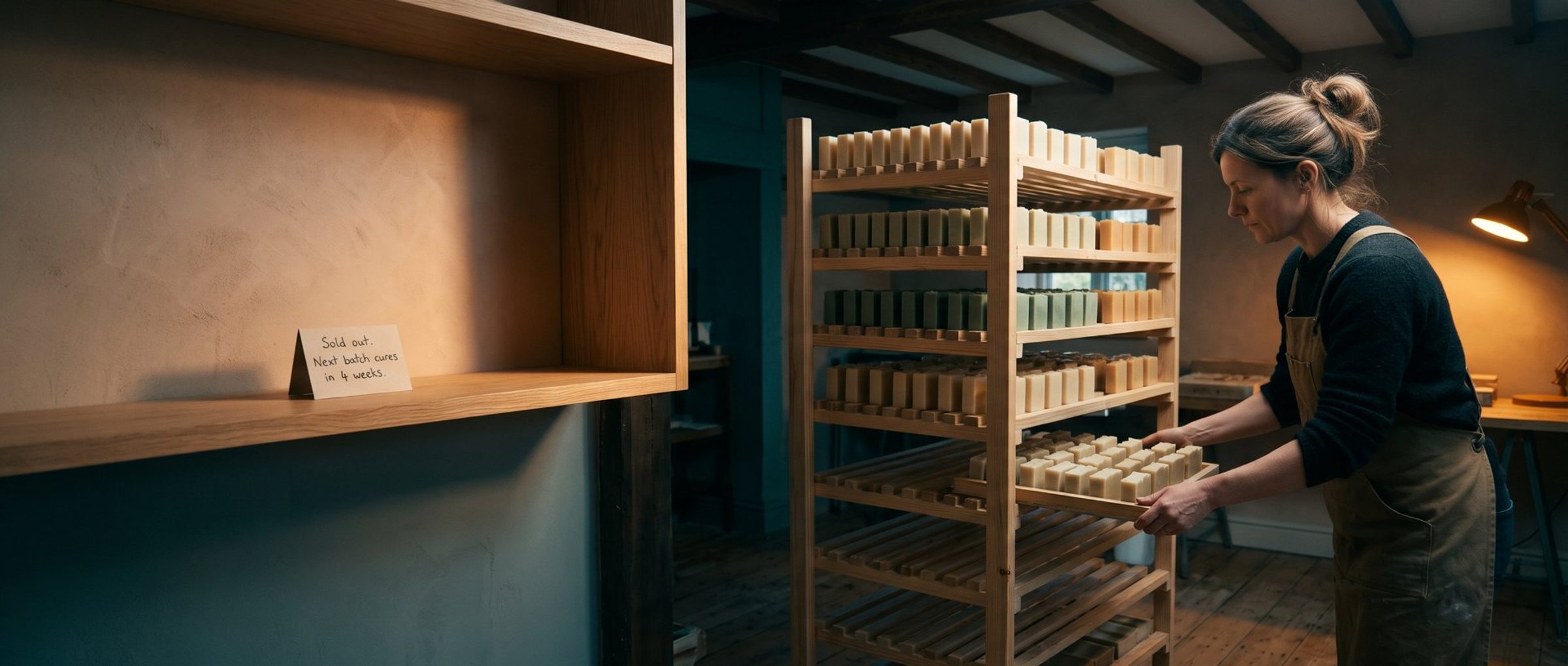
Here is an apology ad running right now from Kaori, a small soap maker, almost word for word: "We owe you an apology. Kaori is sold out again. We thought we had made plenty this time. We were wrong." Then the strength behind the flaw: making more "is not something we can do overnight," and "we would rather keep you waiting than send you something we rushed." Then the one thing it can promise: the next batch goes to the email list first, so join it.
That is a complete admission ad. The flaw is real, the reason behind it is the product's whole selling point, and the ad ends with something the reader can do about it.
Now compare an ad from a lash brand currently running under almost the same opening line: "We owe you an apology." It turns out the "apology" is that one of its claims was an understatement, and it comes with $15 off. That is a sales pitch wearing an apology as a costume, and it spends the one thing an admission ad has going for it. The next time that brand says sorry, nobody will believe it either.
The difference is that the first ad has something behind the apology: a real shortage, a real reason, and a real fix. The admission earns the attention. The fix earns the sale.
That gives every admission ad the same four-part shape:
- Admit. One flaw, in plain words, in the first line.
- Because. The strength it pays for, so the viewer can connect the two.
- Prove. Something they could check: the warranty, the grip texture, the two-day bake, the reviews that mention the wait and say it was worth it.
- Ask. What to do next, with the flaw already handled. "Book now for the week of the 14th" works better than "Call today" once you have told them you are booked out.
Two more guardrails. First, one flaw per ad. One admission reads as honesty. Three in a row read as a business having a rough year. Second, the flaw has to stay true. If your ad says "we're booked two weeks out" and someone calls and gets in tomorrow, the ad was a gimmick, and customers notice gimmicks faster than they notice anything else. The same goes for apologies. An apology ad for a problem you have not fixed is a confession, not an ad.
An Admission Ad Has to Beat Your Best Current Ad Before It Gets the Budget.
An admission ad is a new idea, not a new version of your current ad, so test it the way you would test any new idea: alongside what is already working, with enough budget to get a real answer. Do not switch off a profitable ad to make room for it. We go through the mechanics in You Don't Find the Winning Ad. You Test Your Way to It.
What to watch is a little different from a normal test.
- Cost per lead, then the quality of the lead. A "we're not cheap" ad can produce fewer leads at a higher cost per lead and still be the better ad, if more of those leads accept your quote. Track how many turned into booked jobs, not only how many called.
- What people say when they call. If callers start opening with "I saw you're booked out, can I get on the list?", the ad did its job before you picked up the phone.
- How long it lasts. Most ads wear out as the same people see them again. An admission is less of a gimmick than a clever hook, so it often holds up longer. Watch whether its cost per lead stays steady over several weeks, and resist the urge to replace it just because you are tired of looking at it.
If it wins, ask why before you make more of it. Was it the flaw, the proof, or the person saying it? The method in Your Winning Ad Won for a Reason will tell you which part to keep.
Your Customers Already Know Your Flaw. The Ad Decides Who Tells Them First.
The reason so few businesses run admission ads has nothing to do with whether they work. It is that writing "we're more expensive" in an ad feels like handing your competitors a weapon. Every instinct says to hide the flaw and hope nobody asks.
But your customers already know the flaw. They found it in your quote, in your reviews and in the two weeks they waited. The only question is whether they hear about it from you, attached to the reason it exists, or work it out on their own and assume the worst.
If you want help finding the flaw worth admitting and building the ads around it, that is a big part of what our creative production team does: we start from what your customers actually say, then make ads that sound like you said it. And if you would rather write the first one yourself, start with your last three lost quotes. The ad is usually sitting in the reason they gave.