Search Google for "aventon ebike" in Denver or Chicago and Aventon isn't alone at the top. When we checked, Monarc Bikes ran an ad above the results headlined "Monarc vs Aventon" in both cities. Further down, Velotric ran "Velotric vs Aventon: Complete Ebike Comparison," and Hikeep advertised its own bikes with "$600 off."
Aventon advertised on its own name too, at the top and the bottom of the page. That's the point of this chapter. Someone who types a store's name has nearly made up their mind, and rivals know it. A store that doesn't show up for its own name leaves that shopper to whoever does.
This chapter covers the brand campaign: why a store's name gets a campaign of its own, what rivals do on brand searches, what a brand click costs, what Google's trademark policy allows, how to spot ads that borrow your name, and what Google already shows for free when shoppers search for you. The examples come from the e-bike and cookware stores in this guide. Your brand may draw fewer rivals. The campaign is still worth running.
Aventon's Own Name Is 6% of Its Search Volume. Those Shoppers Have Already Picked the Store.
When we pulled Keyword Planner ideas for the e-bike stores' websites, searches for each store's own name were a small share of the volume: 6.0% for Aventon, 6.5% for Lectric and 1.1% for Ride1Up. Chapter 2 found the same pattern across the guide, with the store's own name under 7% of the Keyword Planner volume for 11 of our 12 stores.
Small as that slice is, it's the most valuable traffic a store has. A shopper searching "aventon ebike" isn't comparing categories. They want Aventon, maybe a specific model, and they're usually close to buying.
So the store's name gets its own campaign:
- Exact and phrase match on the store's name and its common misspellings, such as "aventons," "lectric e bike" and "ride one up."
- Its own small budget, so a busy day on product searches can't starve it.
- Its own report, so brand sales never get mixed into what the product campaigns claim.
- Performance Max kept off it with a brand exclusion, as Chapter 10 covered.
In our experience a brand campaign spends little, because the store is the most relevant advertiser for its own name. Its job isn't volume. It's making sure the first thing a ready buyer sees is the store they asked for.
On "Aventon Ebike," Monarc Ran "Monarc vs Aventon" Above the Results in Denver and Chicago.
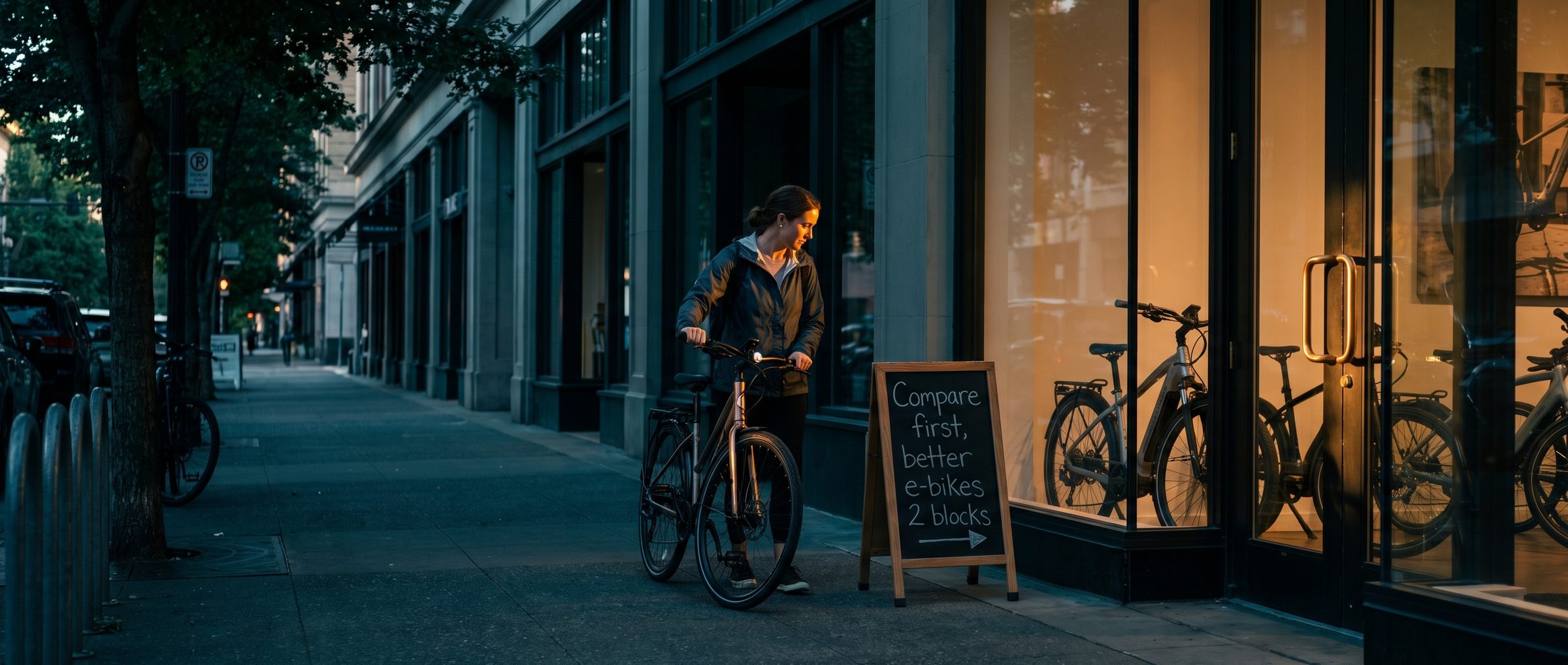
Rivals bid on well-known names because those searchers are ready to buy. Monarc's "vs Aventon" headline is a comparison pitch: it catches the shopper at the last step and asks them to look at one more bike.
Aventon isn't the only target, and comparisons run in every direction. In Google's Ads Transparency Center, Lectric ran ads headlined "Lectric vs. Aventon Comparison," along with others naming Mooncool and Jasion. Upway, which resells e-bikes, ran "Used Aventon E-Bikes - Certified Used Aventon Sale."
Not every brand draws a crowd. On "simms waders" and "orvis fly rod," the only advertiser we saw was the brand itself. A store with a small or new name may have no rivals on its brand searches today. That's not a reason to skip the brand campaign. It's the cheapest time to run one, and it means you'll see the day a rival shows up.
When one does, the brand campaign's auction insights report shows it: the rival's web address appears, with how often its ad showed alongside yours and how often it ranked above you. What to do next is mostly about staying calm:
- Keep your own ad at the top. Check the brand campaign's top impression share. If it slips, raise the brand bid a little; your relevance typically makes that cheaper for you than for the rival.
- Answer the comparison on your page. If rivals run "vs" ads, a comparison page of your own lets shoppers see your side, in your words.
- Don't bid on their name in return just to get even. Chapter 5 put other stores' names on the negative list. Bidding on Monarc or Velotric is a separate decision for a store, made on purpose, in a campaign whose budget and break-even ROAS stand on their own.
Keyword Planner's High Estimate for "Lectric Ebikes" Is $1.49 a Click. For "Aventons," It's $23.74.
Brand clicks aren't all cheap. Keyword Planner's top-of-page estimates for the e-bike stores' own names spread widely:
- "lectric ebikes": $0.21 to $1.49
- "ride 1up": $0.09 to $3.71
- "aventon electric bike": $1.21 to $12.57
- "aventons": $2.09 to $23.74
These are estimates from past auctions, not what any store paid, and Chapter 5 covered how far they can miss. But the gap is wide enough to say something. Our reading: more advertisers bid on Aventon's name, and every extra bidder raises the price of the auction, for rivals and for Aventon itself.
That's the cost of being the name other stores compare against. It's also the case for running the brand campaign early, while the auction is quiet. A store that already holds the top spot for its own name, with a relevant ad and a landing page that matches, usually has the edge in Ad Rank on those searches. A rival paying to appear there has a harder time beating it.
Google Lets Rivals Bid on Your Name as a Keyword. Its Trademark Policy Restricts Their Ad Text Only After You Complain.
Store owners are often surprised that a rival can show up on their name at all. Google's trademark policy is direct about it. Google says it "will not restrict" using trademarks as keywords. A rival can target "aventon ebike" in its account.
What Google does restrict, once the trademark owner files a complaint, is the use of the trademark "in an ad from a direct competitor," and ads that use it "in a confusing, deceptive, or misleading way." Google says it reviews each complaint and "may restrict use of the trademark," and it accepts complaints only against specific advertisers, "within the countries and industries in which trademark owners have demonstrated trademark rights."
Stores that resell a brand get different treatment. As Chapter 5 covered, Google won't restrict a trademark in ads whose landing page is mainly dedicated to selling that brand's products, as long as the ad and page make clear the advertiser is a reseller. That's why a fly shop can run ads for "simms waders." If you're the brand, resellers using your name to sell your products are usually helping you sell. If you're the reseller, decide brand by brand which ones to bid on, using the same margin math as every other product.
Not Every Ad Showing Your Web Address Is Yours. One Showing www.lecreuset.com Came From a Different Account.
Some ads that use a brand's name aren't rivals at all. In our Transparency Center pulls, one ad displayed the web address www.lecreuset.com but ran from an advertiser account named "BLUE POINT ADVERTISING LIMITED," first shown September 14, 2026. Its text promoted a "Le Cruchet" sale of up to 40% off. We can't say where that ad led or who was behind it. We can say it didn't run from Schiller Stores Inc, the account behind Le Creuset's other ads in our pull.
It's not the only case we found. On Reddit, a Made In founder answered a warning about a fraudulent Made In site "advertising a huge summer sale," saying he had filed with "the ad platforms like Google." In a 2024 r/ebikes thread, a shopper warned about a fake "Aventon going out of business" site promoted through sponsored Facebook ads.
These are examples, not verdicts on anyone. The lesson for a store is practical. Once a month, search your own store's name in the Ads Transparency Center and look at who is advertising with it. Check your brand campaign's auction insights for new names. If you find an ad that copies your name or your site to mislead shoppers, report it to Google, and keep a record of what you saw and when.
Google Already Shows Made In's 4.9 Stars and 45-Day Returns Before Anyone Clicks, and It Charges Nothing for It.
A search for a store's name doesn't just show ads. When we searched "made in cookware," every results page we pulled showed a Google store panel with "4.9 (20K) Store reviews," a "Top Quality Store" badge, "Returns 45 days" and "Trending products from Made In." On "aventon ebike," every page showed "Trending products from Aventon."
That panel is free. It draws on the store's Merchant Center data, its reviews and its website, and it can do a lot of persuading before a shopper clicks anything. Chapter 15 covers how store ratings get there.
The brand ad and the panel work together. The panel shows proof from Google: ratings, returns, products. The brand ad adds the store's own message: the current offer, the free shipping threshold, the warranty. Between them, a shopper searching your name sees your store, not a rival's comparison.
Next: AI Max for Shopping Rewrites Titles Only When Google Predicts a Lift. Turn It On After Everything Else Works.
The brand campaign protects the shoppers who already know you. Chapter 13 covers AI Max for Shopping, a newer Google option for reaching shoppers you haven't found yet, and why it waits until everything else is running.
Earlier chapters cover Demand Gen and YouTube and Performance Max. Every chapter is on the guide's home page.
When we set up a store through Google Ads management, the brand campaign goes live with the first product campaigns, and a monthly check of the Transparency Center is part of the routine. Doing it yourself? Search your store's name on Google today and note every advertiser above your own listing.