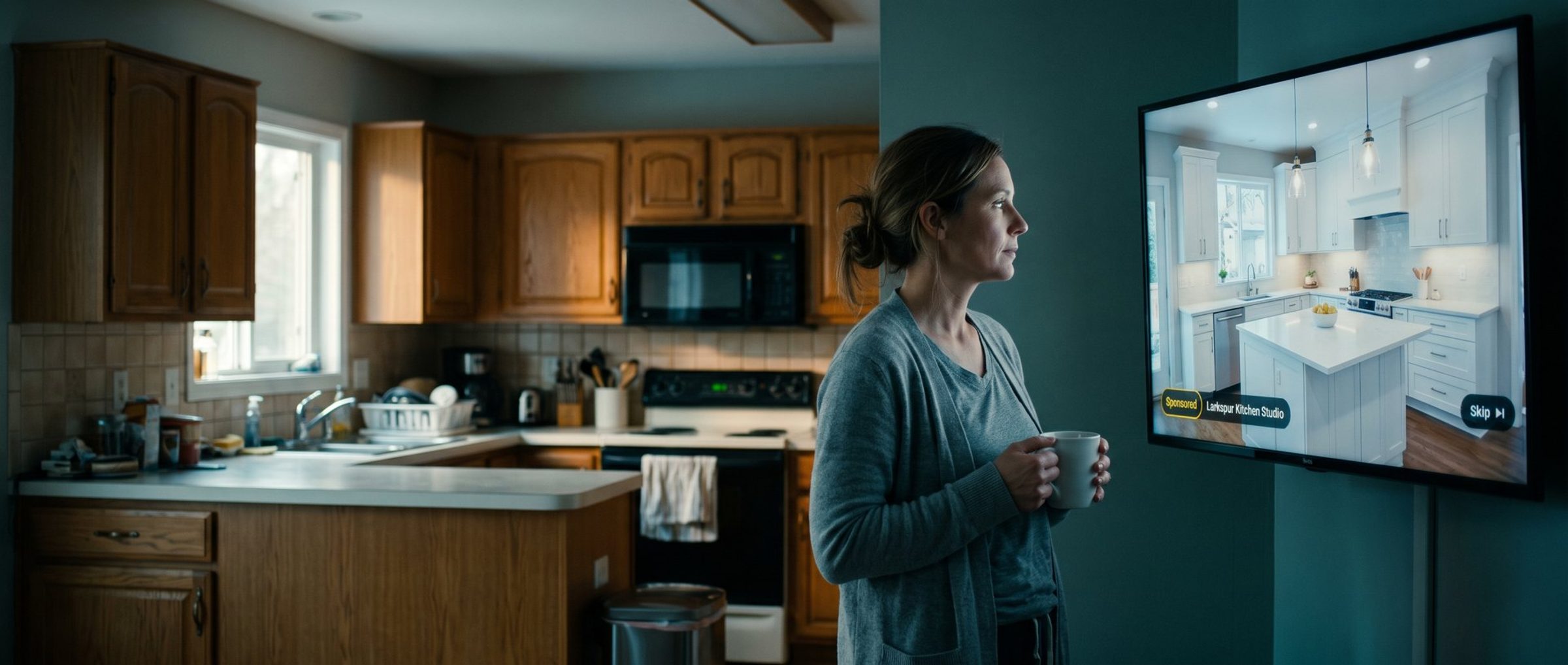
A kitchen remodeler in Columbus gets a pitch from a marketing freelancer: put your project video on YouTube ads and watch the numbers climb. Three weeks and about $800 later, the video shows 40,000 views. The phone has not rung once because of it. The remodeler wants to know whether YouTube ads are a scam or whether they were bought wrong.
They were bought wrong. YouTube ads are worth it for a small business when you pay for customers: people who live in your service area, who have shown they are shopping for what you sell, and who then call, book or buy. They are rarely worth it when you pay for views, which is what most first YouTube campaigns buy, because a view at two cents is cheap for a reason. And even the right kind of YouTube campaign usually belongs after your search ads have found everyone already looking for you, not before.
Here is what Google actually sells you on YouTube, why the cheap version tells you nothing, which businesses YouTube pays back, and how to tell whether yours is one of them before the video budget is spent.
YouTube Will Sell You Views, Eyeballs or Customers. Only Customers Pay the Bills.
When you start a YouTube campaign in Google Ads, the first choice quietly decides everything else. Google sells three different things, and each one is billed differently.
Views. A Video views campaign uses cost-per-view bidding. On a skippable in-stream ad, the kind that plays before a video and shows a Skip button, Google charges you when someone watches 30 seconds of your ad, or the whole thing if it is shorter, or interacts with it, whichever comes first. On an in-feed ad, the thumbnail that sits in YouTube search results and next to other videos, you pay when someone clicks to watch or lets it autoplay for 10 seconds. On a Shorts ad, it is 10 seconds or a tap on the button, a like, a comment or a share.
Eyeballs. Bumper ads, which are six seconds long, and non-skippable ads, which run up to 60 seconds, are bought on cost per thousand impressions. You pay for being shown, whether anyone was paying attention or not. These are built for big brands that want the same message in front of a lot of people many times.
Customers. Campaigns built to get a lead or a sale from YouTube now run through Demand Gen. Google moved its old Video action campaigns into Demand Gen over 2025 and 2026, and its help center now says every one of them has been upgraded as of May 2026. Demand Gen bids for conversions, the actions you tell Google count, and it shows your video ads across YouTube in-stream, in-feed and Shorts placements, plus Discover and Gmail.
Notice which of the three asks you what a customer is. Only the last one. The first two optimize for something you can count on YouTube, not in your business. Google will happily deliver exactly what you paid for. If you paid for views, you got views.
A 2-Cent YouTube View Is Cheap Because Nobody Watching Is Deciding Anything.
Search YouTube for how to run YouTube ads and the most-watched tutorials walk you through the same campaign: a Video views campaign, broad targeting, a small daily budget. One of the most popular, from an analytics training channel, shows an average cost of just under two cents per view with almost no targeting beyond country. Another creator shows a Performance Max setup that bought YouTube subscribers for between 5 cents and $1.80 each.
Those are honest numbers, and for the people who made those videos they make sense. Both were promoting a YouTube channel. A creator wants an audience; views and subscribers are the product. For a remodeler, a plumber or a dentist, they are not. The second creator said it plainly: the cheapest subscribers came from countries where almost none of them would ever buy, and when he switched the ads off, the channel lost subscribers for months.
There is a quieter reason views mislead owners. Google keeps two different counts. The views you are billed for, which Google now calls TrueView views, need the 30 seconds or the interaction. But the public view counter under your video on YouTube ticks up the moment an ad starts to play. So a views campaign makes your video look popular to anyone who visits your channel, which feels like progress, and says nothing about whether one person in your town thought about hiring you.
That is the trap in the remodeler's 40,000 views. At two cents each, $800 bought a large number of people who sat through 30 seconds of a kitchen on their way to something else. Some were in Ohio. Most were not shopping for a kitchen. None were asked to do anything. The campaign worked exactly as designed. It was designed for the wrong job.
YouTube Pays a Small Business Back When the Job Needs Explaining.
Search ads catch people at the moment they type. That is why they are usually the first money a local business should spend: the person searching "kitchen remodeler near me" has already decided they want one. YouTube reaches people before they type, or between searches, while they are watching something else. That only pays when there is something to show them that a three-line text ad cannot.
That rules some businesses in and some out.
Strong fits are jobs people research for weeks, where seeing the work changes the decision:
- Remodeling, roofing, landscaping and pools. The finished project is the sales pitch, and a 60-second walk-through does more than any headline.
- Dental implants, orthodontics, cosmetic work. Big-ticket, nervous buyers who want to see the person and the office before they book.
- Senior care, financial planning, legal services. Trust is the product, and a real person explaining how it works earns it faster than an ad that just says "trusted."
Weak fits are jobs people buy in minutes:
- Emergency plumbing, locksmiths, towing, urgent HVAC repair. The customer searches, calls the first number that looks real and the job is booked. A video watched last week does not beat a search ad today.
- Small, quick jobs people barely think about. If the whole job is worth $90, the math on a video ad rarely works.
What makes YouTube workable for a small business is that you do not have to show your video to strangers at random. Demand Gen lets you aim at people with a real signal. Google's custom segments include an option called "People who searched for any of these terms on Google": enter searches like "how much does a new kitchen cost" or "how long does a kitchen renovation take," and your video can reach people who typed them on Google or YouTube, on campaigns running on Google's own properties. You can also show the video to people who have already visited your website, and to your own customer list. That is a different thing entirely from two-cent views to anyone in the country.
The Video Costs More Than the Ads. It Has to Work in the First Five Seconds.
Owners budget for the ad spend and forget the video. For most small businesses, the video is the harder half.
Google's rules are simple. The video has to live on YouTube, so you will need a channel, but you can upload it as unlisted, which keeps it off your public channel and still lets you use it as an ad. Skippable in-stream ads can be any length, and Google recommends under three minutes. Shorts ads should be under 60 seconds and vertical. In practice, a small business needs two cuts of the same footage: a horizontal version of 30 to 90 seconds and a vertical version under 30.
The deadline that matters is five seconds. That is when the Skip button appears on an in-stream ad. Whatever you say first has to tell the right person this is for them. "If your kitchen still has the cabinets it came with in 1994" stops the remodeler's buyer. A logo animation and a drone shot of the office stop nobody.
It does not need to be expensive. A real project, filmed on a good phone, with the owner or lead installer explaining what changed and what it cost, usually beats a polished brand film, because the buyer is trying to judge whether you are real and whether you do good work. What it does need is to exist before the campaign does. If you do not have a video worth showing a stranger, you are not ready for YouTube ads yet, and no setting will fix that. If you would rather have someone else make it, that is what our creative production team does.
Demand Gen Wants Ten Times Your Lead Cost Every Day. Finish Search First.
This is the part that settles the question for most small budgets. Google's own Demand Gen guidance says that for campaigns bidding to a target cost per lead, the daily budget should be at least 10 times that target. Its setup help adds a second figure: at least $100 a day for campaigns using the Maximize bid strategies.
Put the remodeler's numbers in. If a booked design consultation is worth paying $150 for, Google is describing a $1,500 daily budget. Even the $100-a-day floor is about $3,000 a month, before the video, for a channel that will take weeks to show whether it works. Many local businesses spend less than that on all of Google Ads.
That does not make YouTube a bad idea. It makes it a second idea. A remodeler spending $2,500 a month on search ads that still lose impressions because the budget runs out every afternoon has a cheaper way to grow: fund the searches already happening. YouTube becomes the right next step when search has nothing left to buy, which we covered when sorting the campaign types Google offers a small budget. The full case for when Demand Gen fits, and when it quietly wastes a quarter, is in Demand Gen Will Tell You It Worked. That Is Not the Same as Working.
A YouTube View Is Not a Result. Booked Jobs and Brand Searches Are.
Once you run YouTube for customers, judge it by what happened in your business, not on YouTube.
Watch three things. Booked jobs and calls from the campaign, counted in your own records, not only in Google Ads. Searches for your business name, which you can see in your search campaign's search terms; a video that works makes more people look you up. And what new customers tell you, so add "How did you hear about us?" to your intake form and your phone script, the same idea we laid out in One Question on Your Thank-You Page Finds the Sales Your Ads Never See.
Be careful with the conversions Demand Gen reports by itself. It can count a conversion from someone who watched your ad and later converted without ever clicking it, and it now turns on bidding for those viewers by default in new campaigns, which we explained in Demand Gen Now Bids on People Who Never Clicked. Some of those are real. Some are people who would have called you anyway. If YouTube's conversions climb while booked jobs and branded searches stay flat, believe the jobs.
Give it a fair window. Three months at a budget that clears Google's floor, in one service area, with one clear offer, tells you something. Three weeks at $25 a day tells you nothing, and that is usually the test owners run before deciding YouTube does not work.
YouTube Ads Are Worth It Once Your Search Ads Run Out of People to Find.
So, are YouTube ads worth it for your business? Answer five questions honestly:
- Are your search ads already buying every profitable search in your area? If they still run out of budget before the day ends, fund them first.
- Does your job need explaining? If customers research for weeks and want to see the work, yes. If they call the first plumber they find at 2 a.m., no.
- Do you have a video worth showing a stranger? A real project and a real person, with the point made in five seconds.
- Can you fund it properly for three months? At least 10 times your target lead cost per day, or $100 a day on Maximize bidding.
- Can you count results outside Google? Booked jobs, brand searches and what customers tell you.
Five yeses, and YouTube is one of the few places a small business can show its work to people who are about to buy and have not picked anyone yet. Fewer than five, and the honest answer is not yet. If you are still deciding whether Google Ads is worth it at all, start there. And if you would like someone to run the numbers on your account before any of this gets spent, that is part of how we approach Google Ads management. The remodeler did not need more views. He needed to know which question to ask first.