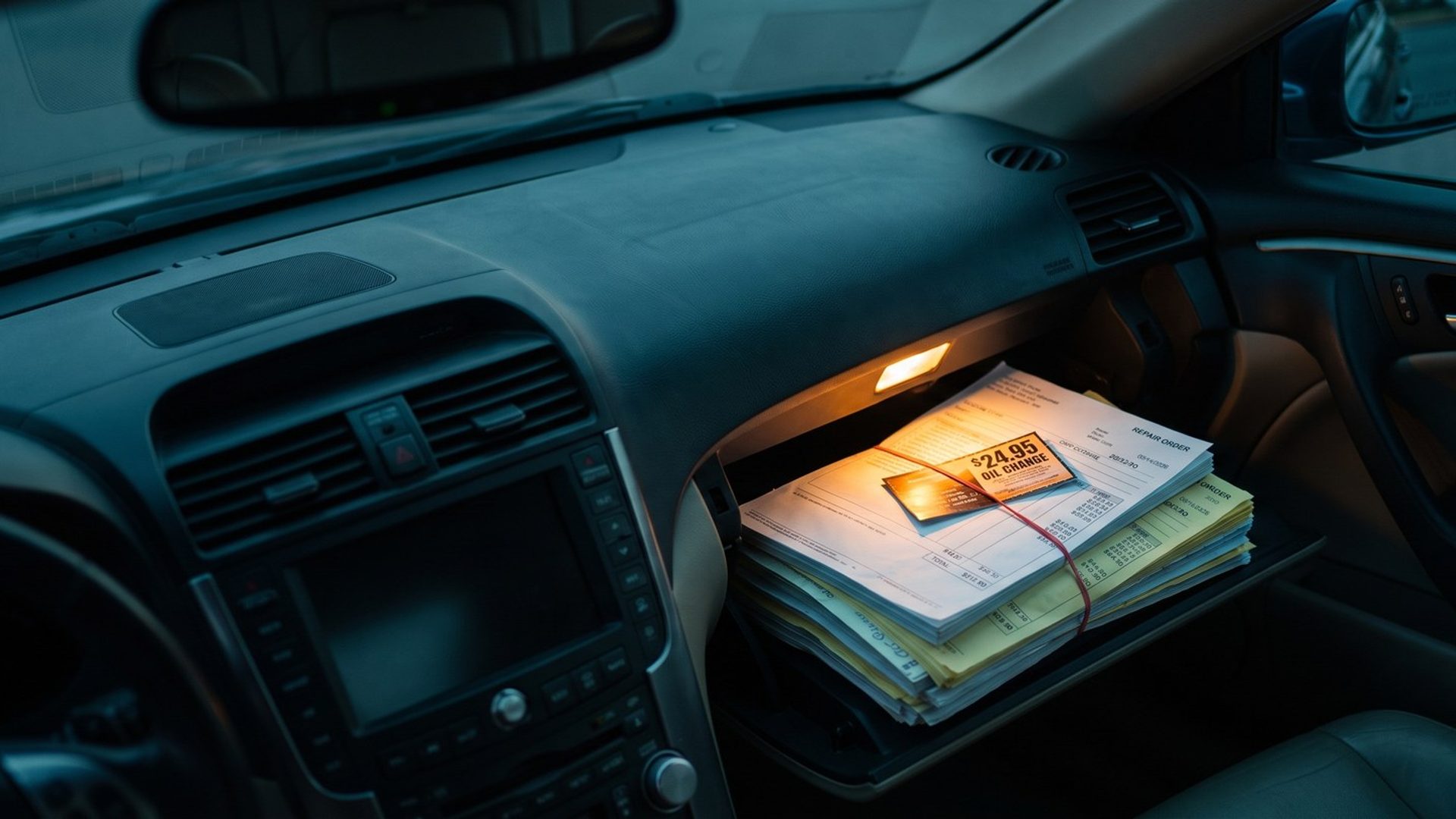
One of the national chains running Search ads in our example market, Portland, Oregon, put this in front of drivers: "$24.95 Synth Blend Oil Change." It's a good offer. It's also an expensive one to advertise. Google's Keyword Planner counts about 1.5 million US searches a month for "oil change near me," and the going rate for the top of that page has reached $6.80 a click.
Put those two numbers side by side and the problem shows up fast. If it takes a handful of clicks to book one coupon customer, the ad budget passes the price of the oil change before the car reaches the lift. At that price, the oil change itself can't pay for the ad. Something after it has to.
So the budget math in a repair account starts at the click and ends at the car, and the car is the part most shops never price. In Chapter 2 we sorted the searches worth buying. Here we work out what each one can afford to cost.
The Click Is the Cheap Part. The Booking It Takes to Fill a Bay Isn't.
Every repair account runs on the same chain. A click costs something. Some share of clicks turn into a booking, a call or a form. Some share of those bookings show up and approve the work. What's left is the cost of one car in the bay, and that number gets compared with what the car is worth to the shop.
The cleanest public numbers we found for the first links come from LocaliQ, which publishes typical figures from its own clients' campaigns; it calls them averages but notes they're medians, to keep outliers from skewing them. For auto service and repair, measured from April 2025 through June 2026:
- Cost per click: $6.42, up 27.13% from the year before.
- Conversion rate: 15.39% of clicks became a lead.
- Cost per lead: $42.10.
WordStream, which belongs to LocaliQ, measured a different window, more than 16,000 campaigns from April 2024 through March 2025, and its automotive repair, service and parts category came in at $3.90 a click and $28.50 a lead. Two reports from the same company, a year apart, landing $2.52 apart on the click: those are typical figures across many advertisers, not a market rate, and your account will land somewhere else. They're useful because they show the shape of the chain: a click is a few dollars, and a lead is several clicks.
The chain doesn't stop at the lead. A booking for Tuesday at 8:00 AM isn't revenue until the car shows up and the customer approves the work. That show-and-approve rate is the link most shops never put a number on, and it's the one that decides whether the ad budget makes money.
A $42 Lead for a $24.95 Oil Change Only Works if the Car Comes Back
Here is the chain for the coupon customer, with one number we made up to show the math. Say half the people who book a $24.95 oil change actually show up. That's an illustration, not a benchmark; your shop software will tell you your real rate. At $42.10 a lead, half showing up means the shop spent about $84 in ads for every coupon car in the bay.
An $84 car that pays $24.95 is a loss, and a coupon visit is the wrong place to try to win it back with a hard sell. On the first visit it will usually stay a loss. The math only works if the oil change is the first visit, not the only one.
That's why the chain's last link matters more than its first. A shop that measures Google Ads by the oil change will shut off its best search. A shop that measures it by the car will see the coupon for what it is: the cheapest way to meet a car that will need brakes, tires and a timing belt over the next few years.
A Coupon Oil Change Brings In $24.95. The Average General Repair Shop Visit Brings In $275.
What is a returning car worth? Two national sources put a number on a single visit. Cox Automotive's 2025 service study found the average visit to a general repair shop came to $275, a little more than the $261 average at dealerships. Consumer Reports' 2023 member survey, published in 2024, covered 11,670 repairs paid for out of pocket and found a median repair price of nearly $700, with 14% paying $2,000 or more.
The cars themselves are getting older. S&P Global Mobility put the average age of a US light vehicle at 12.8 years in 2025. And older cars drift away from the dealer: in the same Consumer Reports survey, about 80% of owners of model-year 2023 cars took them to a dealership for repairs, compared with 18% of owners of model-year 2000 cars. The repair work an aging car needs lands away from the dealer more often than not.
Lifetime value for a repair shop is the sum of those visits. We don't know of a trustworthy national figure for how many times a customer comes back, so we don't print one. Your shop software does know. Pull the last two or three years of repair orders, average what a customer spent across all their visits, and you have the number that should set your budget. It will be far bigger than $24.95.
Here's the simplest version of that pull. Pick every customer whose first visit came in one calendar year. Add up every repair order those customers paid over the next 24 months, including the first one. Divide by the number of customers. That's two years of customer value, measured in your own shop, with your own prices and your own comebacks. Most shop software can run that report or export the data for a spreadsheet in an afternoon.
With the repair order upload from Chapter 1 in place, Google Ads starts doing part of this for you. Each closed repair order arrives with its total, so the account can report which campaigns and keywords bring in $275 customers and which bring in $24.95 ones.
One Value Target Can't Price an Oil Change and a Transmission
A shop that sells oil changes, brakes and transmission work is running three businesses with three price tags. One chain store page in our example market listed brake pad or shoe replacement starting at $249.95 and a full synthetic oil change starting at $89.95, before any coupon.
So the budget gets set per service, not per account. For each service you advertise, write down three numbers from your own repair orders: what the first visit usually brings in, what share of those customers come back, and what they spend when they do. Divide by your show-and-approve rate and you have the most you can pay to bring one of those cars in. That ceiling is what the hand-set bids in Chapter 7 work from.
The same ceiling sets the budget. Decide how many new cars a week each service should bring in, multiply by what you can pay per car, and you have a weekly spend. Using the illustration above, ten coupon cars a week at about $84 each is roughly $840 a week, or $120 a day. You set an average daily budget, and some days spend more than it. Google caps the month instead: a campaign's monthly charge can't pass the daily budget multiplied by 30.4. So a $120 day works out to no more than about $3,650 for the month.
Your repair orders may show oil changes with the lowest first-visit value and the most return visits, and transmission jobs the other way around. Both can be worth advertising. They can't share one cost-per-car target.
67 of 389 Bad Repair Reviews Say the Shop Never Called Back or Never Gave an Update. When the Car Came From an Ad, You Paid for That Silence.
Most of the chain is out of a shop's hands. The click price is set by the auction. The conversion rate depends partly on the searcher. The show-and-approve rate is the one link the shop controls completely, and it's mostly about the phone and the front counter.
We read 389 low-star Google reviews about repair jobs at 28 Portland-area shops, a sample that leans deliberately negative. In 67 of them the customer said the shop never called back or never gave an update. Every one of those customers already found the shop. When they found it through an ad, the shop paid for the click and then lost the car at the counter.
The other side shows up in the good reviews. Drivers praise shops that send photos, explain "what could wait," and answer the phone. One Portland-area customer went back to Accurate Auto to ask whether a 2007 Honda Odyssey was worth keeping, and wrote that the shop "helped me prioritize what needed to be done now versus what could wait." That's a lifetime customer describing why they returned. Those reviews are part of the lifetime value too: they bring the next customer in without a click. Our Google Ads management treats answer speed as part of the budget for exactly that reason.
The landing page is the last piece. A brake search should land on a brake page, not the home page, and most of our example shops already have the pages: 11 of the 12 sites we checked had at least six service pages to send each service's ads to.
Next: Local Shops Name a Car Make or Type in 87 of 229 Ads We Read. Ad Rank Favors the Page That Names It Too.
Knowing what a click can cost is only useful if you can win the auction at that price. Chapter 4 shows how Google's Ad Rank weighs the ad and the page behind it, and why naming the car make in both can lower what a shop pays for the same spot.
This chapter is part of Google Ads for Auto Repair, a sixteen-chapter guide for independent repair shops in every state.