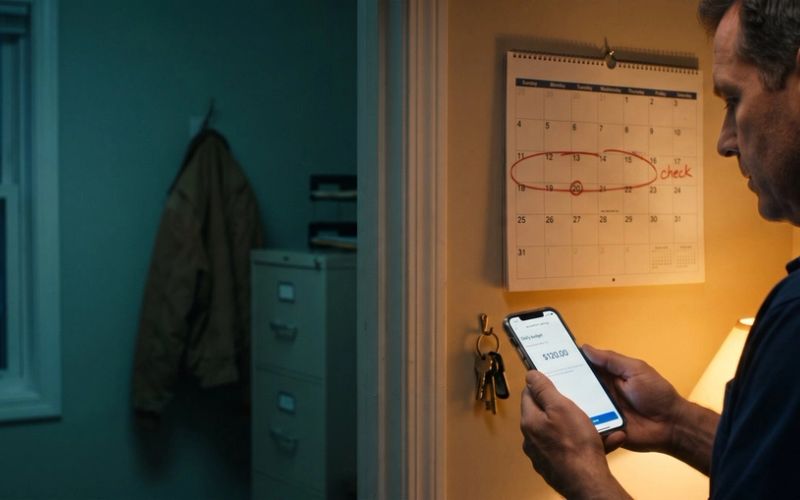
Chapters 1 through 10 chased the searcher whose mind is made up, the person typing a chiropractor's job title into Google. They type "chiropractor near me," or "sciatica treatment," and the ad is there.
This chapter is about the people who haven't decided, and some who've half decided against it. They have a sore back too. They've also heard things. Search ads rarely reach them, because they aren't searching for you yet. A video can.
In Three Local Reddit Threads, 23 of 63 Replies Told the Person Asking to Skip the Chiropractor
In our example market, Baltimore, we read three Reddit threads in the city's main forum where someone asked for a chiropractor recommendation. We coded every one of the 63 replies by hand:
- 23 told the person not to go, or to see a physical therapist or a physician instead.
- 10 named a specific chiropractor or practice.
- The other 30 did neither.
That's a third of the replies talking the person out of it, and only one in six pointing them to a practice. It's one market and three threads, so treat the exact share as a snapshot, not a national rate. But the people asking noticed the pattern too. One wrote, "I'm really only looking for recommendations not advice on the efficacy of chiropractic care." Another reply joked that the poster "committed the #1 Reddit sin of asking for chiropractor recommendations."
The recommendations that did survive had something in common: they sounded careful. One reply praised a chiropractor because "He won't work on you without X-rays and is reasonable in his approach." That's worth remembering when it's time to film.
The Fear of Neck Adjustments Turns Up on Reddit and Almost Never in Chiropractic Reviews
The doubters and the patients write in different places.
Not one of the 1,266 Google reviews of Baltimore-area chiropractors we read used the word "stroke." "Quack" appeared once. "Pseudoscience" appeared once. Reviews come from people who already went, and most of them were happy.
On Reddit, the same worries come up in the patients' own words. "Everybody told me horror stories about people having strokes after neck adjustments," one person wrote. Another: "I've heard about the chance of a stroke if you get neck adjustments and that scared the hell out of me." We searched Reddit by topic, so we don't count how often the fear comes up there. What the quotes show is how people put it when it does.
The reviews answer the fear without naming it. Happy patients wrote about gentle or comfortable care in 105 of 1,060 four- and five-star reviews, and about a doctor who explained or talked them through it. The worry and its answer are both real, but they mostly live in different places: the fear shows up on Reddit, and reviews rarely name it.
A YouTube Ad Reaches a Doubter Before They Ever Search for a Chiropractor
Search ads wait for a search. Someone who's still deciding whether chiropractic is safe isn't typing "chiropractor near me." They're watching videos, scrolling, reading. Google's Demand Gen campaign type is built for that moment. It runs image and video ads across YouTube, including Shorts, and Google's other feeds, aimed at people based on their interests and what they're likely shopping for, rather than at a search they just made.
For a chiropractor, that changes the job of the ad. A Search ad answers "who should I see?" A video ad answers the question that comes before it: "should I see anyone like this at all?" Chapter 2 placed Demand Gen after Exploration and Performance Max for a reason: it reaches people furthest from booking, so it only makes sense once the Search campaigns are already turning decided searchers into kept first visits.
Google's Health Rules Limit a Chiropractor's Video Ads to YouTube and Discover
For most businesses, Demand Gen spreads across five Google properties at once. A chiropractor gets fewer.
Google's Demand Gen page has a section on sensitive categories. For those advertisers, YouTube is usually the only place the ads go, with Gmail and the Display Network ruled out. Discover is less clear. One Google page says sensitive advertisers can serve there with appropriate predefined audiences, while the main Demand Gen page says Discover is open to them only without personalized or predefined audiences. Build the chiropractic video for YouTube first; anything Discover adds is extra.
The audiences narrow too. The main Demand Gen page also limits sensitive-category campaigns to Google's own predefined audiences, such as in-market or affinity segments, and nothing the advertiser built. That fits what Chapter 10 covered for Performance Max: no patient lists, no visitor lists, no lookalikes. As in that chapter, treating chiropractic as a health category is our reading of Google's policy, and the safe one.
In practice, that means choosing from Google's own audience lists in the campaign setup, and skipping anything built from your site's visitors or your patient records.
Keep the location setting from Chapter 9 too: a radius or ZIP codes around the office, on "Presence." A video ad that plays for someone two hours away does nothing for a practice whose patients come back twice a week.
A Nervous Patient Can Watch the First Visit in a Video. A Promise That It's Safe Shows Them Nothing.
What should the video show? Not a claim. Show the visit.
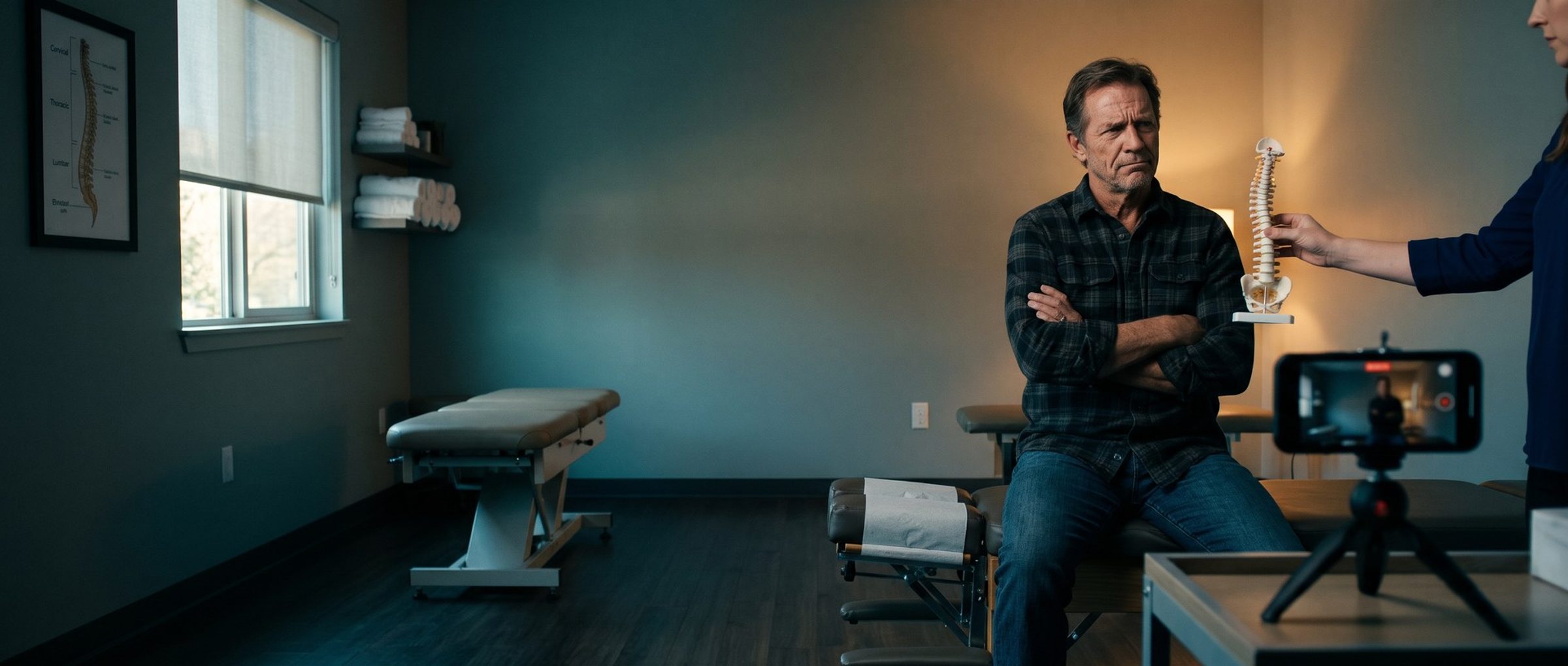
The worried viewer's question is "what will they do to me?" A short video can answer it the way the careful Reddit recommendation did. Film a real first appointment, with a patient who agrees to it or a staff member standing in:
- The front desk welcome, a real person greeting a real patient.
- The exam and questions, the doctor asking about the pain and testing range of motion before any adjustment.
- The explanation, the doctor showing a spine model or the X-ray and saying what they found, in plain words.
- Consent, the doctor asking before adjusting, and saying that neck adjustments aren't the only option if the patient prefers something else (only if that's true of your practice).
- What comes next, how many visits the doctor expects and what they'll cost, so there's no surprise later.
Shoot it on a phone in good light. Thirty to sixty seconds is plenty.
The same video earns its keep outside the ad. Put it on the condition pages from Chapter 4, where a nervous visitor decides whether to call. Add it to the Performance Max asset groups from Chapter 10, so Google uses your real office instead of building a video from photos. And send the link to new patients before their first visit, so the first appointment holds fewer surprises.
What not to say matters as much. Google's policy bars "unproven claims of cures for incurable medical ailments," and it requires a visible disclaimer on testimonials that claim specific results, saying results aren't guaranteed and can vary. Our advice goes further than the policy: skip "100% safe," skip "cures sciatica," and skip patient clips promising results unless the disclaimer is on screen. The visit itself is more convincing than any of those claims.
Google Says a Demand Gen Budget Should Cover Ten New Patients a Day
Google's own guidance makes the budget question blunt. For a Demand Gen campaign bidding toward a target cost per patient, Google recommends a daily budget of no less than ten times that target.
Run the numbers before you start. If your kept first visit costs $100 through Search, a Demand Gen campaign aimed at a similar target wants about $1,000 a day. Google's performance guide gives a second test: if a chiropractic video campaign routinely burns through more than about 80% of the day's money, the budget is too small for the target.
Chapter 3's worked example makes it concrete. It put the most a practice could afford for a new cash patient at $140. Ten of those patients a day comes to $1,400, so a cash-patient video campaign aimed at $140 implies about $42,000 a month. Run that math with your own numbers before you build anything.
Most single-office chiropractors won't have that budget, and that's a reasonable answer in itself. And like Exploration and Performance Max, video waits until Search is booking roughly 30 quality leads a month for the practice. Even then, it's for practices with the budget to feed it properly. A practice that can't fund it should spend on Search first, and still film the video, because it works on the website's condition pages too.
A Chiropractic Video Campaign Earns Its Budget in Kept First Visits, Not Views
Video reports a lot of numbers that look good: views, view rate, engagement. None of them is a new patient.
Judge the campaign the same way as every other campaign in the account, by the conversions from Chapter 1: calls of 30 seconds or more, new-patient forms, bookings, and above all kept first visits. Give it several weeks, because Google's performance guide warns that a new Demand Gen campaign needs time to learn, and conversions can arrive days after the view. If the cost per kept first visit lands within reach of Search's, keep it. If it doesn't, stop the campaign; the video still has a job on the sciatica and neck pain pages.
Ask the front desk too. A patient who says "I saw your video" on the first call is the clearest sign the campaign is reaching the right people. Have them note it on the new-patient intake for a few weeks. Ten of those notes tell you more about a chiropractic video campaign than ten thousand views.
If you'd like help working out whether your practice has the budget for video yet, our Google Ads agency team runs the numbers for the practices we work with before any video campaign launches.
Next: The Map Pack Appears on Nearly Every Chiropractor Search
Before any of these paid campaigns, most local searchers see something free: the map results. Chapter 12 looks at the map pack and the Business Profile behind it. The earlier chapters, from Performance Max back to tracking, are on the Google Ads for Chiropractors guide home.