
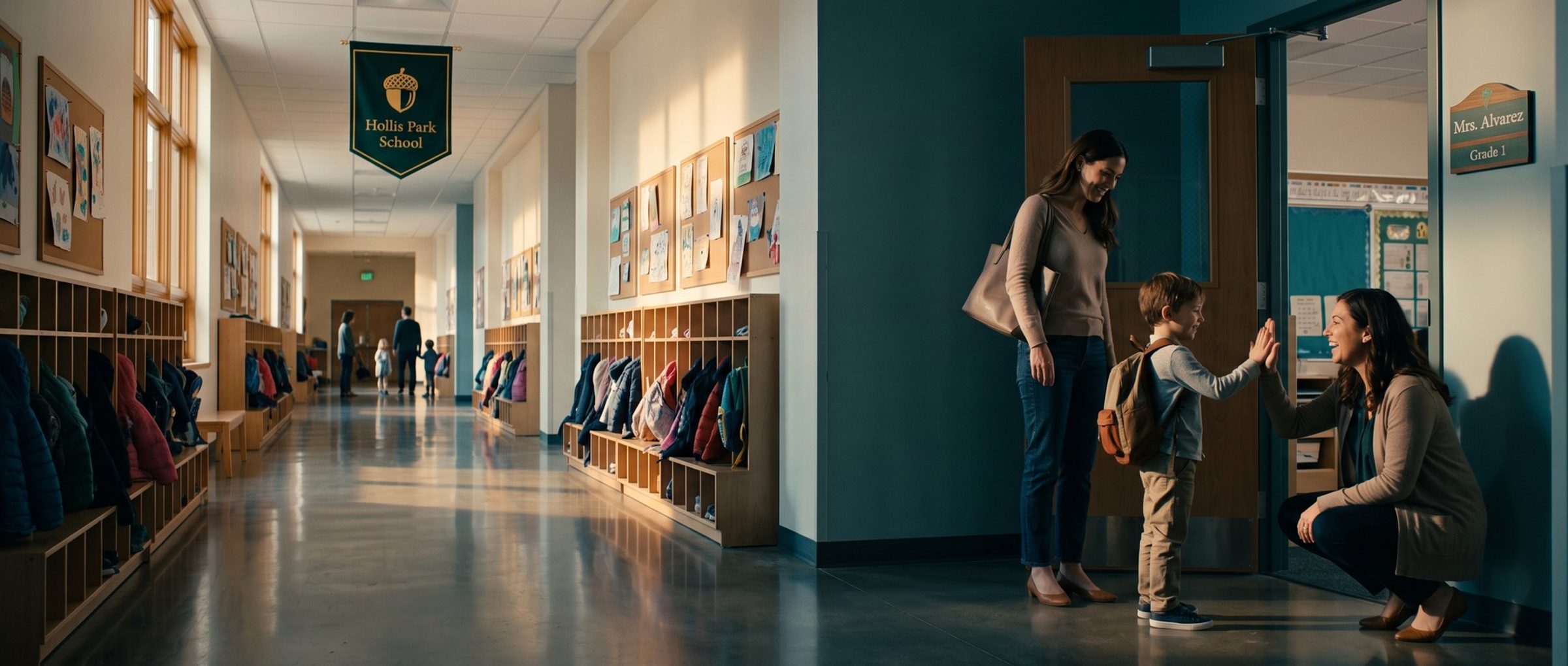
Most school ads are written by the people who know the school best: the admissions director, the marketing office, the head of school. That's exactly the problem. They describe the school the way the school describes itself: rigor, mission, a redefined approach, an inclusive community. Families describe it differently, and when they praise a school in public, they mostly praise one thing.
This chapter covers where to find the words families use, what the ads in one market actually say next to those words, why every claim in an ad has to be on the page, and how to give Google enough headlines to find the combinations that work.
Families Praise a School's Teachers More Than Anything Else. Only 8 of 234 School Ads Did.
We read 826 reviews of our twelve example schools in the Salt Lake City market, every one by hand: private K-12 schools, colleges, trade schools and online programs, from Google and Niche. Teachers and instructors came up in 316 of them, more than any other theme, and 220 of those mentions were praise.
In private K-12 reviews the pattern is stronger. Of 88 private K-12 reviews, 54 brought up teachers, 48 of them warmly. Parents don't write about rigor or mission. They write about being known:
- "Your kids are known well and so are you as a parent." (a Christian K-12 school parent, Niche)
- "Our children are known and seen, challenged, engaged, and deeply respected for who they are." (an independent school parent, Niche)
- "Smaller classes and your professors know you by name." (a private college student, Niche)
Then we read the ads. The Ads Transparency Center held 234 ads with readable text from the same twelve schools. Only 8 of them praised the school's teachers or instructors in the ad's own words, and all 8 came from three schools: a community college's culinary ad in four versions, a technical college's "industry expert instructors" and a beauty school's instructors. None of the six written ads from the three private K-12 schools mentioned a teacher. One mentioned small class sizes.
The online programs were the exception, and they show what matching looks like. Flexibility was their students' most common praise: 63 of 207 online-program reviews praised the schedule, the pace or the fit with work and family, in words like "working mom" and "own pace." And 24 of the online programs' 79 ads said flexible, own pace, self-paced or on your schedule. Their ads already sound like their students.
Reviews Are Written After Enrolling. Reddit and Niche Show How Families Talk While They're Still Choosing.
Reviews tell you what families value once they're in. To hear the words they use while they're still deciding, which is when they see your ad, look where they're asking each other for advice.
Where to read depends on the kind of school:
- Private K-12. The three private school listings we checked on Google showed no reviews at all, so Niche was the only review source. Parents also ask each other on Reddit and in local parent groups, in threads like "Best Private Schools in SLC" and head-to-head comparisons of two named schools.
- Colleges. Google reviews and Niche both have volume. Watch for reviews that aren't about the school: at our example university, 29 of 52 Google reviews we pulled weren't about the school, and most of those were about the hospital, events or parking.
- Trade schools. Google reviews carry the most, with Reddit trade threads for the choosing words. A beauty school's reviews can be mostly salon clients; at our example school, 46 of 57 had nothing to do with the school.
- Online programs. Google, Niche and Reddit, where the question is almost always "is it legit?"
The words differ between the two places. In the 703 Reddit posts and comments we read about choosing a school, "worth it" appeared in 28 posts against 6 of 826 reviews. "Accredited" appeared in 28 posts and 2 reviews. Tours, visits, open houses and shadow days came up in 50 posts and 14 reviews. Families who are still choosing ask whether it's worth the money, whether the degree is real and whether they should visit first. Those are headlines.
One more source sits inside the school. The admissions office and the front desk answer the same questions every week: Do you have a bus? Is there a sibling discount? Can my child shadow for a day? Is the program approved for my state's license? Ask them to keep a list for a month. The questions families ask out loud are the ones they're typing into Google.
A School Ad Can Promise Only What the Page Shows. 9 of Our 12 Example Schools Advertised Claims Their Sites Never Made.
When we checked every ad from the twelve schools against the school's own website, 9 of the 12 had run at least one ad with a claim, offer or date the site didn't state or contradicted:
- "Apply Free," while the application flow showed a $65 fee.
- "Classes start August 2024," still running in August 2026.
- "18 Sports Teams," against 17 sports on the site.
- "Excellent pass rate," with no pass rate anywhere on the site.
Several are old ads nobody went back to, not attempts to mislead. They still cost the school. A parent who clicks "Apply Free" and meets a fee has just learned not to trust the next thing the school says. Google's misrepresentation policy also bars a school ad from promising an offer a family can't readily find once they land, or from implying an unlikely result is the usual one.
Outcome claims need the most care. Many school ads use the word "career" as a label, but only 22 of the 234 (9%) said anything concrete about jobs, licenses, pass rates, pay or employers, against 15% of the reviews. When students do talk about outcomes, they argue with numbers. A CDL student wrote that "not even 2 weeks after passing my cdl test I have a good paying job." In a Reddit cosmetology forum, one commenter's advice to a future student was to "ask about their rate when it comes to their students passing state board." In an online university's Reddit forum, one commenter offered proof in a line: "Also, I got a 40% pay increase."
That's the bar an outcome headline has to clear. "Excellent pass rate" with no rate on the page fails it. "92% Passed State Boards in 2025" clears it, if the page publishes the 92% and says which year and which exam. Trade schools and online programs that publish licensing exam results, job placement or employer partners on the program page can put the number in the ad. Schools that don't publish those numbers should start there, on the page, before writing the ad.
The fix starts with the landing page. Write the ad from the page the ad points to (Chapter 4): the tuition it states, the accreditation it names, the start dates it lists, the pass rate it publishes. A claim goes into the school's ad only after it's on the school's page.
We hold our own drafts to the same rule. Writing ads for a private school we managed, we drafted the headline "100% college acceptance rate," then flagged it ourselves before launch because we weren't sure it reflected reality. A claim like that belongs in an ad only when the school publishes the number and can stand behind it.
Pinning Headlines Locks a School Ad Into Fewer Combinations. Google's Own Help Page Recommends Against It.
A school's responsive search ad can carry 15 short headlines (30 characters apiece) and four longer descriptions (90 apiece). For each family's search, Google assembles a different mix and keeps track of which mixes earn the click.
A pinned headline always shows in the same slot, and advertisers often pin their name to slot one. Each pin leaves Google fewer headlines to fit a parent's search, so Google doesn't recommend pinning for most advertisers, and a pinned ad can score lower on Ad Strength. Pin only what must appear in every ad, like a required disclosure, and give that slot two or three versions so Google still has a choice.
Here is what 15 headlines can look like for a made-up private school, Ashford Day School, built from the review words above. Every one has to be true on the page the ad points to:
Teachers and being known get several headlines because they lead the reviews. A tour or shadow-day headline gives the family the next step they're already asking about. Tuition and aid headlines answer the cost question directly; all twelve example schools publish tuition on their sites, so there's no reason for the ad to dodge it. A college would add program names and transfer; an online program would add accreditation, pace and "working adults" in its own students' words.
The four descriptions work the same way, with more room. Two examples for the same made-up school, each under 90 characters:
- "Small classes and teachers who know every child by name. Book a tour or a shadow day."
- "K-8 private school. Tuition and aid are listed on our site. Open house most Saturdays."
Write all four from the same lists: one about teachers and being known, one about the visit, one about cost, one about what makes the school different from the others in your market.
Before writing, read what rival schools say. Google's Ads Transparency Center shows the ads of any verified advertiser, searchable by name or website, and the Ad Preview and Diagnosis tool (Chapter 5) shows the live ads on a search in your market without costing anyone a click. You're looking for what everyone says, so your ad can say something else: if four schools all lead with "college prep," the school that leads with its teachers stands out.
AI writing tools come last, if at all. Give one the reviews and it will hand back polished headlines in the school's brochure voice, which is the voice families don't use. Use it to check character counts or suggest a shorter way to say something you already wrote, not to write the first draft.
Next: Reaching Teenagers Without Targeting Them
Chapter 9 covers the audience schools most want and Google limits most: students under 18, and the parents who decide with them. If your bidding isn't set up yet, Chapter 7 covers what to bid on. All sixteen chapters are listed on the Google Ads for Education guide home. If you'd like a hand with the ads themselves, here is how our Google Ads management runs for schools.


