Most pest control ads are written the same way: someone opens a blank headline box, types the company name, adds a price, and calls it done. The result is a search page where every ad sounds like every other ad, and the cheapest offer on the page does most of the talking.
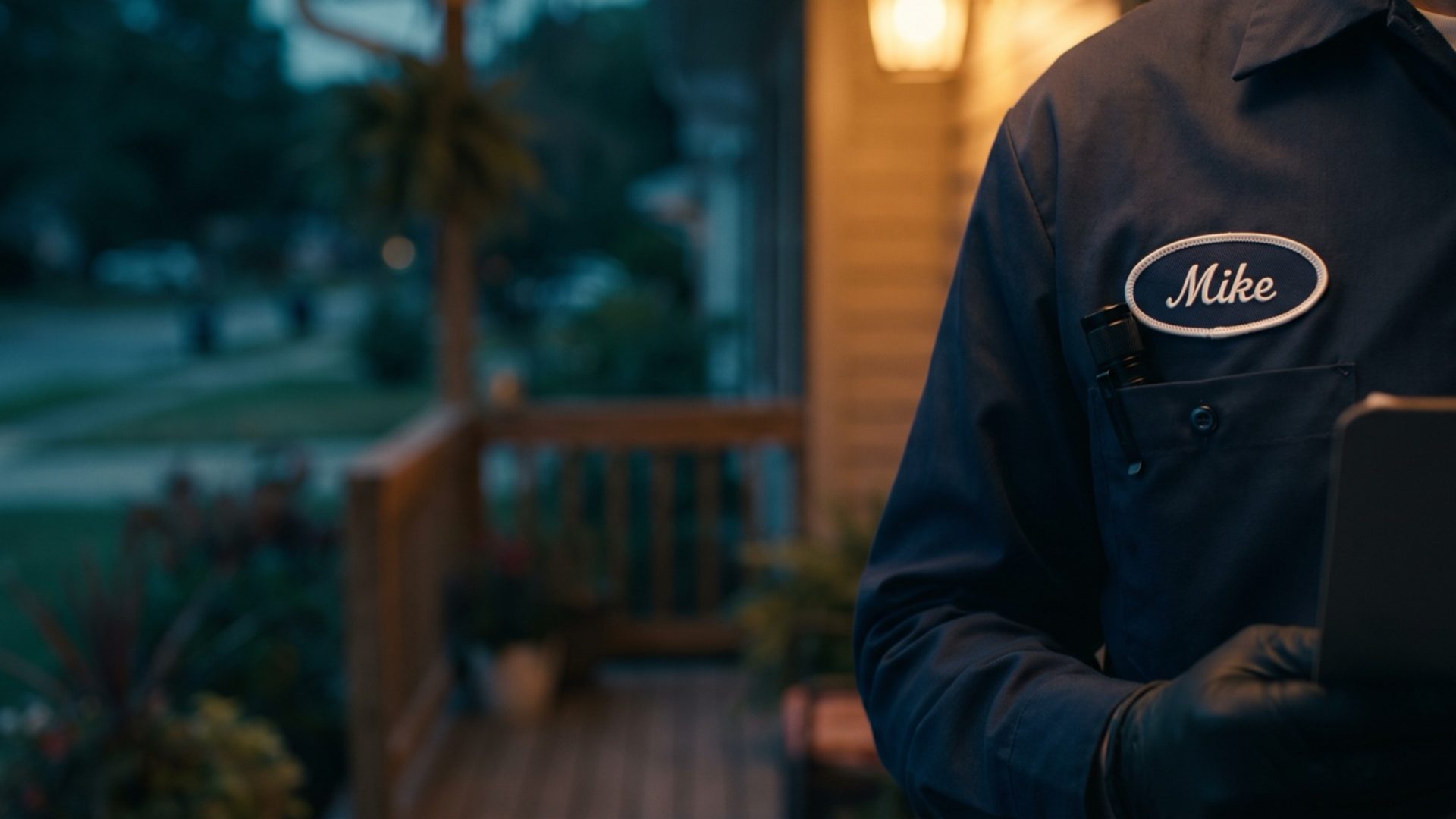
There's a better place to start. Your customers have already told the internet what they value about pest control companies, in thousands of words, for free. We hand-sorted 616 Google reviews left for pest companies around Tampa-St. Petersburg, this guide's example market, and more than half talked about the person who came to the house. Then we read the ads those same kinds of companies run on Google. Almost none of them mention that person.
This chapter is how to close that gap, starting with the words you already own.
Your Service Page Already Wrote the First Draft of Your Pest Control Ad
Before reviews, before competitors, start with your own landing page. Chapter 4 built one page per pest, and Google grades every ad partly on how well it matches the page behind it. An ad that promises something the page never mentions starts at a disadvantage, and it leaves the visitor hunting for the thing that made them click.
So read your termite page, or your rodent page, and pull out what's already there:
- The service in plain words: termite inspection, rodent exclusion, bed bug heat treatment.
- The promises you keep: free re-service between visits, a written warranty, same-day response, a technician who sends photos.
- The trust signals: years in business, licensing, local ownership, the neighborhoods you serve.
Each of those is a headline candidate, and each one is already true, because it's already on your site. If the page is thin, fix the page first. An ad can't borrow a promise the page doesn't make.
Customers Praise the Technician. Pest Control Ads Sell the Price.
Of the 616 reviews we read, 338 mentioned the technician by name or described how they worked. Nearly all of those, 316, were positive. Another 87 praised a tech who explained what they were doing, sent photos or walked the homeowner through the treatment. Not one of those 87 was negative.
That wasn't one big company pulling up the average. At 16 of the 21 listings with at least 10 reviews, 40% or more of the reviews talked about the technician. Big brands and small local shops alike.
Then we read the ads. We looked at the two most recent Search ads from each of 35 pest control advertisers in Google's Ads Transparency Center, about 51 of which we could read clearly. Thirteen led with a price or an offer: a first service for $47 or $49, a monthly rate, $50 off. Eleven promised a guarantee. Seven promised same-day service. Five mentioned a technician at all, and every one of those was generic: "trained technicians," "licensed exterminators," experts who "take notes every visit."
Customers write about the tech who explained everything and came back when the roaches did. The ads write about $49.
That's not a knock on price. Price works, and nothing in this chapter says to hide yours. But a price is the easiest promise in the auction to copy, and a chain can always print a lower one. The technician is the one thing a competitor can't copy, and it's what your customers already say they're paying for.
Here are phrases pest control customers wrote, word for word, that fit in a 30-character headline:
- "I haven't seen one since"
- "Explained everything"
- "I like having the same person"
- "He came out the next day"
- "Always on time"
- "No lingering smell"
- "Done right the first time"
Two rules before you use any of them. First, a line that makes a factual promise (arriving the same day, using only natural products) belongs in your ad only when your crews deliver it on every job. Second, don't present a line as a quote from a real customer unless it is one. The words are a guide to what matters to buyers. Your headline is still your promise.
Where to find your own phrases: your Google reviews first, then Yelp, Thumbtack, the BBB and Angi, wherever your customers leave them. And ask the person who answers your phones what callers ask about before they book. The front desk hears the objections that never make it into a review.
Pest Control Reviews Complain About Contracts. Almost No Ads Promise None.
The reviews held a second pattern. Fifty-four of them mentioned contracts, auto-renewal or canceling, and 36 of those were complaints. Almost all of them were about getting out: a yearly contract the customer didn't know they'd signed, a notice period nobody remembered, cancellation fees, bills that kept coming after the customer canceled. One reviewer put it plainly: "I had no idea I was agreeing to a yearly contract with no way to get out of it." Only two of the 54 were positive. Most of the complaints came from the listings of national and regional brands.
Among the roughly 51 ads we read, one promised "no contracts."
If you don't lock customers into long contracts, that's a headline almost nobody in the auction is using, aimed straight at a worry customers put in writing. "No contracts." "Cancel anytime." "Pay per visit." Each fits in a headline with room to spare.
If you do use contracts, leave this one alone. Don't write around it with something vague that hints at flexibility. A customer who clicks on an implied promise and finds a 12-month agreement at the bottom of the page is the review you'll be reading next month.
Every Pest Control Ad Your Competitors Run Is Posted in Google's Ads Transparency Center
You don't have to guess what your competitors say. Google publishes it.
Go to Google's Ads Transparency Center, search by the advertiser's name or website, and filter by date and location. You'll see the ads that company has run, including its Search ads. Two things to know from our own research:
- Some local companies advertise under someone else's name. Franchises and agency-managed accounts often show the franchisee, a parent company or the agency as the advertiser. If a competitor's name finds nothing, try their website instead.
- The Center shows what ran, not always where. When we looked up the national brands, it didn't tell us which cities their ads targeted.
For what's actually showing in your own market today, use the Ad preview and diagnosis tool from Chapter 5, set to your service area. Paid tools like SpyFu and Semrush can add history and estimated spend, but they're optional. The free tools cover what you need to write your first ads.
What you're looking for: the promises everyone makes, so yours don't blend in, and the promises nobody makes, so you can.
Fifteen Headlines Launch Unpinned. Only a Proven Winner Earns a Pin.
Google's standard Search ad is the responsive search ad. It holds as many as 15 short headlines, 30 characters apiece, plus up to 4 longer descriptions at 90. Google shuffles them into different ads for different searches and keeps track of which versions earn the calls.
Fill the slots from the sources above, and give Google real variety to work with:
- The service and the pest, in the searcher's words: "Termite Inspection in Tampa."
- The technician, in your customers' words: "Your Tech Knows Your House," if you keep the same tech on each route.
- The promise: re-service, warranty, response time.
- The differentiator: no contracts, local ownership, years in the neighborhood, if true.
- The price, if you publish one.
Prices also have a home of their own under the ad: price assets, a row of up to eight cards, each with a short header, a short description and a price. Google asks for at least three. Chapter 4 promised the rules, and there's one that matters most for pest companies: Google's policy says the prices must be accurate, "easily found" on the page the card links to, and match what the card says. Of the twelve example sites we studied, only three showed any service price on the page. The rest asked for an inspection, a phone call or a street address first. If your site works that way, price assets aren't available to you until the page shows the price. That's a business decision, not an ad setting. The setup also includes a price qualifier, so a starting price can be labeled as one and doesn't read as the whole bill.
Then launch the headlines unpinned. Pinning locks a headline to a position, like always showing your company name first. Google's own guidance says pinning cuts down the combinations it can test and isn't recommended for most advertisers. At launch, you don't know yet which headline is your best one, so let Google find out.
Pin only when you know: the owner has proof a line works from years of flyers and door hangers, or the data shows one headline carrying the account. Otherwise, leave the slots open.
You'll see a grade called Ad Strength while you write. It's a helper, not a judge. Google is explicit that this grade plays no role in the auction itself, in Ad Rank or in Quality Score. A "Poor" rating on an ad built from true, specific headlines is fine.
AI tools have a place here, but at the end, not the start. Write from your page and your customers first, then ask an AI tool to check your character counts or suggest variations. An ad that starts from a blank AI prompt comes back sounding like everyone else's, because it was trained on everyone else's.
Once the ads have run for a few weeks, Google Ads reports how each headline performed. Replace the weakest few with new lines from your reviews, and keep doing that for as long as the account runs. Good ad copy isn't written once. It's pruned.
Next: The Settings That Decide Where the Ads Run
Good copy is wasted on the wrong neighborhood. Chapter 9 covers campaign settings: location targeting built around where your trucks actually go, ad schedules and the defaults Google turns on that a pest company should turn off.
If you're catching up, Chapter 4 explains why each pest gets its own ad and page, and Chapter 7 sets the bids these ads compete with. The full series is on the pest control guide's home page.
For the pest companies on our Google Ads management, the first headlines come from the company's own reviews, and the technician is in them from day one.