
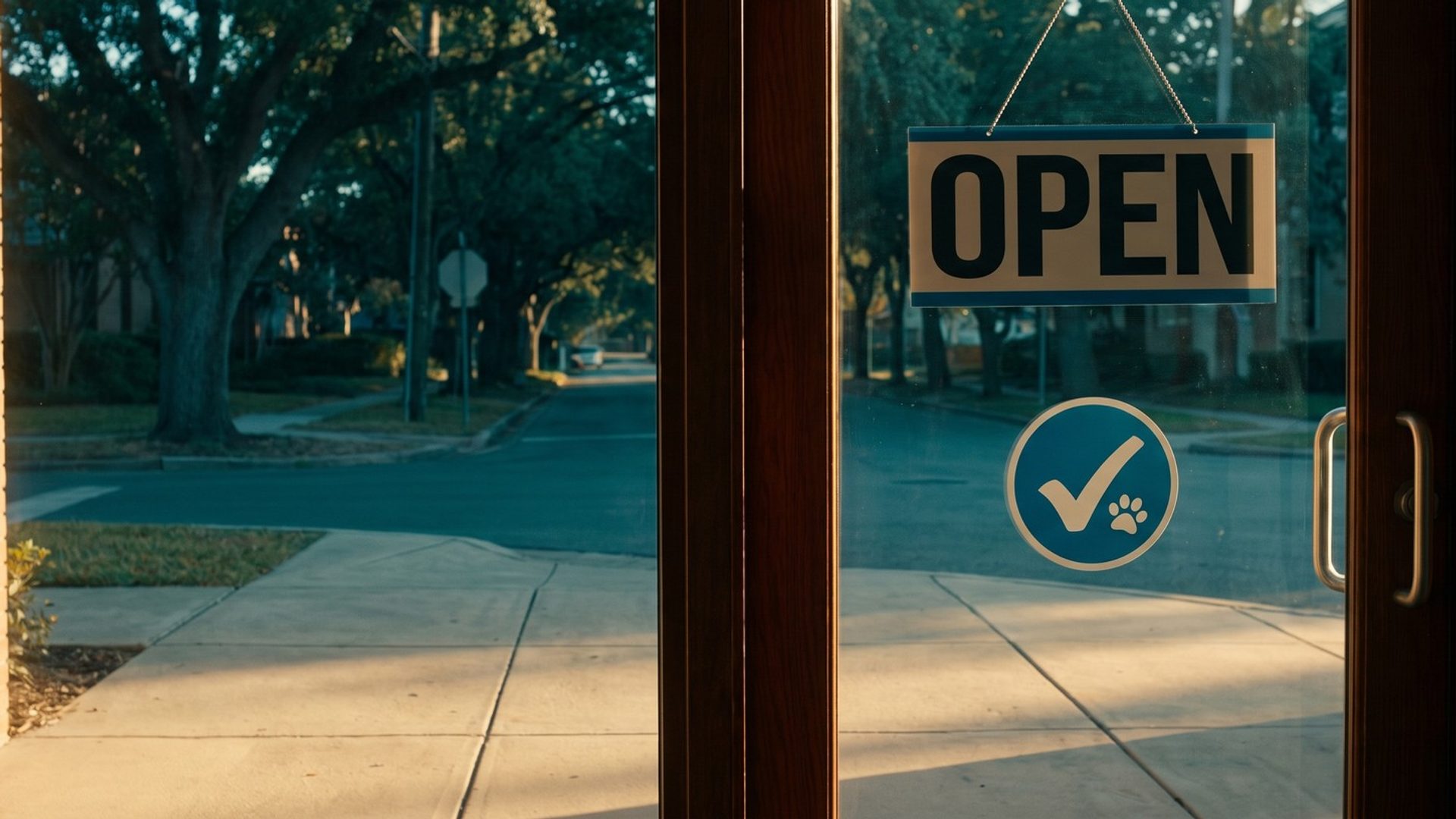
An owner searches for a vet, sees a practice with a verified badge and a row of five-star reviews, and taps to call. The phone rings six times and goes to voicemail. She hangs up and taps the next practice down.
With a regular search ad, that missed call costs you one client. With Local Services Ads, it can also cost you your place on the page, because Google ranks these ads partly on how reliably a business picks up.
Local Services Ads are Google's pay-per-lead ads for local businesses, and veterinarians have their own category. This chapter covers how they rank, what the badge means now, which rules apply to vets, and why our method adds them late rather than first.
The Ads Above the Ads
Local Services Ads look different from the search ads in earlier chapters. Instead of a headline and description, they show the business itself: its name, rating, review count, hours and a badge. Google describes them as a way to "appear prominently in Searches and connect with customers in your area."
The pricing is different too. There's no charge for a click. The practice is charged when an owner actually reaches out through the ad, usually with a call or a message.
"Veterinarian" is one of the categories Google offers in the United States. It's worth noticing where Google files it. Google's screening rules group businesses into sections, and veterinarians sit under Pet Care, alongside groomers and boarding, not with the doctors and dentists in the health care section. That placement matters later in this chapter.
Google Ranks Them Partly on Whether You Pick Up
Local Services Ads run on an auction, and Google publishes what goes into it. There's the bid, the most you're willing to pay for a lead. Then there's how likely your ad is to produce a lead, and that's where a vet practice's phones come in. Google's ranking page says directly that missed calls can count against a business's responsiveness.
The rest comes from what Google calls profile quality. Its list: the practice's rating, how many reviews it has, how fast it usually responds, whether it has good photos, and which verification checks it has passed. Google also says that stronger profiles, especially ones with photos, can rank higher and can be charged less for each lead.
So two practices bidding the same amount won't rank the same. The one with more reviews, real photos of the practice, and staff who answer the phone will usually sit higher, and it may pay less for each lead.
On the bid itself, Google's advice is to let it choose. Its recommended setting, Maximize Leads, sets the bid automatically to get as many leads as the budget allows, and Google says businesses of similar quality and budget that use it usually get more leads than those that set bids by hand. For a practice new to Local Services Ads, that's a sensible start. Set a weekly budget you're comfortable with, let it run for a few weeks, then look at what each lead actually cost and how many became booked visits before deciding whether to raise it.
Vet Practices Already Miss More Calls Than They Think
That responsiveness rule would matter less if vet practices answered every call. The research says they don't.
A 2026 study in the AVMA's journal sent callers posing as new clients to 5,053 general practices, found the way an owner would, through Google Maps. Only 67.0% of attempts ended with an appointment. In 15.1% of attempts, nobody answered. Another 8.2% ended because the caller was left on hold too long. Only 3.9% failed because the practice had no room for new patients.
Read that last number again. Most of the lost appointments weren't about capacity. They were about the phone.
In a search campaign, those missed calls are lost clients. In Local Services Ads, they're lost clients and a weaker responsiveness record, which can push the practice down for the next owner too. Chapter 1 covered how to track calls. Before a practice turns on Local Services Ads, it's worth checking how many calls it's already missing and fixing coverage first: a second line at the front desk during busy hours, overflow to another trained staff member, or an answering service that can book.
Reviews Are the Part You Control Most
Of everything in the ranking, reviews are the input a practice can most directly grow. Local Services Ads draw on the reviews from the practice's Google Business Profile, the same ones owners see on Maps, so every review a practice earns there helps both.
Vet practices have an advantage here. Owners write about their vets in detail, as Chapter 8 showed from 683 reviews in one example market. A simple habit keeps new ones coming: ask at checkout, after a visit that went well, and send a short text with the review link the same day.
Two rules keep it clean. Ask every client, not only the ones you expect to be happy, and never offer a discount or a gift in exchange. The federal rule on consumer reviews, covered in Chapter 8, bars rewarding reviews that are conditioned on being positive.
The Google Verified Badge Replaced Guaranteed and Screened
If you've looked into Local Services Ads before, you may remember green badges called Google Guaranteed and Google Screened. They're gone. In August 2025, Google announced it was unifying the badges, starting that October, into one: Google Verified. The new badge "will replace other LSA badges and programs, like Google Guaranteed, Google Screened, License Verified by Google and the Money Back Guarantee," and it shows "alongside details of which verification checks a business has passed."
For a veterinarian, Google's screening page lists what those checks are:
- Licenses: a state-level business license and a state-level license for the owner.
- Insurance: professional liability insurance.
- Background and registration checks: a business check and an owner check, for some businesses.
Have the documents ready before you apply. The badge is part of profile quality, so a practice that completes its checks gets the badge and a better shot at ranking.
Pet Care Isn't Health Care in Google's LSA Rules
Google's Local Services help pages list several features that health care businesses can't use. They can't take booking leads, where an owner books a time straight from the ad. They can't run pre-badge ads. And they don't get call recordings or lead credits, the refunds Google gives for leads that weren't real.
Those rules shape how dentists and doctors use Local Services Ads. Whether they apply to vets is a fair question, and Google doesn't answer it directly. Our reading: because Google files veterinarians under Pet Care rather than health care, these limits likely don't apply. But Google doesn't say so in plain words, so confirm what's available in your own account before you build a plan around it.
If booking and message leads are available to you, turn them on. Google notes that more ways to reach you "can increase the likelihood of receiving a lead, especially during nights and weekends when you can't answer the phone." For a general practice that closes at 6 p.m., a message lead at 9 p.m. that the front desk answers in the morning is better than a missed call.
Why Our Method Holds It Until Later
With all that going for them, why aren't Local Services Ads the first thing a vet practice runs?
Control. In a search campaign, you choose the keywords, read the searches that triggered your ads, block the wrong ones, and write the ad. In Local Services Ads, you choose the services you offer and the area you cover, and Google does the rest. You just don't have the granularity of control that Search gives you. You also get less of the measurement the rest of this guide depends on.
That's why our method treats them as a cautious, optional add later in the rollout, not a starting point. They work best for a practice that already has:
- Strong reviews, since rating and review count feed the ranking.
- Reliable phone coverage, since missed calls count against you.
- Search campaigns already running, so you can compare what a lead costs in each.
When those are in place, Local Services Ads can be a useful second source of calls from owners ready to book. When they aren't, the ads tend to show you the practice's weak spots at a price.
Google Hasn't Said When Vets Move to the New System
One more thing to know before you start: Local Services Ads are changing. Google is moving them into regular Google Ads accounts as Performance Max campaigns with pay-per-lead goals, the campaign type from Chapter 10, in phases.
Google's timeline starts with a first group of home and storefront services in August 2026, such as plumbers, electricians and cleaners. More kinds of businesses follow late in 2026. Every category still left moves in 2027.
Veterinarians aren't named in any phase. So a practice starting Local Services Ads now should expect to move by 2027 at the latest. Until then, keep the reviews, photos and verification current, since they feed the ranking today.
Next: When Google Writes Your Ads
Chapter 13 covers AI Max, the Google feature that writes ad text from your website and expands your keywords, and the rules a vet practice needs to set before it runs, starting with who's allowed to be called a specialist.
The whole guide is on the Google Ads for Veterinarians guide home. And if you'd like help deciding whether Local Services Ads fit your practice yet, it's part of what our Google Ads management looks at for vet clients.