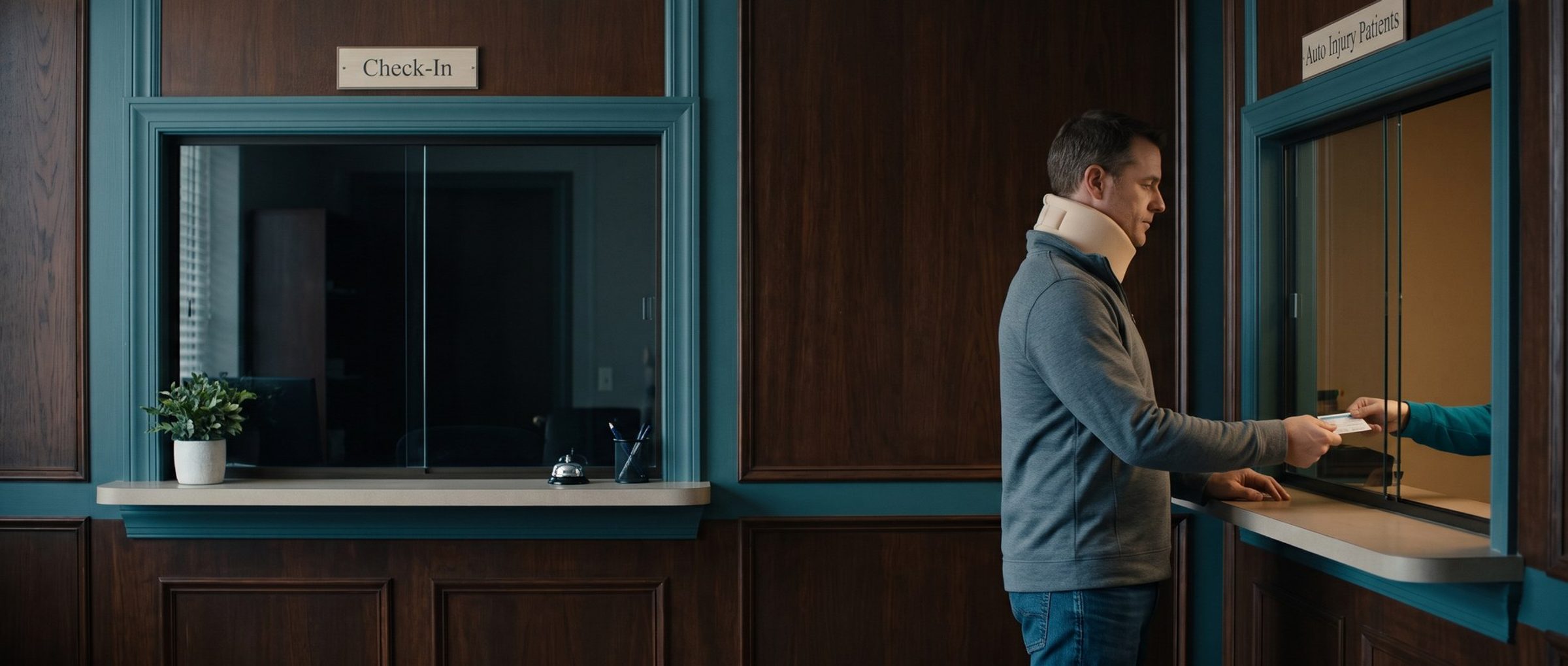
Most chiropractic patients find a practice the same way: a sore back, a search, a call. Car accident patients arrive differently. They're often hurting in more than one place, dealing with an insurance claim, sometimes working with a lawyer, and on a deadline they may not know they have.
For many practices, auto injury is a real part of the business. In Google Ads, it's also the most expensive set of searches in chiropractic. This chapter explains why those searches deserve their own campaign, what the click is really worth, and the rules that sit around accident marketing.
Car Accident Chiropractor Searches Top Out Near $70 a Click. Everyday Chiropractic Searches Stop Around $18.
Keyword Planner's top-of-page bid ranges show the gap plainly. For the core chiropractic searches, "chiropractor near me" and its close cousins, the high end of the range tops out between $13 and $18 a click nationally.
Car accident and auto injury searches cost far more per click, by Keyword Planner's national monthly figures:
- "car accident chiropractor near me": 4,400 a month nationwide, bids running $8.31 to $69.66
- "auto injury chiropractor near me": 590, up to $84.68
- "accident chiropractor near me": 390, up to $82.60
- "personal injury chiropractor near me": 720, up to $34.14
Two more things stand out. Only the "near me" phrasings report volume; Keyword Planner shows zero for the plain versions such as "car accident chiropractor." And locally the numbers are small. In our example market, Baltimore, "auto accident chiropractor near me" showed 30 searches a month with no bid data at all.
One related search is much bigger. "Whiplash injury" draws 14,800 US searches a month, with bids from $4.92 to $39.94, and "whiplash chiropractor" another 1,300. Whiplash is a common car accident injury, so those searches belong in the same campaign, with their own ad group and a page about whiplash care.
So accident searches are few and expensive, apart from whiplash. That combination is exactly why they shouldn't share a budget with anything else.
Eleven of Twelve Chiropractors We Studied Already Have an Auto-Injury Page Ready for an Ad
Of the twelve Baltimore-area practices we studied, eleven offer auto-injury care and have a dedicated page for it, usually titled for auto accidents or whiplash. Two of them go further, with a portal for attorneys or an option to treat on a medical lien.
That matters because Chapter 4's rule applies here too: the ad should land on the page that matches the search. A car accident searcher who lands on the home page has to hunt for the one thing they came for. The auto-injury page already answers it, or should. Before advertising, check that it covers the questions an accident patient asks first:
- Who pays: which auto policies, PIP or MedPay coverage, and health plans you work with, and whether you can bill the auto insurer directly.
- Timing: how soon a new accident patient can be seen.
- Paperwork: what to bring, such as the claim number and the insurer's contact.
- What happens on the first visit, in plain words.
A Separate Accident Campaign Keeps $70 Clicks From Eating the Back Pain Budget
Give a chiropractic practice's car accident searches a campaign of their own, with a budget nobody else can touch.
The reason is arithmetic. If "car accident chiropractor near me" sits in the same campaign as "back pain chiropractor," a handful of $50 and $70 clicks can use up the day's budget before the back pain searches get a turn. In a separate campaign, each budget does its own job: the core campaign keeps showing for the everyday searches, and the accident campaign spends only what the practice decided auto injury is worth.
A separate campaign also makes the numbers readable. Accident patients cost more to reach, and what they're worth varies widely by case. Mixed into the main campaign, both blur into an average that describes neither.
Inside the accident campaign, use the same structure as Isolation (Chapter 5): exact match, a small number of close searches per ad group, bids set by hand. Add negatives for the searches that aren't patients, such as people looking for a lawyer, a police report, or a body shop.
In Florida, Auto Coverage Pays for Chiropractic Care Only When It Starts Within 14 Days of the Crash
Where the patient lives changes everything about an auto-injury case. An insurance industry group's state-by-state summary counts twelve states plus Puerto Rico with no-fault auto insurance laws, where a driver's own policy pays medical bills first, regardless of who caused the crash.
Florida shows how much the details matter. Its personal injury protection law pays medical benefits only if the patient's first care comes "within 14 days after the motor vehicle accident," and it names chiropractic physicians among the providers who can deliver that initial care. Chapter 3 noted the dollar cap that follows. For a Florida practice, that 14-day window shapes how quickly the practice needs to see new accident patients.
Other states set different limits, and fault states work differently again, with payment often waiting on the at-fault driver's insurance. Before building the accident campaign, look up your own state's rules, or ask the attorneys and adjusters your practice already works with.
Auto Insurance, Not the Patient, Often Pays for an Accident Visit. That Changes What the Click Is Worth.
Chapter 3 built a worksheet that values each kind of patient by who pays, and auto injury was one of the four payers. The 2025 national survey of chiropractors in that chapter put personal injury at 9% of patients.
For the accident campaign, run the worksheet on its own with your own records:
- What an auto-injury case brings in over the full course of care, by payer type.
- How long payment takes. In some cases the practice is paid only when a claim settles, which can be months later.
- What share of accident leads become kept first visits.
That gives you a ceiling for the accident campaign's bids, separate from the main account. It may well justify paying several times what a back pain click costs. It may not, if most of your accident cases pay slowly or partly.
Of the 183 low-star reviews we read, 13 involved an accident case, an attorney or a settlement, and four of those were about bills or collections tied to the case. Explaining clearly how billing works, before the first visit, is part of what the campaign is buying.
Measurement works as in Chapter 1. The kept first visit goes back to Google by click ID, with no patient details attached, so the accident campaign learns which clicks became patients.
Texas, Ohio and Three Other States Limit Calls to Accident Victims. None of Those Laws Mentions Search Ads.
Several states limit how a health care provider can contact someone after a crash, and chiropractors are named in them.
- Texas bars a chiropractor from soliciting an accident victim, including by phone, in person or "through a direct message on a social media platform," before the 31st day after the accident.
- Kentucky bars a health care provider from soliciting a person involved in a motor vehicle accident during the first 30 days.
- Colorado bars solicitation within 30 days, and says solicitation "does not include radio, television, newspaper, or yellow pages advertisements."
- Ohio never allows in-person contact, and limits phone, email, text and mail contact after the first 24 hours.
- Arizona treats soliciting someone in a motor vehicle accident within the past 15 days as grounds for discipline.
Our reading of these laws, which is not legal advice: they're aimed at contact directed to a specific person after a specific accident, and none of the five mentions search ads. A search ad shown to someone who typed "car accident chiropractor near me" is that person reaching out, not the practice. The risk sits in the tactics that sometimes travel with accident marketing: calling or texting people from crash reports, messaging them on social media, or paying anyone to refer accident victims. Keep those out of the plan, and check your own state's rules with a lawyer who knows them.
A Patient Shaken by a Car Accident Needs an Ad That Explains the First Visit and the Billing
Accident ads have their own rule at Google. Its clickbait policy doesn't allow ads that use "negative life events such as death, accidents, illness, arrests or bankruptcy to induce fear, guilt or other strong negative emotions to pressure the viewer to take immediate action." Chiropractic rules in states such as Pennsylvania bar ads designed to appeal mainly to a layperson's fears, too.
So skip the urgency copy. Someone searching after a crash is already shaken. What they want from the ad is practical: can you see me soon, do you work with my insurance, and what happens at the first visit. Good accident headlines answer exactly that:
- "We Bill Auto Insurance" (if you do)
- "Same-Week Accident Visits" (if true)
- "Neck & Back Care After a Crash"
Each fits Google's 30-character headline limit from Chapter 8.
Then carry the same calm tone onto the auto-injury page described earlier, so the ad and the page sound like the same practice. If you'd like help building the accident campaign and its budget, our Google Ads agency team sets these up for practices that treat auto-injury patients.
Next: What a New-Patient Offer Does in a Chiropractic Ad
New-patient offers are the next topic in Chapter 15: what a first-visit price does in an ad, and what patients say about it afterward. The earlier chapters, from AI Max back to tracking, are on the Google Ads for Chiropractors guide home.