Every December, the same thing happens without anyone planning it. Kids come home from school coughing, parents catch it a week later, and the phones and the waiting room fill up. Nobody had to be persuaded. The flu did the marketing.
That's worth remembering when Google suggests a campaign built to create demand. Its job is to catch people before they've typed anything, in a YouTube break, a phone's Discover feed or a Gmail tab. It's a good tool for the right job. The mistake is pointing it at the one season that needs no persuading at all.
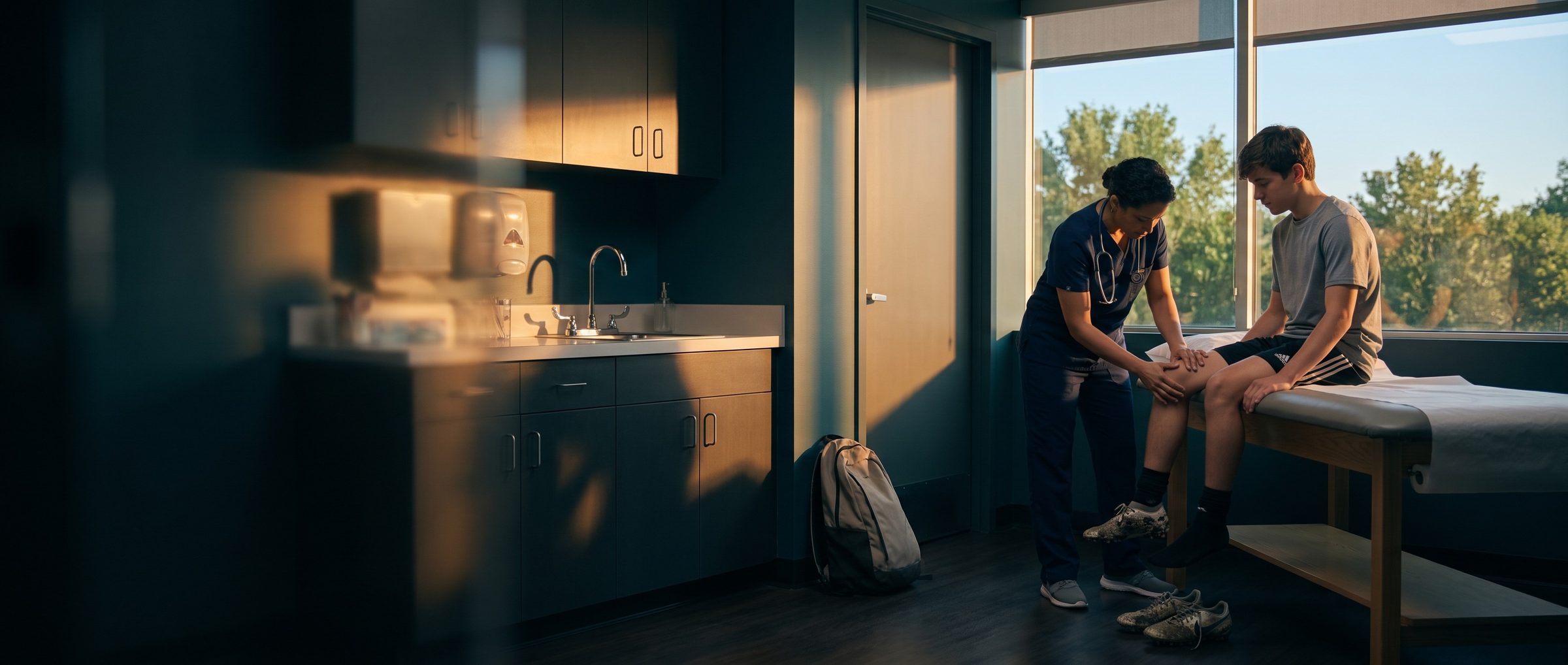
For an urgent care, the right job shows up in Google's own search data, and it isn't in winter. It's in July and August, when parents of school athletes need a physical signed before practice starts.
Flu Searches Run Five Times Higher in December Than in July, With No Help From Your Ads
Keyword Planner keeps a month-by-month count for every search, so we looked at the last twelve months nationally and in Philadelphia, our example market. The flu line looks the way you'd expect. Across the US, "flu symptoms" drew about 1,000,000 searches in December and about 201,000 in July, five times as many. In Philadelphia, the gap was wider: 33,100 in December against 4,400 in July.
The CDC's own record agrees. Across 40 flu seasons, flu activity most often peaked in February, followed by December.
None of those searches needed an ad to happen. People got sick and went looking. Your Search campaigns from Chapter 6 are already waiting for them, because the services and "near me" searches those campaigns bid on are exactly what a sick person types next. Spending on Demand Gen in December is paying to remind people of a fever they already have.
Searches for Urgent Care Near Me Barely Move Between Winter and Summer
Here's the number that surprised us. "Urgent care near me" drew about 4,090,000 searches a month across the US in ten of the last twelve months, including July. December rose to about 5,000,000. February dipped to about 3,350,000. In Philadelphia, the same search held at about 135,000 a month in eleven of twelve months, rising to 165,000 in December.
Chapter 3 cited 2016 industry data showing an average July day running about 14% below baseline and an average December day about 25% above it. The searches don't show a summer slump at all. The people who need urgent care in July are still looking for it. They're just looking for different things: the sprained ankle from a pickup game, the cut from a fishing hook, the ear infection after the pool.
Experity, which runs software for many urgent cares, reported the same thing from the inside for the 2025-26 season: even during peak flu activity, most visits had nothing to do with flu.
So the question for summer isn't how to create demand for urgent care. It's which summer demand you can reach before your competitors do.
Sports Physical Searches Jump Ninefold Between December and August
The clearest seasonal wave in the whole data set belongs to sports physicals. Across the US, "sports physical near me" drew about 8,100 searches in December and about 74,000 in August. In Philadelphia, it went from about 110 in December to about 1,000 in August. Both markets show the same ninefold jump.
In Pennsylvania, there's a rule behind that wave. The state's high school athletic association, PIAA, requires a pre-participation physical on its own form, and the form says the exam can't be done earlier than May 1 for the coming school year. It stays good until the next April 30, or the end of the spring season. Every athlete needs a new one every year, and every one of them has to happen in the same few months.
Other states set their own rules and forms, so check yours. But the pattern of a physical due before fall practice is common enough that the August spike shows up in the national numbers too.
That's a very different kind of demand from the flu. It's predictable to the month, it happens every year, and the parent knows it's coming. What they don't know yet is where they'll get it done.
Demand Gen Reaches the Parent Before the Sports Physical Search Starts
A Search ad waits for the parent to type "sports physical near me." Demand Gen can show up earlier: in a YouTube video they're watching in June, in their Discover feed, in Gmail. The job is to be the name they already have in mind when the form comes home.
A physical is also one of the few urgent care services that works well as a plain offer. What it is, what it costs if you publish a price, which ages you see, how to check in online, and when you're open. A short video of your own front desk and exam room does more than any stock footage, and the online check-in from Chapter 1 gives the campaign a conversion it can actually learn from: a booked physical.
Timing matters as much as the ad. Start in late spring, once the new school year's physicals can be done, and run through August. By September, the wave has passed, and Search can handle the stragglers.
Google's Health Rules Decide Where a Physical Ad Can Run and Who Sees It
Demand Gen can run on YouTube, Discover, Gmail and Google's display network. Ads in sensitive categories, and health is one, get less room: Google generally keeps them on YouTube, and they can only use Google's own predefined audiences, not your lists.
Which side of that line a sports physical falls on is a judgment call, because Google doesn't name urgent care services in its policy. Our reading is that an ad for a routine school physical is probably not a sensitive health ad, and an ad about flu, strep or a symptom almost certainly is. That's one more reason to keep Demand Gen for the physical and leave illness to Search.
The other rule is about age. Google doesn't let advertisers aim ads only at teens under 18, and users under 18 aren't eligible for personalized ads at all. That settles who the ad is for: the parent. Google's demographic options include parental status, and the ad should read like it was written for the person who fills out the form and drives to the appointment.
Demand Gen Needs a Budget Ten Times the Cost of a Check-In
When a Demand Gen campaign bids toward a target cost per check-in, Google wants the daily budget to be ten times that target or more. If a booked sports physical costs you $30 in ads, that's a $300 daily budget before the campaign has room to learn. For a single center, that's a lot of money for a service with a modest price.
That's why we treat the first summer as a test, not a launch. Start with one campaign across the whole group rather than one per center, give it the budget Google asks for, and measure it on booked physicals, not views or clicks. If the cost per booked physical comes in near what Search pays, it earns next summer. If it doesn't, Search keeps the job, and the budget goes back to the searches Chapter 6 built.
Winter Money Belongs in Search, Where the Flu Patients Are Already Looking
Chapter 3 set the winter budget increase and the ceiling that comes with it: the waiting room. December is when that ceiling hits hardest. Searches for "urgent care near me" rise by about a fifth, and every center has the same number of exam rooms it had in July.
That makes the winter job about holding position, not reaching new people. The extra money goes into Search, to keep your ads at the top of the page for the "near me" and service searches from Chapter 7's impression share targets. It doesn't go into Demand Gen, because in flu season the people you'd be reaching are already searching.
Next: Maps and Google's Wait Times
A parent who searches "urgent care near me" sees a map before they see anything else. Chapter 12 turns to Google Maps: what your listing shows patients before they tap, and where ads fit next to it.
Catch up on Chapter 3 for the budget math and Chapter 10 for the other campaign that reaches beyond Search, or see all sixteen chapters on the guide home.
When urgent care groups hire us for Google Ads management, we plan the year around the searches, not the other way around: Search all year, more of it in winter, and a physicals test before school starts.