
Every apartment community pays somebody to be found. Many communities spend most of their leasing ad budget on listing sites like Apartments.com and Zillow, because that's where renters look. Google Ads is the other big option, and the two get argued about constantly, usually by people who sell one of them.
This bonus chapter sorts out what the numbers actually say. It covers how many renters use listing sites and what they see there, what one agency's multi-year data showed about cost per lease, why listing sites can bid on your community's own name, which searches a community can win on Google, and how to decide which listing subscriptions earn their keep. Nearly every source here sells listing ads or search ads, so each one is labeled.
85% of Renters Use Listing Sites. Listing Pages Put Your Competitors Next to You.
Listing sites are where renters start, and that much isn't in dispute. Apartments.com surveyed more than 15,000 US adults planning to rent in 2026, and 85% said they're using or planning to use a site like Apartments.com. Word of mouth came second at 37%, and search engines third at 35%. That's a listing site asking renters about listing sites, so the gap may be generous, but other surveys also show heavy listing-site use. Zillow's own 2025 renter research found renters used a median of five sites or apps in their search, and that nearly one in five recent renters skipped touring a unit before signing. Renters shop widely, and a lot of the decision happens on screens the community doesn't control.
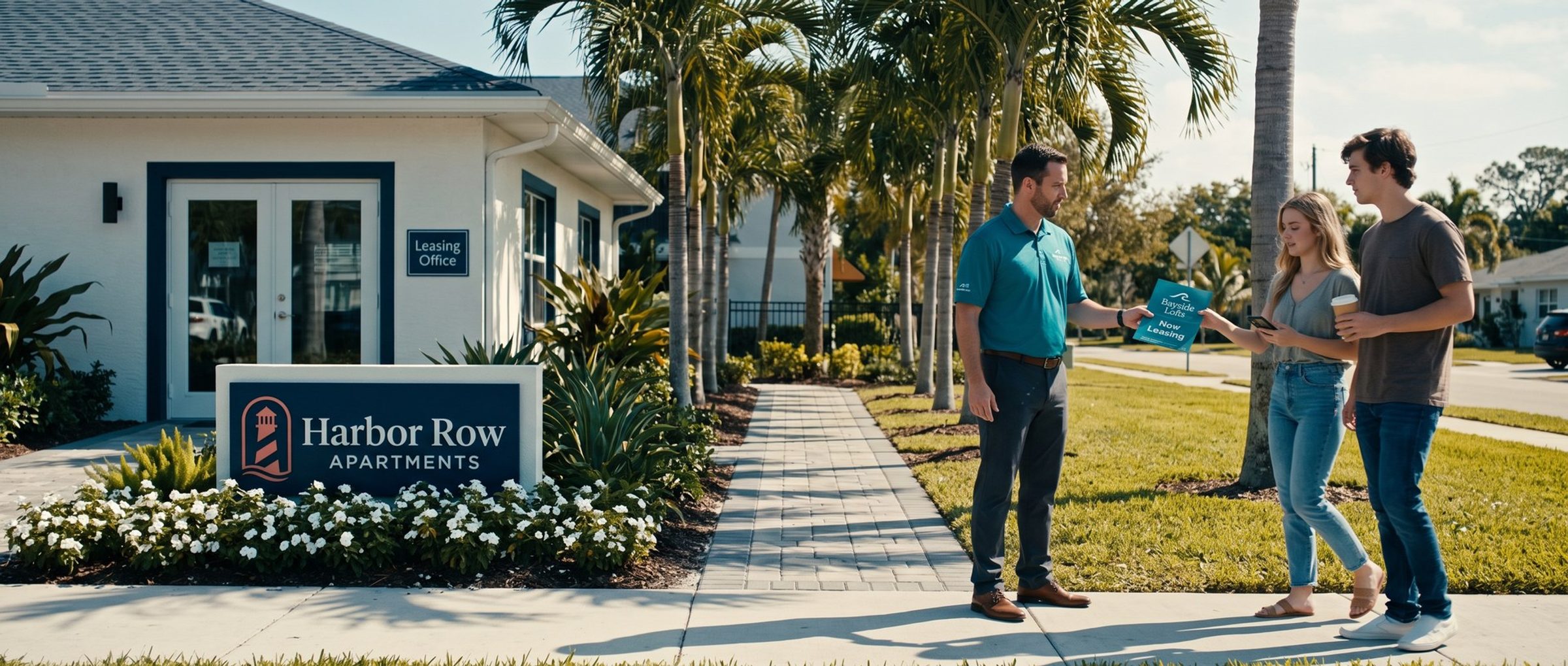
The catch is what renters find there. A listing page shows your community beside every other one in the area that pays to be listed. One paid search agency described it years ago as renters who also "find the 10 to 15 other competitors that are on that page," and another put it more bluntly in 2024: "you don't want to be spending spending money to promote your competitor projects which is essentially what these types of Internet listing services do." A third agency demonstrated on screen a listing form with a pre-checked box that shares the renter's inquiry with similar properties. Those are agencies that sell search ads, so read them as advocates.
Even the advocates don't say quit. The same 2024 agency added: "I would say it's pretty common to do a bit of both and that's fine." And one listing site works differently from the rest: an agency that manages multifamily campaigns singled out Apartment List because it charges by the lease, "which I love them for that." Paying only when a renter signs takes most of the risk out.
Search Ads Beat Apartments.com on Cost per Signed Lease at About Three Out of Four Properties
Usage isn't cost. The more useful question is what a signed lease costs from each source, and the most detailed recent numbers come from a multifamily marketing agency's 2026 report. Using a multi-year marketing mix model across dozens of its clients' properties, it found that paid search produced leases at $663 to $1,166 each, against $980 to $2,149 for Apartments.com and $1,558 to $1,962 for Zillow. Paid search came out cheaper than Apartments.com at 74% to 83% of the properties, and cheaper than Zillow at 86% to 96%.
The same report tracked the trend. Over its three-year analysis period, the cost per lease from paid search rose 76%, from Apartments.com 119% and from Zillow 15%. Every channel got more expensive, and the gap between search ads and the biggest listing site widened.
Older data from a property software vendor points the same way. In one study of property websites, leads from paid search turned into leases at 15.44%, against 2.37% for leads from listing sites, and another put the cost per lease at $588 for paid search and $607 for listing sites. Those figures are undated and likely years old, and the vendor sells search and website services, so treat them as direction, not measurement.
The agency's model is the strongest number here, and it's still an agency that sells paid search measuring its own channel. What it shows is consistent with everything else: for most communities, a lease from a search ad costs less than a lease from a listing subscription. Your own numbers, from the tracking in Chapter 1, are the ones that decide.
The same report made two points worth keeping. Citing an undated Yardi study, it found organic search, people finding the community's own website without an ad, far cheaper per lease than listing sites, but limited by how many people search for the community and its category. And it framed the alternative to marketing spend plainly: an extra month of free rent on a $1,700 unit costs more than a month of paid search at most properties. A concession is a price cut that stays on the books; an ad is spending that can stop.
Google Lets Listing Sites Bid on Your Community's Name. A Campaign for That Name Keeps the Searches Yours.
When a renter types your community's name into Google, the listing sites can show up above you, and so can competitors. Google's trademark policy says it "will not restrict" using trademarks as keywords. It restricts a name in ad text only after the trademark owner complains, and its exceptions include ads whose landing page is an index of search results for that name, which describes a listing site. So expect listing sites to buy the search for your name, and often to use the name in the ad too.
One analytics vendor described the result years ago: competitors "standing in front of your clubhouse handing out flyers to all your best prospects." That's why most apartment agencies run a campaign on the community's own name. One puts it at "typically 5 to 10% of your uh paid media investment," and says it raises the price for the competitors trying to take that traffic. There's a contrarian camp that says never pay for your own name, and that agency acknowledged it. For a community whose name competitors and listing sites are actively buying, the small spend is usually worth it. The same agency claims renters "typically are going to convert eight times out of 10 on your brand term," its own figure and not a measured benchmark, but the direction is obvious: a renter who types your name is close to signing.
Build it the way Chapter 10 described: the community's name in its own campaign, a brand exclusion keeping Performance Max off it, and the listing sites' names on the leasing campaign's negative list, as Chapter 5 set up, so you're not paying to send renters to Zillow. Once a month, look up the community's name in Google's Ad preview and diagnosis tool, the way Chapter 5 checked competitors, to see who else is bidding on it.
Listing Sites Own "Apartments Near Me." A Community Owns "2 Bedroom Apartments Near Riverside."
The biggest renter searches are the listing sites' home turf. One paid search consultant described a generic apartment search plainly in 2024: the free results are "websites like apartments.com Zillow uh Trulia Zillow again rank Cafe," and "right before they even get to those you're going to see ads." A community bidding on "apartments near me" is buying a spot in a page built around its biggest competitors for renters' attention. One agency that runs apartment campaigns sorts renter searches into five kinds, generic, apartments plus a city, floor plans, your brand and niche amenities, and prefers the middle three, because listing sites dominate the generic ones.
That matches Chapter 6. "2 bedroom apartments near me" draws about 33,100 searches a month nationally, and a renter who adds a neighborhood has narrowed it to a few communities. Those searches are narrower, the listing sites don't own them the way they own generic ones, and the click lands the renter on a floor plan page that's yours alone, with no competitor beside it. A community doesn't need to outbid Apartments.com on "apartments near me." It needs to win the searches that name its bedrooms and its neighborhood.
A Listing Site That Turns Under 2% of Its Leads Into Leases Is a Bill, Not a Lead Source
The practical answer isn't choosing one. It's measuring both. One paid search agency's rule, from years ago, was to find the listing services converting under 2% of leads into leases, "cancel those services repurpose that money and invest it in paid search advertising." A property software executive, speaking on an agency's show in 2026, called cost per conversion the "most useless metric" for comparing sources, and pointed out the advantage of leases: "they can only count it once." Cost per signed lease is the number that compares fairly.
That needs the tracking from Chapter 1 and the lead-to-lease data from Chapter 10: each lead tagged with its source, and each signed lease traced back to it. Then the quarterly decision is simple. Listing subscriptions that sign leases at a cost close to search ads stay. The ones that send a stream of inquiries that never sign get cut, and the money moves to the searches your community can win.
Don't cut the free part. Zillow Rental Manager listings have been free to publish since May 2022, though Zillow points communities with 25 or more units to its paid advertising. Apartments.com offers free rental tools for posting a listing, with a paid Premium upgrade. A free listing that brings an occasional lease costs nothing to keep.
For the same comparison in another industry, see how senior living communities weigh referral sites against their own ads.
Next: Winning the HOA Board
Chapter 16, the last bonus chapter, covers how an association management company reaches HOA and condo boards, a smaller and slower audience than owners or renters. Earlier chapters cover tracking, the first owner and renter searches, Performance Max for leasing and fair housing in ad copy. The full list is on the Google Ads for Property Management guide home, and our Google Ads management page explains how we'd compare your leasing channels.