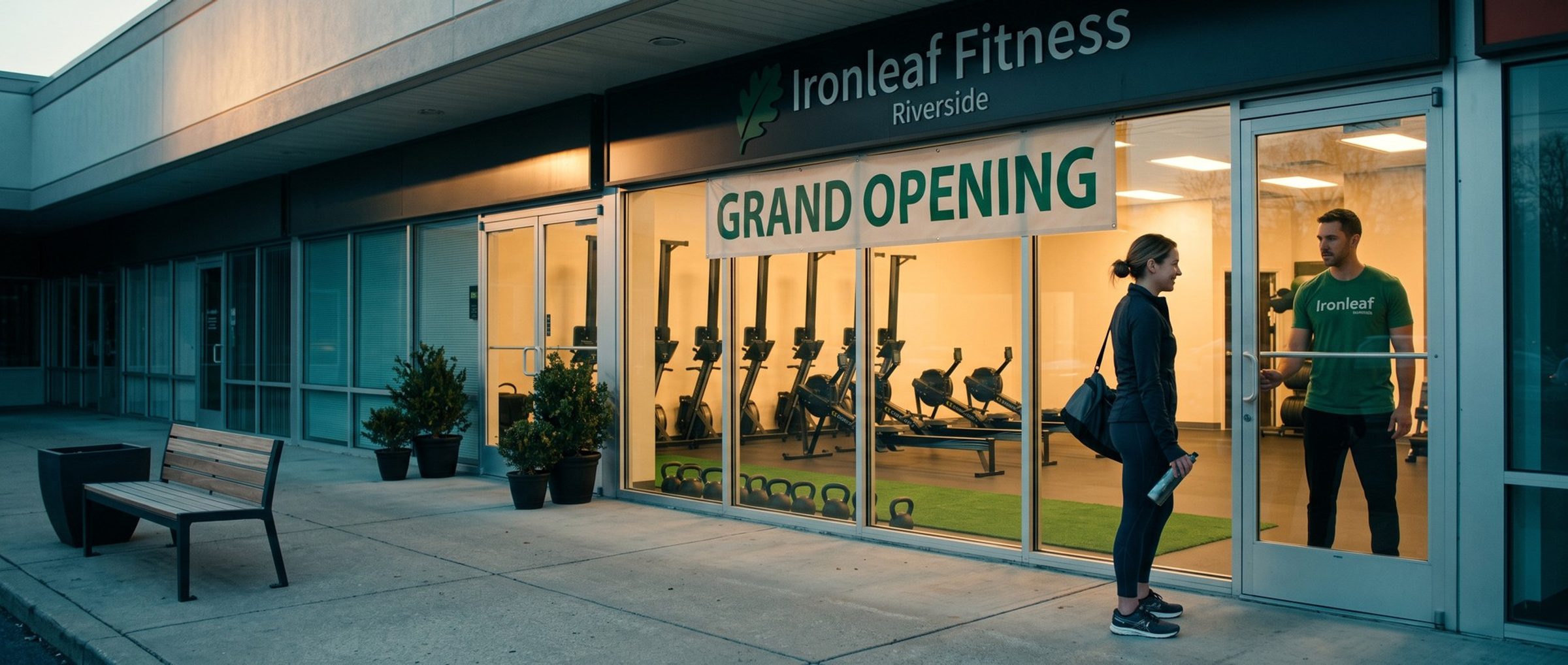
A new franchise location gets one grand opening. The agreement usually says how much has to be spent on it and when, and the franchisor's marketing team often has a plan ready: banners, a launch event, social posts, maybe a video campaign. The question for Google Ads is narrower. Of the money set aside for opening, how much goes where, and in what order?
Our answer is the same one this guide gives for every budget: the people already looking come first. This chapter covers what franchise agreements require for a grand opening, why Search gets the first dollar, what Google lets a location do before it opens, what Demand Gen costs by Google's own guidance, and how to run a presale without promising something that isn't there yet. Search volumes come from Keyword Planner in one example market, Orlando. The grand opening requirements come from franchise disclosure documents and apply wherever those brands sell franchises.
Franchise Agreements Set Grand Opening Budgets From $2,500 to $70,000. Several Give the Owner About Three Months to Spend Them.
Of the 21 franchise disclosure documents we read, most set a grand opening or initial marketing requirement, and the range is wide.
At the low end, Kumon's is $2,500 in pre-opening marketing, paid to Kumon and passed on to its vendors. Mathnasium's is $5,500 in pre-opening advertising. Code Ninjas requires at least $8,000, spent from 60 days before opening to 60 days after. European Wax Center's minimum is $12,000. Anytime Fitness sets $11,000, $16,000 or $23,000 depending on the tier. Window Hero and Massage Envy require at least $15,000 each, Window Hero's from 30 days before opening to 60 days after. The Joint's minimum is $20,000, and its own estimate runs to $25,000.
At the high end, Orangetheory's presale and grand opening spend runs $36,000 to $45,000, from 12 to 16 weeks before opening to 30 days after. Goldfish Swim School requires $30,000 to $70,000 from pre-opening through the first three months, and says it must include digital.
Two details matter more than the totals. First, several windows are short. A requirement spent between 30 days before and 60 days after opening has to work in about three months. Others run longer: European Wax Center's covers three months before opening and three after. Second, some of the money never reaches the owner's hands. Hand & Stone's $15,000 is paid to the franchisor's in-house agency. The Little Gym's may be paid to the franchisor for its media partner. Take 5's $20,000 is paid at signing. In those systems, the owner's job is to know what's being bought and to ask for the results location by location.
Someone Searching for a Gym Near Me on Opening Week Doesn't Need Convincing. Search Gets the Grand Opening's First Dollar.
A grand opening plan tends to reach for awareness, because nobody knows the location yet. But some people are already looking for exactly what it sells. Chapter 2 counted roughly 33,100 monthly searches for "gym near me" across the example market's metro area. A location's territory gets a share of that, and none of those searchers needs to be talked into wanting a gym.
That's why Search gets the grand opening's first dollar. A Search ad only costs money when someone types the search and clicks. Its spend lands on people already looking for what the location sells, inside its own territory from Chapter 9, from the first day the doors open.
The campaign itself is the same Isolation campaign this guide has built all along: the location's biggest near-me and service searches in exact match, with bids set by hand from its own Keyword Planner ranges, as Chapter 7 described. A brand-new location has little or no conversion history of its own, so we start with bids set by hand. Chapter 3's math sets the ceiling: the most a customer is worth, divided by how many leads it takes to get one.
Google Will Show a New Franchise Location's Business Profile 90 Days Before Opening Day. Those 90 Days Belong in the Plan.
A location can be on Google before it's open. Google's Business Profile help says a new business can set its opening date "up to one year in the future," and that "After you enter the date and verify your business, your profile shows up on Google 90 days prior to your opening date." During those 90 days, Google says, "You can engage with your community."
That profile matters for the ads too. Chapter 12 covers location assets, which pull a location's address, phone number and hours from its Business Profile into its ads. A profile that's verified and correct before opening is one less thing to fix in launch week.
So the 90 days before opening carry their own checklist. The Business Profile is verified with the opening date set. The location page from Chapter 4 is live, with the location's name, address and phone number. Call tracking and conversion tracking from Chapter 1 are working and tested. When the first ad runs, everything it points to is already in place.
Google Recommends About $670 a Day to Chase a $67 Fitness Lead With Demand Gen. A Month of That Outspends Most Grand Opening Minimums.
Demand Gen is where a franchise location pays to be seen by people who haven't searched for it. A new studio's Demand Gen ad could turn up between YouTube Shorts, in someone's Gmail promotions tab, on Maps or on a news site in Google's display network. It's the obvious tool for a launch, and it comes with budget guidance.
Google's Demand Gen page puts a number on it: for a campaign aiming at a target cost per lead, it recommends budgeting no less than ten times the target. That line doesn't specify a day or a month. Demand Gen's budget panel, though, frames its suggestions as daily amounts, so we read it that way. Read as a daily budget, the number gets large fast.
Run that with a real number. Chapter 3 used a 2026 health and fitness benchmark from the ad vendor WordStream: $67.36 per lead. Multiply by ten and a new studio would be budgeting roughly $674 every day. Across the 30.4-day month Google uses for budgets, that's about $20,500. Most of the grand opening minimums above are $20,000 or less for the whole launch.
There's a second problem. A target CPA is supposed to come from what leads actually cost. A location that opened last week doesn't know that yet. Setting Demand Gen's target from a national benchmark means guessing, and spending ten times the guess every day while the campaign learns. Google's own advice is to let about 50 conversions pass before changing a Demand Gen campaign's bidding.
We Add Demand Gen Only After the Search Ads Show What a Customer Costs. Stock Footage of a Gym Nobody Can Visit Yet Doesn't Sell the Location.
None of this rules Demand Gen out. It puts it later. Once the location's Search campaigns have logged about 30 quality conversions a month, as Chapter 6 described, the location knows its own cost per lead, and that becomes Demand Gen's target. By then the location also has visitors and customers whose data can shape its audiences.
The creative should be the location, not the brand. Chapter 8 found customers praising the people at a location far more than the brand behind it. A video walking through the real studio, with the real coaches, does a job no stock footage can: it shows a nearby customer what's waiting at that address. A brand's national spot can sell the idea of the brand. Only the location's own footage can sell the location.
Audiences come from the same place. Google Ads can build audiences from people who visited the location's page, and Demand Gen can find lookalikes of people who bought, visited or watched. In launch week those lists are small or empty, so the campaign runs on broad guesses about who might care. Health-related franchises have a further limit: Google restricts campaigns in sensitive categories to its own predefined audiences.
For a franchise system, there's one more option. When the franchisor's fund runs awareness across a whole region, ask whether that campaign can cover the new location's area. Chapter 2 showed funds aren't required to spend in any one territory, so get the answer in writing. The location's own budget stays on Search, where its money buys the most.
A Presale Is the One Time a Franchise Location Advertises Before It Can Serve Anyone. The Ad Has to Say When the Doors Open.
Some systems sell before they open. Orangetheory's disclosure document calls its whole launch a presale and grand opening program, starting 12 to 16 weeks before opening and expecting at least 250 presale memberships before a studio opens. Anytime Fitness labels its line the same way. In our experience, fitness studios often sell founding memberships this way, and childcare and education brands take waitlist sign-ups.
Search works for a presale with one condition: the ad has to be honest about timing. Chapter 8 covered Google's rule against ads that promise something the landing page can't deliver. A presale ad that reads like the location is open today points people to a door that's still locked. A presale ad names the thing for sale today, a founding membership or a waitlist spot, gives the month the doors open, and sends the click to a page with that same date on it.
Some states also have rules about money collected before a club opens; Orangetheory's disclosure document mentions escrow requirements for presale memberships. Check yours before the ad promises anything.
The conversion changes too. During a presale, the location tracks presale sign-ups or waitlist entries as its conversions, with the same care Chapter 1 described, so that by opening day it has real data on who signed up and what it cost.
Next: Location Extensions Copy Each Franchise's Business Profile Into the Ad
With the location open and its campaigns running, Chapter 12 turns to the asset that ties every ad to a real address: location assets, which copy each location's Business Profile into its ads, mistakes included.
All sixteen chapters, from tracking and territories to who runs the ads and franchise development, are on the guide's home page.
Every new franchise location we launch in our Google Ads management starts its grand opening budget in Search, with its Business Profile, location page and tracking ready before the first ad. Opening a location? Ask how your grand opening money is split, and how much of it goes to people already searching for what you sell.