Every August, parents work through a back-to-school list: shoes, backpacks, a physical, the forms the school sent home. A children's eye exam is often not on it, or it's on it and gets crossed off because the school already did a vision screening in the spring. By the time a teacher notices a child squinting at the board, it's October.
That gap is an opportunity for an optometry practice, and Search alone can't reach it. A parent who doesn't know their child needs an exam doesn't type "pediatric eye doctor near me." This chapter covers Demand Gen, Google's campaign type for reaching people before they search, and how to aim it at parents in the weeks when they're planning the school year.
School Screenings Pass Kids Who Still Need an Eye Exam
Most children do get their vision checked. National survey data shows that about four in five children had a vision screening in the previous two years (79.6% in 2023). Far fewer see an eye doctor. In the National Survey of Children's Health for 2022 and 2023, only 52.6% of children aged 6 to 17 had visited an optometrist or ophthalmologist in the previous two years.
The difference matters because a screening isn't an exam. A screening is a quick check, often done at school or in a pediatrician's office, that flags some children for follow-up. Illinois spells out the difference in its School Code. Anyone running a vision screening there must first give parents a written notice that says, in part: "Vision screening is not a substitute for a complete eye and vision evaluation by an eye doctor." The law then defines an eye exam as a history, visual acuity, refraction for near and far, an internal and external examination and a glaucoma evaluation.
Parents who skip the exam usually aren't careless. In a 2025 study, when children couldn't get needed vision care, caregivers most often named cost (59.9%) and trouble securing an appointment (47.7%). Both are things an ad can answer: which vision plans you take, and when you have openings.
Kids' Eye Doctor Searches Peak When School Starts
Google's Keyword Planner shows when parents finally act. Across the US, from September 2025 to August 2026, "pediatric eye doctor near me" drew about 14,800 searches a month in May and June. It rose to about 18,100 in July and August, then peaked at about 27,100 in both September and October.
That's the opposite of the adult pattern. As Chapter 7 showed, "eye exam near me" peaks in January and sinks to its low point in June and July. Children's searches climb just as adult searches bottom out.
The timing tells you something about the parents. The fall peak arrives after school starts, when the forms, the screening results and the teacher's notes show up. Your Search campaigns will catch those parents. Demand Gen's job is to reach them earlier, in July and August, while the family is still planning and the calendar still has openings.
Some States Put a Deadline on a Child's First Eye Exam
In some states, the exam isn't just advice. It's a school requirement with a date attached.
Illinois requires an eye exam for every child enrolling in kindergarten and for any student enrolling in an Illinois school for the first time. The exam has to be done by a licensed optometrist or physician within the previous year, and proof is due by October 15 of the school year. If it's missing, the school may hold the child's report card until the family shows proof of an exam or of one scheduled within 60 days.
Kentucky sets a different deadline. Its school eye exam form, citing Kentucky law, requires proof of an exam by an optometrist or ophthalmologist no later than January 1 of the first year a child aged 3 to 6 is enrolled in public school, public preschool or Head Start.
Other states have no exam requirement, or rely on screenings alone. Check your own state's education department and your state optometric association before you write about a requirement. (This isn't legal advice.) If your state does set a deadline, it belongs in the ad. "Kindergarten eye exams due by October 15" tells a parent exactly why to book now.
Demand Gen Puts Your Practice on YouTube Before Parents Search
Demand Gen is Google's campaign type for people who aren't searching yet. Its ads run on YouTube, including Shorts, and on Discover, Gmail, Maps and Google's Display Network, using video and image ads rather than text. Google describes it as a way to reach audiences likely to be interested in your business before they go looking for it. Google has also begun moving Display campaigns into Demand Gen, so this is now where image and video prospecting lives in Google Ads.
In our rollout, Demand Gen comes late. The Search campaigns go first, then Performance Max (Chapter 10), and only then a campaign that reaches people before they're ready to book. By then the account has months of booked-exam conversions (Chapter 1), which is the data Demand Gen needs to find parents who will actually schedule.
For an eye care practice, back-to-school season is the clearest use of it. The need is real, the timing is predictable, and the audience is easy to describe.
Google Lets You Reach Parents by Their Children's Ages
Google Ads offers detailed demographic audiences built around parenthood, split by the age of the children: Parents of Infants, Toddlers, Preschoolers (4 to 5 years), Grade-Schoolers (6 to 12 years) and Teens (13 to 17 years). We checked the Google Ads API on September 27, 2026, and all of them are available for Demand Gen campaigns.
For a back-to-school campaign, Parents of Preschoolers catches the families heading into kindergarten, and Parents of Grade-Schoolers covers the bulk of the school years. Add Parents of Teens if your practice sees many high schoolers, sports vision patients or first-time contact lens wearers. Then set the location to the radius your patients actually drive, the same way Chapter 9 set up Search.
These are Google's own audiences, which matters for health care. Google's personalized advertising policy lets health-related ads use predefined Google audiences, including demographics and detailed demographics, even where advertiser-built lists are off-limits.
The children themselves are off-limits entirely. Google's policy says users under 18 aren't eligible for personalized advertising of any kind, and its demographic targeting rules say advertisers can't target ads to reach only children under 13 or only teens under 18. Your audience is the parent, and your ad should speak to the parent.
Myopia Ads Run in a Narrower Lane Than Exam Ads
Many practices want to use the back-to-school window for myopia management too. It's worth doing, but it isn't the same campaign.
Google's health policy covers treatments for chronic conditions, and the FDA calls myopia "a chronic disease." Google doesn't name eye care in its policy, so this is our reading: a myopia management ad or landing page is likely to be treated as sensitive, while a routine children's eye exam likely isn't. Google's Demand Gen rules for sensitive categories are strict. Those ads are generally limited to YouTube, can't serve on Gmail or the Display Network, and must use predefined Google audiences only. Run myopia management as its own campaign, so a policy flag on it can't hold back your exam ads.
The wording needs the same care. MiSight 1 day contact lenses are FDA-approved for slowing myopia progression in children who are 8 to 12 when treatment starts. In September 2025 the FDA authorized Essilor Stellest eyeglass lenses to slow myopia progression in children who are 6 to 12 at the start. Orthokeratology lenses are approved for temporarily reducing myopia, not for slowing its progression. And no low-dose atropine eye drop is FDA-approved for myopia as of this writing; an FDA advisory committee is scheduled to review one on October 30, 2026. An ad that promises to "stop" myopia, or calls an off-label treatment FDA-approved, is a claim you can't support. Chapter 16 covers the drug and device rules in full.
A Summer Flight Beats a Thin Year-Round Budget
Demand Gen is expensive to run badly. Google recommends that campaigns using a target cost per conversion carry a budget of at least 10 times that target. If a booked children's exam costs you $80 in Search, that's a budget of $800 or more.
Most practices can't fund that month after month, and they don't need to. The demand is seasonal, so the spending can be too. Run the campaign as a flight from mid-July through September, when parents are planning and the school deadlines are close, and spend nothing on it the rest of the year. Launch with Maximize Conversions, and let Google's own budget recommendations on the campaign review page guide the daily amount.
Point it at the same primary conversions as Search: booked exams, request forms and qualifying calls (Chapter 1). Google's help center suggests lighter events, such as site visits, to help Demand Gen learn faster. For a practice, a site visit isn't a patient. Optimize for the booking and accept that the campaign learns more slowly.
Film a Child's Exam, Not a Wall of Frames
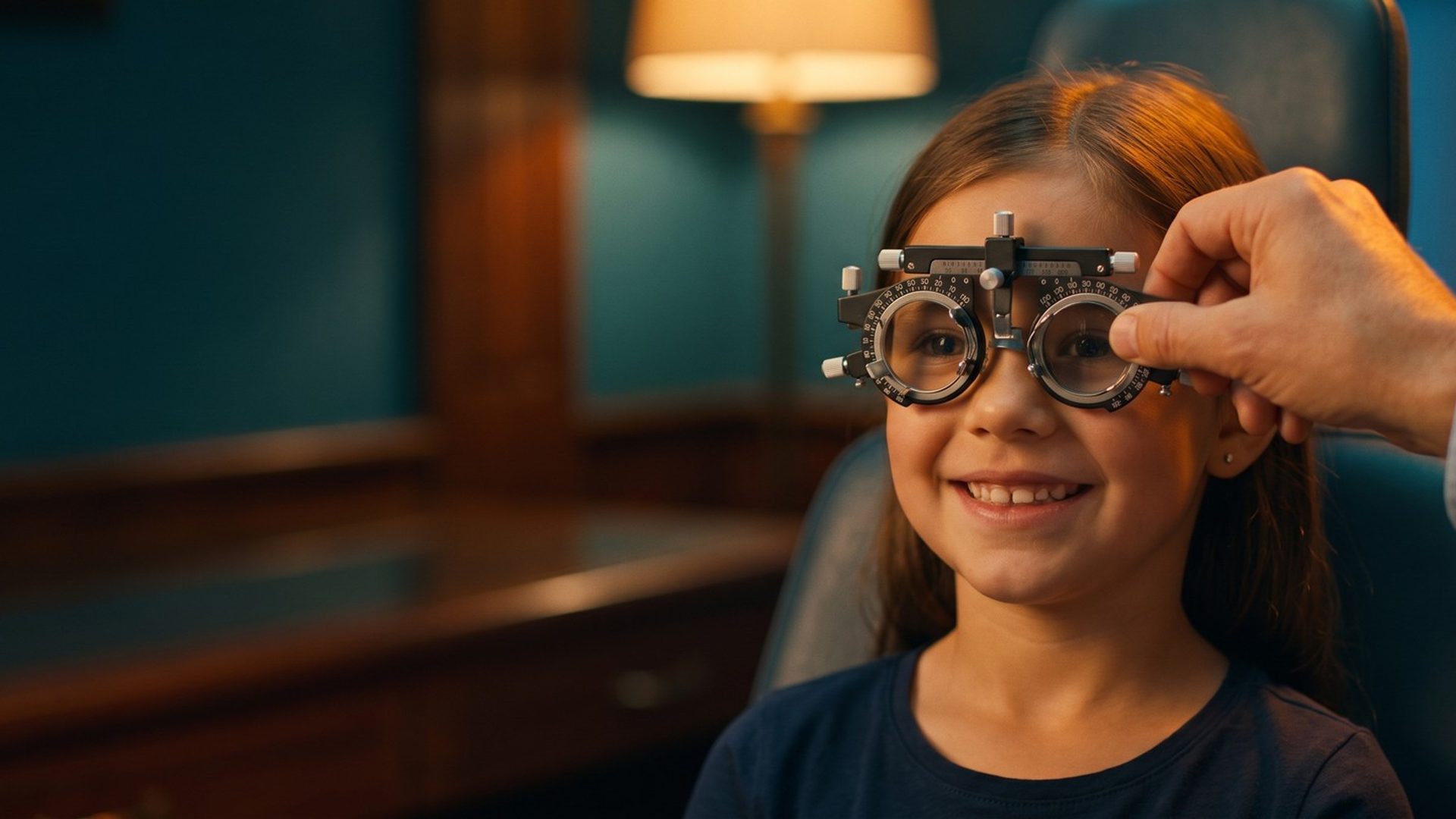
Demand Gen runs on pictures and video, so the creative does most of the work. The most useful video a practice can make is short and simple: a doctor with a child in the exam chair, explaining in a sentence or two what the exam checks that a school screening doesn't. Phone video is fine. Keep it at least 10 seconds long, since Google won't serve shorter videos as YouTube in-stream ads, and make both a horizontal version and a vertical 9:16 version, which Google recommends for Shorts. For image ads, supply the horizontal 1.91:1, vertical 4:5 and square 1:1 sizes.
Say something a parent can act on:
- The difference: a screening flags some children; an exam checks how their eyes work.
- The deadline, if your state sets one.
- The barriers parents named: the vision plans you accept and your evening or Saturday openings.
Use real photos of your doctors, rooms and patients (with written permission from the parents), never stock photos. Every claim follows the same rules as your Search ads (Chapter 8), including your state's rules on naming the doctor.
Judge the Flight by Children's Exams Booked Before Mid-October
A Demand Gen campaign will report plenty of views and clicks. Neither is a patient. Judge the flight by children's exams booked from July through mid-October, compared with the same months last year, and by the conversions the campaign reports against your booked-exam goal.
Also watch the searches that mention your practice by name during the flight. A parent who saw your video in August and books in September often gets there through a Search ad or your Google Business Profile, not by clicking the video. If your brand campaign's searches and bookings rise during the flight and settle after it ends, the video did part of that work.
Give the flight a full season before you decide. One summer's numbers set the baseline; the second summer tells you whether to spend more.
Next: The Ads Above Yelp and Zocdoc
Demand Gen reaches parents before they search. The next chapter goes back to the search results page, to the ads that sit above the Search ads in many markets. Chapter 12 covers Local Services Ads for optometrists and how they compete with the directory sites that crowd the eye doctor results.
Every chapter is listed on the guide's home page.
Optometry practices under our Google Ads management plan their back-to-school flight in June, with the video filmed before the first parent opens a school form. Planning your own? Book one afternoon this month to film a doctor with a child in the chair.