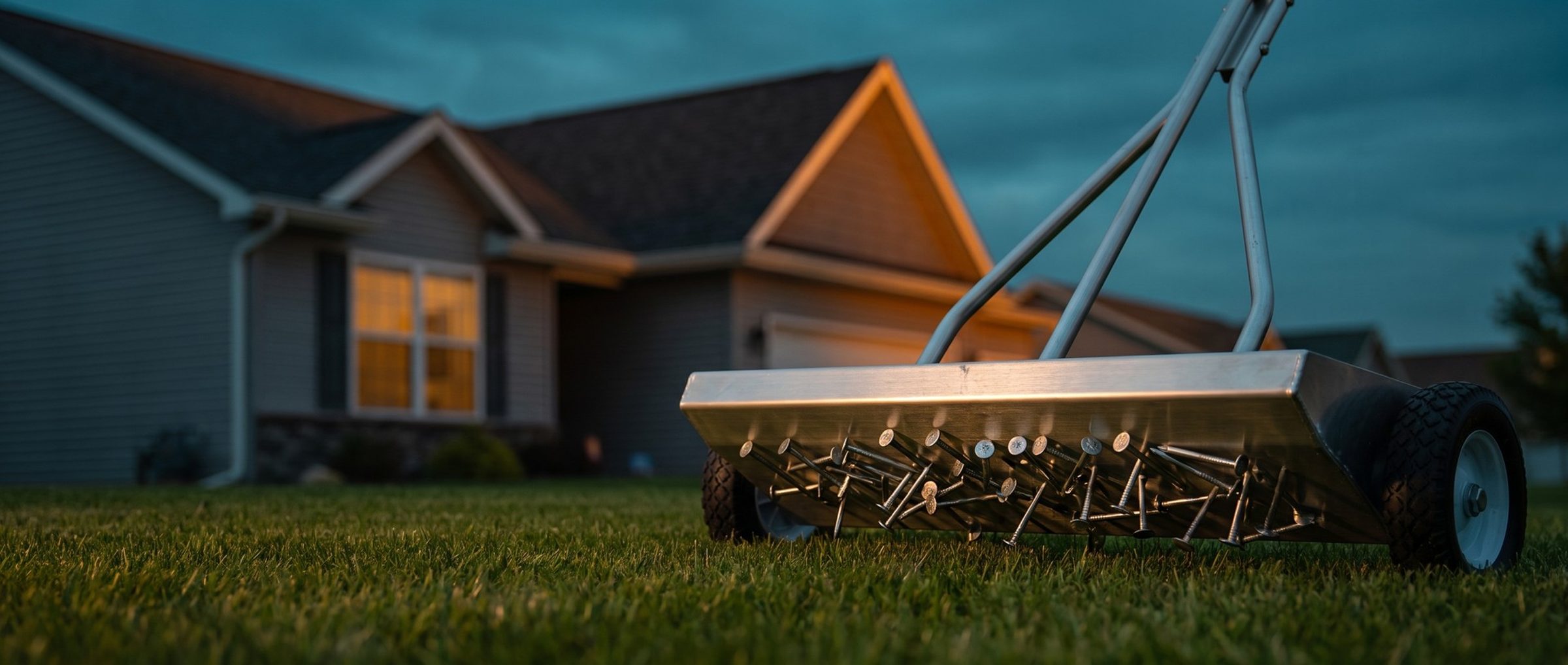
Ask a roofer what makes their company different and you'll hear about shingles: the manufacturer, the certification, the warranty tier, the years on the job. Ask their happiest customers the same question and you'll hear about the yard.
That gap is the whole chapter. Homeowners don't hire a certification. They hire the crew that picked up every nail, called back when they said they would, and left the flower beds alone. The words for your ads are already written. Your customers wrote them, for free, in your Google reviews.
Five-Star Roofing Reviews Talk About the Yard, Not the Shingle Brand
For this guide we read 635 Google reviews left for 15 roofing companies in our example market, Minneapolis-St. Paul, alongside 887 homeowner posts and comments on Reddit. The counts below come from matching words and phrases across those reviews, so treat them as a sample of how homeowners talk, not a census.
Cleanup came up in 121 of the 635 reviews. It's where five-star reviews stop being polite and start being specific:
- "the whole crew scoured our property with rakes, brooms and even magnets to be sure that they left the property exactly as they found it" (Kaufman Roofing, Google review)
- "leaving our residence like they were never there" (Four Point Construction, Google review)
- "I especially appreciate him checking for nails so I don't have to worry that my dogs would find them!" (Presidential Construction, Google review)
Now the other side. Not one of the 635 reviews named Owens Corning, CertainTeed or Malarkey, or used the phrase "Master Elite." Two mentioned GAF. Homeowners do research shingle brands and certifications, mostly before they hire, and the Reddit threads show it. But once the roof is on, that's not what they tell their neighbors about. They tell them about the nails.
Roofing Ads Brag About Certifications. Not One Mentioned the Cleanup.
Then we read the ads. Google's Ads Transparency Center shows the ads an advertiser has run, and for the roofing and exterior companies from our example-market research, we pulled every text ad shown in the three months before we looked. After removing lead sellers, a shingle manufacturer's own ads and anything that wasn't about roofing, and dropping duplicates, 150 ads from 25 advertisers were left.
Here's what they said:
- 48 offered a free inspection, estimate or quote.
- 33 leaned on years in business, family ownership or being local.
- 13 named a manufacturer certification, like GAF Master Elite, Owens Corning Platinum Preferred or CertainTeed ShingleMaster.
- 1 mentioned communication.
- 0 mentioned cleanup.
This isn't a knock on certifications. A Master Elite badge is real, and a homeowner comparing three bids may well look for it. It belongs on your landing page, near the quote form, where the careful researcher will find it. But the headline is the first thing a stranger reads, and the market spends that spot on free inspections and badges while nobody uses it for what homeowners actually praise.
Low-Star Roofing Reviews Blame the Silence After the Deposit, Not the Shingles
The unhappy reviews are even more useful, because they tell you what homeowners are afraid of before they ever call.
Of the 157 reviews in our sample rated one to three stars, 81 touched communication or scheduling. Twenty-seven used no-show or no-callback language: "never called," "radio silence," "no one ever answers." Bad shingles barely register. The pattern is a crew that was eager before the contract and hard to reach after the check cleared. In the homeowners' own words (businesses withheld):
- "Once they got our checks, communication all but went out the door."
- "ALL communication has been initiated by me."
- "When I call, no one ever answers the phone."
Read those as a list of the objections sitting in a homeowner's head when your ad appears. A headline that answers one of them does more work than one that describes your shingles. If your office really does return every call the same day, that's a headline. If a single project manager stays with each job from the inspection to the final walk-through, that's a headline too, and it's the direct opposite of one reviewer's complaint about going through four salespeople before work started.
The rule is simple: only promise what you already do. An ad that says "We Return Every Call" and a voicemail box that's full is how the next low-star review gets written.
Storm Chasers Made "Local" the Roofing Claim Homeowners Look For
After a hailstorm, homeowners hear from a lot of roofers they've never heard of. Fifteen of the 157 low-star reviews in our sample were about door knocking, ignored no-soliciting signs, repeat calls or text messages, several from people who say they never hired the company at all.
On Reddit, the defense homeowners recommend to each other is being local. "Local" came up in 49 of the 887 homeowner texts, usually as advice: call a roofer who was in business here before the storm, ask the neighbors who they used. One homeowner praised a roofer because "their office is in actual Minneapolis, not some far flung exurb."
This is the one theme where the ads and the homeowners already agree: 33 of the 150 ads leaned on years in business or being local. The trouble is that "local" alone has turned into wallpaper. Make it specific enough to check. The town you work out of, the year you opened, the neighborhoods where your crews have already worked. "Your Neighbors' Roofer" is 22 characters, and it's true only if you've done the roofs down the street.
Your Google Reviews Are the Biggest Pile of Roofing Headlines You Already Own
Our method starts ad copy with the landing page, not a blank screen. Chapter 4 built a page for each service, and the ad has to match it, so start with its own words and trust signals. Then go find the homeowner's version:
- Your own Google reviews. For the roofers in our sample, Google is where the reviews are. The 15 listings held 4,183 Google reviews between them, and in each of the three companies we cross-checked, Google held more reviews than any other site we found. Sort by newest and read 50. Copy every phrase a homeowner used twice.
- Competitors' low-star reviews. Their one-star reviews are your homeowners' fears, written in plain language. Every complaint you can honestly promise the opposite of is a headline.
- Reddit threads in your city. Search your city's subreddit for "roofer." Homeowners are blunter there than anywhere else, and they're talking to each other, not to you.
- Your own phone. Chapter 1 set up call tracking so you know which calls the ads bring in. Whoever answers those calls knows what homeowners ask before they book. If half of them ask whether you work with insurance, that question belongs in the ad.
- The Transparency Center. Search each competitor by name to see the ads they're running. You're not copying them. You're finding the space they left open.
AI tools come last in our method, never first. Use one to tighten a headline you already found in a review or to check the character count, not to invent the promise. A tool that has never stood in a homeowner's yard will write "Quality Roofing Solutions" every time.
A 30-Character Roofing Headline Has Room for "Like We Were Never There"
The ad format that holds all of this is the responsive search ad. Google's help page lays out the limits: up to 15 headlines of 30 characters each, up to 4 descriptions of 90 characters, and display path fields of 15 characters each. Google mixes those pieces into different combinations and learns which ones work for which searches.
Thirty characters sounds tight until you notice how short homeowners' best lines already are. Here's what the review language turns into:
- "leaving our residence like they were never there" becomes Like We Were Never There (24 characters).
- "scoured our property with rakes, brooms and even magnets" becomes Magnet Sweep Before We Leave (28).
- "so I don't have to worry that my dogs would find them" becomes Safe for Kids, Dogs and Tires (29).
Fill the rest of the 15 with the searches themselves, so the ad matches what was typed: "Roof Replacement in [Your City]," "Hail Damage Roof Inspection," the service names from the ad group. Then the answers to the fears: the local claim, the callback promise if it's true, the free inspection that 48 of your competitors already offer and that homeowners now expect. Use the descriptions for the fuller version of one promise, in the homeowner's words. "Our crew sweeps the yard with magnets before we leave, so your tires, your dog and your kids never find a nail" runs 110 characters, too long. "Magnet-swept yard before we leave. Your kids, dog and tires never find a nail." is 78, and no other roofer in our example market is running anything like it.
Pinning Every Roofing Headline Stops Google From Testing the Homeowner's Words
A responsive search ad lets you pin a headline to a fixed position so it shows every time. It's tempting to pin your company name to position one and your certification to position two and call it done. Don't. In our method, new roofing accounts launch with nothing pinned, so Google can test the homeowners' words against each other and find out which ones actually get clicked and booked.
Google's own guidance lines up: it advises pinning sparingly, because every pin cuts the number of combinations it can try. Pin only a headline that's already proven, because your data shows it wins or because it's something that has to appear in every ad.
You'll also see an Ad Strength score next to each ad, and it will nag you to add more headlines. It's worth listening to on variety, but it's not a grade on your results. Per Google's own help page, a roofer with a "Poor" score and a roofer with an "Excellent" one start the auction on equal footing: Ad Strength doesn't feed their Ad Rank or Quality Score. A "Poor" rating on an ad that books inspections is not an emergency.
After the first month, look at which headlines Google shows most often and which ones sit unused. Swap the two or three laziest lines for new ones pulled from this month's reviews. Your customers keep writing new copy, and every new review is another batch.
Next: Settings That Keep Your Budget Inside Your Service Area
The ad now says what homeowners say, and the bids from Chapter 7 decide where it shows up. Before any of it goes live, the campaign settings have to be right. Chapter 9 covers the defaults Google turns on that can spend a roofing budget in towns your crews will never drive to.
The full guide is on the roofers guide home, and if you'd rather have someone else mining your reviews for headlines, that's part of our Google Ads management.