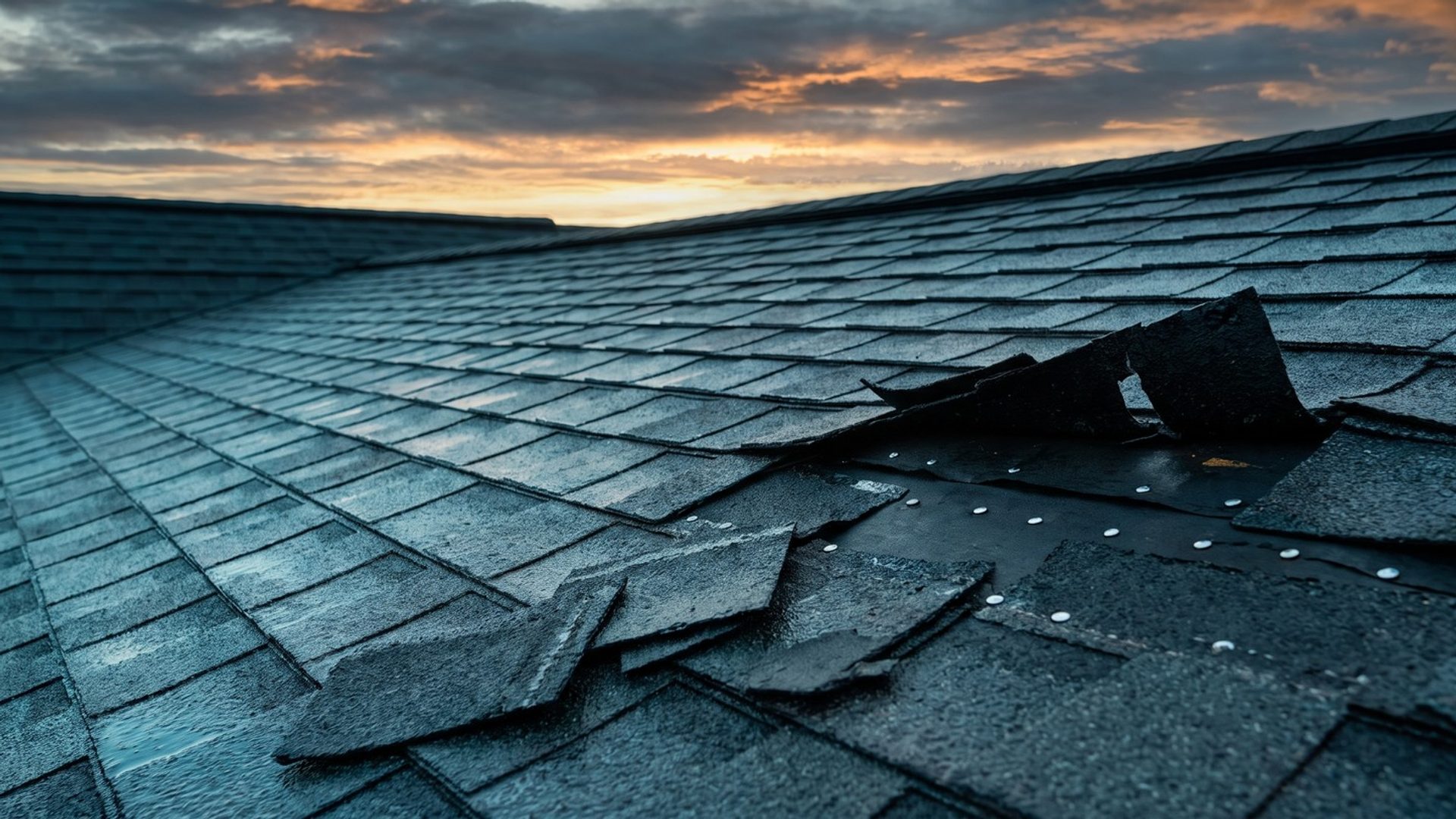
Picture two homeowners on the same street on the same Tuesday night. One is standing in the upstairs hallway looking at a brown ring spreading across the ceiling, phone in hand, typing "roofer near me." The other is on the couch after a neighbor's reroof, idly typing "how long does a roof last" because the crew next door made it look like a big job.
Both searches are about roofs. Only one of them ends with a crew on a roof this month. A new roofing account that can't tell them apart will spend like it's feeding both, and the one who's merely curious is far cheaper to reach, so that's who the budget drifts toward.
This chapter is about which homeowner you pay for first. The short answer: the one with the bucket under the drip.
"Roofer Near Me" Draws 13 Times the Searches of "How Long Does a Roof Last"
Start with the numbers, because they settle an argument most roofers never realize they're having. Across the US, Google's Keyword Planner shows these monthly searches and top-of-page bid ranges:
- roofer near me: 165,000 searches, $14.27 to $74.07
- roofing companies near me: 165,000 searches, $16.09 to $84.48
- roof repair near me: 90,500 searches, $14.89 to $71.23
- roof replacement near me: 40,500 searches, $17.70 to $84.91
- how long does a roof last: 12,100 searches, $2.18 to $8.58
Keyword Planner's bids are estimates built on broad match, so read them as ranges give or take about 30%, not quotes. Even so, the shape is plain. The searches where homeowners hire a roofer are bigger than the research searches, and they cost several times as much per click. Advertisers pay for them because they turn into jobs.
That flips a common instinct. Plenty of owners assume the smart move is to "get in early," buy the cheap research clicks and build a relationship before anyone else does. In roofing, the early homeowner may not need a roof for two years. The late homeowner needs one before the next rain.
A Roof Becomes a Search the Day It Leaks or Hail Hits It
Our method sorts searchers into five stages of awareness. Here's what each one looks like when the subject is a roof, with US monthly searches:
- Unaware. The roof is 19 years old and nobody in the house has thought about it since closing day. There's no search at all.
- Problem aware. Something happened. "Water stain on ceiling" (3,600), "roof leak" (8,100), "missing shingles" (320), and in cold states "ice dams" (27,100).
- Solution aware. The homeowner knows a roof might be the fix and wants to understand it. "Roof replacement cost" (18,100), "how long does a roof last" (12,100), "metal roof vs shingles" (6,600).
- Service aware. They're looking at what a roofer actually does. "Roof inspection" (33,100), "emergency roof repair" (8,100), "hail damage roof" (5,400), "best roofing company" (2,900).
- Most aware. Phone already in hand. The near-me searches for roofers and roof repair, and the searches where a homeowner types one company's name plus "reviews" to check out a referral.
A roofer's marketing has a different job at every rung. At the top you create awareness, lower down you drive interest, then you influence the decision, and at the bottom you compel the homeowner to act. Roofing has an unusual shortcut through that list: weather. A storm can move an entire neighborhood from unaware to most aware overnight, and nobody reads a buyer's guide in between.
Roof Research Searches Are Cheap Because Nobody Is Hiring Yet
Put the bids side by side and the market tells you what each search is worth.
The research searches top out around $8 to $23 a click. The hire searches top out around $71 to $85. Nobody sets those prices by committee. They come out of an auction where advertisers bid what each search has been worth to them. When the market pays a fraction as much for a click, it's telling you how rarely that click turns into a signed roof.
Cheap clicks carry a second cost that doesn't show up on the invoice. Chapter 1 covered how Google learns from whatever you count. Feed a brand-new account thousands of clicks from homeowners who won't call for months, and the conversions it studies are thin and slow. The account spends its first weeks learning from people who are just looking.
The research crowd is real, and they do want answers. Our scrape of 20 roofing searches in the example market turned up a price question in the "People also ask" box on 18 of them. Those homeowners matter. Later in the rollout they're exactly who Demand Gen and YouTube are for. They're just not where a new account's first dollar belongs.
The Bottom of the Roofing Funnel Is Where Your First Dollar Belongs
Every chapter in this guide builds from the bottom of the funnel toward the top. It sounds backwards, since traditional marketing starts wide and narrows. In Google Ads, the account needs real conversions before any of its automation works, and the bottom is where conversions happen fastest.
So month one targets the most-aware searches. That's the job of Isolation, the name we give an exact-match campaign with bids set by hand, pointed at the near-me roofing searches and the ones with your town in them. The brand campaign covers your company name. Once the account is logging about 30 real conversions a month, Exploration (our name for the broad-match follow-up) starts reaching the leak, hail and ice dam searches that no keyword list catches. Research searches wait until later channels.
What does a first Isolation list look like? Short and literal. "Roofer near me," "roofing company near me," "roof repair near me" and "roof replacement near me." Your city's name paired with "roofer," "roofing company" and "roof replacement." "Emergency roof repair" if someone answers the phone at night. A handful of ad groups, each tight enough that the ad can repeat what the homeowner typed. In our example market, the city-named roofing searches carried higher top-of-page bids than the near-me versions, up to $132 for "roof replacement" plus the city. Expensive, yes. The auction prices them that way for a reason.
What's missing from that list matters just as much. No "roof replacement cost," no "metal roof vs shingles," no "how long does a roof last." Those homeowners will still find you, through the reviews and the organic results you already have, and later through the channels built for them.
The exception is budget. A company with money to spend on several stages at once can reach higher earlier. For most roofers, the bottom pays for the climb.
Local Services Ads and Search Ads Both Sit Where Homeowners Hire
Google offers roofers more than one way to show up, and each belongs to a stage:
- Local Services Ads sit at the bottom. Google says the unit is "shown prominently in Google Search results when people search for the services you offer in areas you've chosen," and you pay per lead, not per click. This guide starts them in month one, next to Isolation. Chapter 12 covers why roofers get more from them than most businesses do.
- Search ads handle the hiring searches and the one stage above them, where a homeowner is pricing an inspection or hunting for someone to tarp a leak tonight.
- Performance Max waits until roughly the half-year mark, when the account can show it half a year of real inspections and signed roofs.
- Demand Gen and YouTube reach the top: homeowners who aren't searching yet, and the ones still comparing metal and shingles.
One more place to know about: Google's AI Overviews, the summaries at the top of many research searches like "roof replacement cost." Google says ads from Search and Performance Max campaigns are eligible to show above, below or within them. You don't need a special campaign for it, and it isn't a reason to chase research searches in month one.
Referrals Still Send Homeowners to Google to Check Your Name
Here's the part roofers usually know from experience. In a 2026 trade survey of homeowners, 74% said they'd follow a recommendation from a neighbor, friend or family member when picking a roofer. Exactly half said they'd use a search engine. Two-thirds said they'd collect three quotes, and 39% expected to hear back the same day.
Referral and search aren't rivals. The neighbor gives the homeowner a name, and the homeowner types that name into Google to see if you're real. In our example market's Keyword Planner data, several roofing company names show up with the word "reviews" attached. That search is the most-aware stage there is, and if a lead seller or a competitor's ad sits above your name when it happens, you paid for the referral with years of good work and lost it in one scroll.
That's why the brand campaign launches in month one with Isolation. It's cheap, it protects the referrals you already earned, and it hands the account some of its first real conversions.
Roofing Searches Rise and Fall With the Weather
Roofing demand keeps its own calendar, and the funnel moves with it. Here's one year of monthly searches in our example market, Minneapolis-St. Paul. Your market's peaks will land on different months, but the pattern of a roofing year repeats everywhere.
- "Roofer near me" hit 3,600 searches in September and again in February and March, then fell to 720 in November.
- "Ice dams" jumped to 6,600 in December and sat around 110 all summer. Nationally it peaks later, at 135,000 in February.
- "Hail damage roof" jumped from 70 in March to 320 in April, peaked at 480 in June, and came back to 320 in September.
- "Emergency roof repair" reached 210 in July and August, against 10 in January.
We can see the swings; the data doesn't tell us their causes, and a single storm year can bend any line. What matters for planning is where the money goes when searches climb. The answer is still the bottom of the funnel. When ice dam season arrives, add the ice dam searches that say "removal" and "near me" to Isolation. When hail season starts, lean into inspections. Don't answer a busy season by buying research clicks.
Next: What a Sold Roof Is Worth
You now know which homeowners to pay for first. The next question is how much a click is worth paying at all, and that depends on what a signed roof earns you and how many inspections it takes to get one. Chapter 1 set up the tracking that answers it. Chapter 3 does the math.
All sixteen chapters, in build order, live on the Google Ads for Roofers guide home. And when a roofing company hands the whole thing to us for Google Ads management, the first campaigns we build are the ones at the bottom of this funnel.