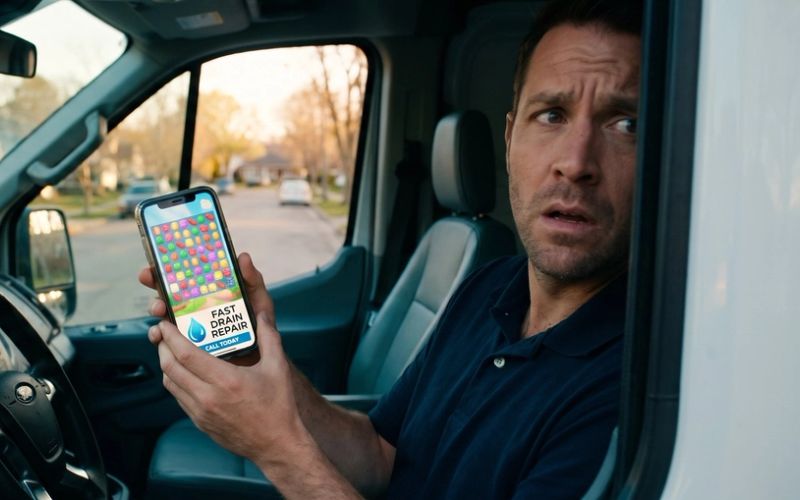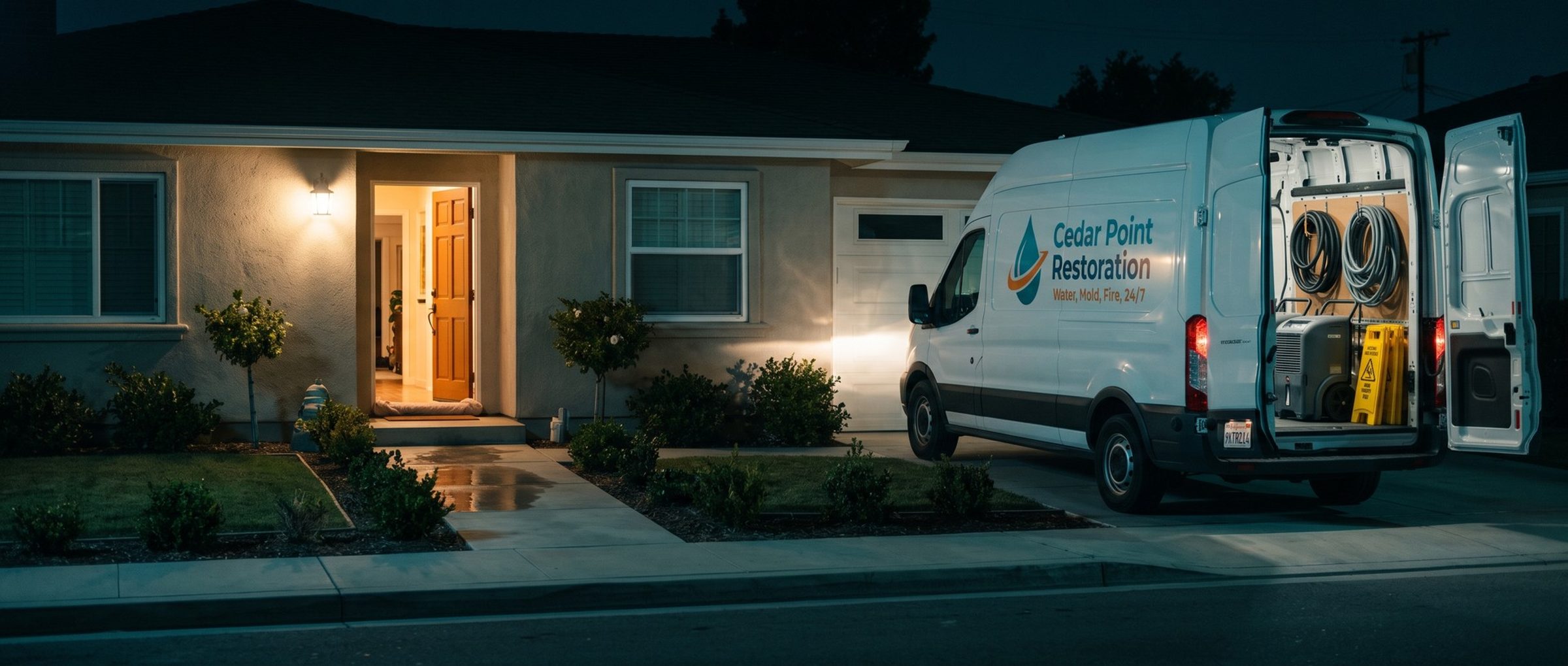
Read a restoration company's five-star reviews and you'll notice how specific people get. They don't say the crew was "responsive." They say the crew was there within 30 minutes. They name the project manager who sent updates almost every day. They describe the moment, at 8 p.m. or on a holiday, when someone actually picked up.
Then read the same companies' ads: open around the clock, fast response, locally owned. Almost none of the detail homeowners care enough to write down makes it into the ads that are supposed to win them.
That gap is the easiest copy win in restoration. The words that sell your next job are already written, by your last customers.
Reviewers Write Down How Many Minutes the Crew Took. Only 3 of 293 Restoration Ads We Read Named a Time.
In one example market, Sacramento, we read 722 Google reviews of local restoration companies, franchises and independents both. Twenty of them gave an arrival time of about two hours or less, without anyone asking. "They were at our property within 30 mins!" "I contacted Rainbow and they were there within 20 minutes and knew exactly what needed to be done." "We called and they came the same day (~45 minutes) and did the job."
People rarely put numbers in reviews. When they do, it's because the number was the point: the water was spreading, and someone came.
Now the ads. Using the Ads Transparency Center, Google's public library of ads, we pulled 293 recent ads, from the previous 90 days, run by restoration companies active in Sacramento and by national brands: franchise locations, national firms and local independents. Three named an arrival time. One franchise location wrote "45 minute response." An All Dry Services franchise ran "We Arrive Within an Hour" in two versions. None of the local independents named a time.
What the ads said instead was the hours. About a third claimed "24/7" or "24 hours." That's true for most restorers and useful to say, but it describes when you answer, not how fast you show up. A homeowner looking at four ads that all say 24/7 has nothing to choose between.
One warning before you write a number into an ad. Only promise a time your dispatch can keep on a busy night. In the same set of reviews, the unhappy ones were unforgiving about first contact: five of the 61 negative reviews were about calls nobody answered or crews that never came, and three of them said they hired someone else. A missed "45 minutes" costs more than never promising one.
Hundreds of Restoration Reviews Praise a Crew That Kept Homeowners Informed. Not One of 293 Ads Promised It.
Speed gets mentioned. Communication fills the reviews. A rough keyword count flagged more than 240 of the 722 reviews for praising how the company communicated, and reading them, the praise is concrete. "He kept me informed of the daily progress in terms I understood." "Tiffany kept us informed throughout every step of the process." Another said the project lead "kept me informed with regular updates, often on a daily basis."
That makes sense for the work. A water job runs for days: fans running in the living room, holes in the drywall, an adjuster who hasn't called back. The homeowner's biggest fear after the first night isn't the water. It's not knowing what happens next.
In the ad set, not one of the 293 restoration ads promised updates in the company's own words. The word showed up four times, on two national franchise brands' ads, and each time it came from Google itself: a review-summary panel Google adds to some ads, built from the advertiser's reviews. Google read the reviews and found the point. The ads hadn't made it.
Insurance is the other theme that runs through the reviews: 71 of the 722 describe the company working with the insurer or the adjuster. That's a big enough subject to get its own chapter, so Chapter 14 covers the insurance searches and what ads can safely say about claims.
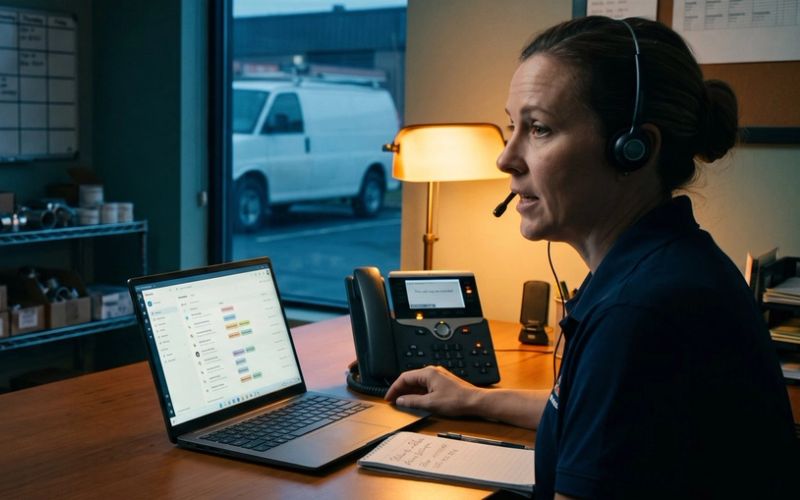
One more source sits closer than the reviews: whoever answers your phone. Ask that person to write down the five questions callers ask most this week. Whatever comes up, whether it's insurance, how long the fans will run or whether the family can stay in the house, those are the questions the ad and the page should answer before anyone dials.
Three of 12 Restoration Websites We Read Named an Arrival Time. That Line Belongs in Their Ads.
The landing page comes before the headline. The ad and the page have to say the same things, which is the match Chapter 4 is built on, and the page is usually where a company has already done its most careful writing.
In the example market, we read the websites of 12 restoration companies. Three stated an arrival time: two said 45 minutes, one said four hours. Four printed a state contractor license number, which none of the 293 ads did.
Every one of those is ad material, as long as it's on the page:
- An arrival promise, if the page makes it and dispatch keeps it.
- A license number, which none of the ads we read printed, or IICRC certification.
- Years in business and review counts, stated the way the page states them.
- What the first visit involves, in the page's own words.
The rule runs both ways. If the ad says "On Site in 45 Minutes," the page has to say it too, near the top. And if the page doesn't say it because nobody is sure it's true, it doesn't go in the ad.
The Ads Transparency Center Shows What Franchise Locations Already Say. Most of It Is 24/7 and Star Ratings.
Google's Ads Transparency Center lets anyone look up an advertiser by business name or website, then filter by region and date to see the ads it ran. For a restoration company, that's a free look at every competitor's copy without clicking a single ad.
Look up the franchise locations and the independents that show up on your searches. In the national set we pulled, the franchise ads leaned on the same few lines: 24/7, a star rating, years in business, a phone number. Those are reasonable claims. They're also what a homeowner sees in every other ad on the page.
An independent can say things a national brand can't. The owner's name. The town the crew lives in. The arrival time your dispatch actually keeps. The project manager who sends daily updates. If those are true for you, they're the lines that make your ad different from the four above and below it.
Then check how it looks live. To see the results page the way a homeowner will, run your searches through the Ad Preview and Diagnosis tool (Chapter 5); it doesn't charge a rival for a curious click. Tools like SpyFu or Semrush can fill in history if you already pay for one, but they're optional. AI writing tools get a draft only after your reviews and your page have shaped it. They polish; they don't start.
A Restoration Ad Gets Up to 15 Headlines, Shown in Any Order. Each One Has to Make Sense Alone.
Google's help page says you can give a responsive search ad up to 15 headlines and 4 descriptions, and Google combines them into different versions for different searches. It also warns that the pieces can appear in any order, so each needs to make sense on its own.
For a restoration company, that means no headline that only works after another one. "And We Bill Your Insurer" fails when it shows first. Write every headline as a complete promise.
Here's what a water damage ad group's headlines could look like, drawn from reviews and a page like the ones above. Every one assumes the claim is true for your company and stated on your page:
- Water Damage? We Answer 24/7
- On Site in About 45 Minutes
- Progress Calls Every Day
- We Explain Every Step
- IICRC-Certified Drying Crews
- 4.9 Stars, 300+ Reviews
- We Work With Your Insurer
At launch, leave them unpinned. Pinning nails a line to one spot. Google's example is a disclaimer that must appear in every ad, and that's about the only reason a restorer needs a pin at launch. Every pin narrows the combinations Google can try. Let the account show which lines get clicked and which calls book, then decide.
Ad Strength Grades Variety, Not Booked Jobs. A Poor Rating Doesn't Keep a Water Damage Ad Off the Page.
As you type, Google grades the ad: Poor, Average, Good or Excellent. That rating is called Ad Strength, and it pushes for more headlines, more variety and more keywords in the text.
Read it for what it is. Google's help page says Ad Strength doesn't decide whether an ad can show, and calls it a common misconception that it counts toward Ad Rank, Quality Score or winning the auction. It's a suggestion box for the ad's variety.
So don't stuff "water damage restoration near me" into six headlines to turn the meter green. A headline that repeats the keyword says nothing a homeowner can choose you for. A headline with your arrival time does.
The grade that matters comes from the Chapter 1 tracking: which ad's calls became signed work authorizations. If an ad rated Average books more jobs than one rated Excellent, keep the Average one.
Next: Most Water Damage Listings Say Open 24 Hours.
Every restoration ad says 24/7. Chapter 9 asks whether yours should run that way: when the phone really gets answered, and why overnight ads only pay when a person picks up.
Want the whole plan first? The guide home lists all sixteen chapters. Chapter 7 sets the bids these ads run on.
When a restoration company hands us its account for Google Ads management, the first ads are written from that company's own reviews and pages, and the AI tools only see a draft after that.