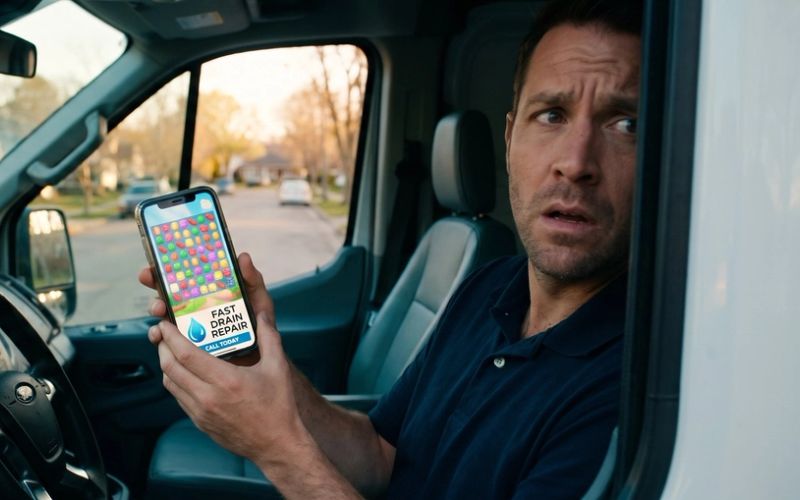
There's a short window between the moment a homeowner finds water and the moment she calls anyone. She's holding a towel in one hand and a phone in the other, and the first thing she types usually isn't "water damage restoration near me." It's a question: what do I do?
Search ads mostly wait for the second search, the one that names the service. Demand Gen is the campaign type that can reach her during that gap, with a restoration video showing up on YouTube or in her Gmail before she has typed a service name at all. For a restoration company it's a real option, but a late and expensive one, and it only works if the video actually answers the question she's asking.
"What Should I Do Immediately After Water Damage?" Came Up on 6 of 24 Restoration Searches We Ran.
In one example market, Sacramento, we ran 24 restoration searches and collected the "People also ask" questions Google showed alongside the results. There were 96 in all. Eight of them were some version of "what do I do first?", and one exact question, "What should I do immediately after water damage?", appeared on six different searches, from "burst pipe water damage" to "24 hour water damage."
Keyword Planner shows the same need nationally. "What to do if basement floods" and "what to do when pipe bursts" each draw about 720 searches a month across the US.
These are the homeowners in the gap. They know something's wrong and they're about to call someone. They just haven't decided whether they need a plumber, a restoration company, a shop vac or their insurance agent. A company that has already shown them, clearly and calmly, what happens in the first hour has a head start on that decision.
Demand Gen Puts a Restoration Video on YouTube, Gmail, Discover and Maps. Nobody Has to Search First.
Google lists five homes for a Demand Gen ad: YouTube and its Shorts, the Discover feed, Gmail, Maps and the Display Network of partner sites. Instead of keywords, it reaches people through audiences: groups Google builds from what people watch, search and browse.
That's the strength and the catch. A Demand Gen video can reach a homeowner scrolling YouTube the evening after she searched "water in basement what to do." It can also reach thousands of people who will never have a leak this year. The audience work in this chapter decides which.
It also comes late in the plan. The earlier chapters build an account that books jobs from people already searching for a restorer: exact match first, broad match after about 30 booked jobs a month, then Performance Max. Demand Gen reaches further up, to people who haven't asked for anyone yet. Reaching them only pays once the searchers are already being converted at a profit.
Google Wants About 50 Conversions Before Demand Gen Settles In. At About $1,800 a Booked Job, That Takes a Big Budget.
Two numbers from Google's own Demand Gen pages decide whether this campaign fits a restoration account.
The first is learning. Google's Demand Gen performance guide says a campaign needs at least 50 conversions to build a good foundation, and advises against heavy changes until it gets there.
The second is budget. Set a target cost per booked job, and Google recommends a budget worth at least ten of those jobs for target-based bidding. Its performance guide frames that as a daily budget: at $100 a day and a $10 target, it says, you're capped at 10 conversions a day.
Now put a restoration number next to those. Chapter 3 worked through an example where a booked water damage job cost about $1,800 in ad spend. Ten times that target is $18,000 a day, and 50 booked jobs at that price is $90,000 of learning. Those are illustrations from one worked example, not a quote, but the order of magnitude is the point: aimed straight at booked jobs, Demand Gen is a campaign for restoration accounts with large budgets.
There's also a timing problem particular to this trade. Water damage doesn't arrive on a schedule. A video seen in March may not matter until a pipe freezes in January, and the conversion, if it comes, may come through a brand search or a direct call months later. And a conversion that comes months later may fall outside the window Google counts, so the campaign's own report can understate what it did.
A smaller company has two honest choices. Wait until the account can carry it. Or run a small, deliberate test aimed at a cheaper action the Chapter 1 tracking already counts, such as calls of 30 seconds or more, while judging the result by the booked jobs that follow. That breaks Chapter 1's rule that booked jobs steer the budget, so it's only for the length of the test, and only in an account where calls have tracked booked jobs closely. It's a test, not a launch.
Google Has No Ready-Made Audience for People With Water Damage. You Build One From the Leak Searches Instead.
Demand Gen lets you pick from Google's ready-made audiences: people "in market" for something, people with long-term interests, people going through life events. We pulled Google's full list through its Ads API: 1,048 in-market, affinity and life-event segments. None of them is water damage or restoration.
The closest ready-made options are in-market Home Insurance, Home Improvement and Plumbing Services, and a life event called Recently Purchased a Home. Each is a neighbor of the right audience, not the audience itself. Someone shopping for home insurance isn't standing in water.
The better tool is a custom segment. Google's custom segments page says you can build one for Demand Gen from keywords and URLs related to your service. For a restoration company, that means the searches from this chapter and Chapter 6: "what to do if basement floods," "what to do when pipe bursts," "water in basement what to do," the leak phrases broad match uncovered, and the websites of the restoration companies homeowners compare you with.
When you build it, choose the option for people who searched these terms on Google; left on the default, Google reads the keywords as interests, not as searches people actually ran. Built that way, it's the closest Google gets to a list of people who've recently had water where it shouldn't be. Start with it, and use the ready-made neighbors only as a comparison. Check the segment's size before launch.
A Restoration Video Should Answer "What Do I Do First?" The Phone Number Can Come Second.
The ad itself is where most Demand Gen attempts at restoration go wrong. A video that opens with a logo and a phone number is an ad for people who already decided to call. The audience here hasn't decided yet.
Answer the question first. A minute-long video can cover the first hour plainly:
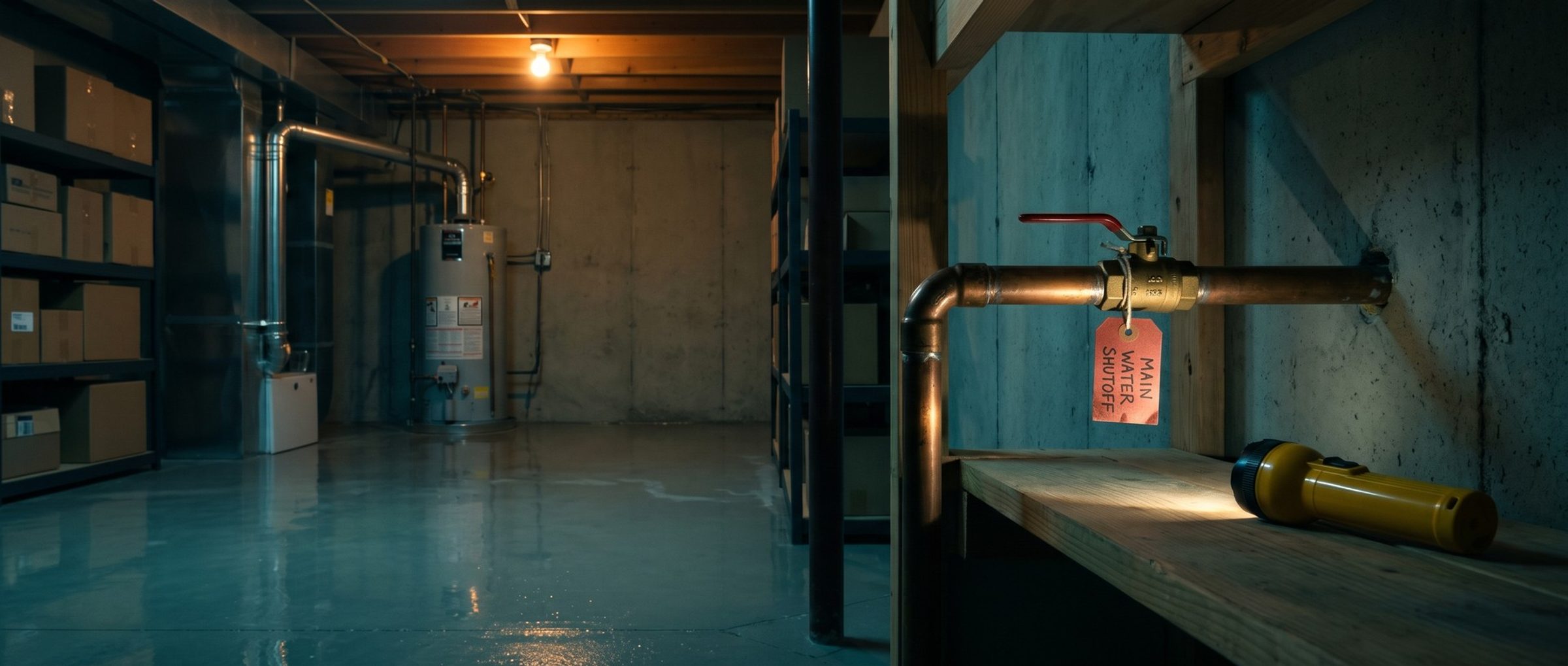
- Stop the water if it's safe to. Show where a main shutoff valve usually is.
- Stay clear of anything electrical in or near the water.
- Take photos before anything gets moved, because the insurance claim will ask what it looked like.
- Then call a restoration company, and here's what happens when we arrive.
That last step is where your company comes in, and it lands better after the help. A homeowner who just learned from you where her shutoff valve is has a reason to trust the rest.
Keep it honest. Chapter 6 covered Google's rules against leaning on a bad life event to scare people, and a video built on fear reads badly to someone already scared. Use real footage, too: your technician, your truck, a real wet basement (Chapter 10 made the same case for Performance Max). A calm person in a branded shirt explaining what to do is more convincing than any stock clip.
Google Says a Healthy Demand Gen Campaign Spends About 80 Percent of Its Daily Budget. Spending All of It Means the Budget Is Too Small.
Once it's running, Demand Gen has its own signs of health. Pacing is the quickest health check. Google's performance guide for this campaign type says a campaign that meets its targets without burning through more than about 80% of each day's budget has room to work. One that's consistently spending more is budget-constrained: the system is stretching too little money across the whole day.
The same guide advises patience with changes: nudge bids rather than yank them, a 5% to 10% move per week, 15% at the very most, and a wait of 30 to 50 conversions before reading the result. A restoration owner used to adjusting exact match bids by hand every week (Chapter 7) will find that pace slow. That pace is Google's recommendation, and on a campaign this expensive it's worth following.
And judge it on booked jobs, like everything else. A Demand Gen campaign can report thousands of video views and plenty of clicks. If the signed work authorizations from the Chapter 1 tracking don't rise, the views were the product, and you paid for them.
Next: Local Services Ads Have One Restoration Category.
Demand Gen reaches homeowners before they search for a restorer. Chapter 12 returns to the homeowner who has already decided to hire someone, at the top of the results page: the pay-per-lead Local Services listings with Google's verified badge, and the single water damage category restorers have to fit into.
Want the whole plan first? The guide home lists all sixteen chapters. Chapter 10 covers the campaign that comes before this one.
When a restoration company hands us its account for Google Ads management, Demand Gen waits until the Search campaigns are already booking jobs at a profit.